

创作上传
VIP
收藏下载
登录 | 注册有礼
查看完整案例

收藏

下载

分享
坐落于Kaʻūpūlehu这片神圣土地之上,位于夏威夷的Kona度假村,在沉寂十余年后,于昔日隐秘度假地的遗址上重新焕发生机。新度假村以营造一种自然、亲和的奢华体验为核心构想,其备受期待的“第二篇章”不仅汲取了场地独特的自然特质,也延续了原有度假村曾打动全球旅人的精神内核。如今,这里呈现出一个开放而充满活力的栖居之所,让宾客沉浸于典型的岛屿体验之中,同时引入面向未来的可持续设计理念。
Nestled on the sacred lands of Kaʻūpūlehu on The Big Island of Hawaii, Kona Village rises from the remnants of a beloved hideaway after over a decade of stillness. Carefully conceived to emanate a feeling of organic, approachable luxury, the resort’s long-awaited second chapter draws inspiration from the unique nuances of the destination, as well as the original property that captured the hearts of travelers from all over the world. What lies here now is an inviting and spirited sanctuary that fully immerses guests in the archetypal island experience while ushering in a forward-looking sustainable design.
▼度假村鸟瞰,aerial view of the village©Douglas Friedman


轻触土地
Light on the Land
新度假村的设计以尽可能减少对土地的干预为原则。在维护场地结构完整性与现有考古遗迹的前提下,Walker Warner致力于以尊重的方式重现原度假村所代表的太平洋岛屿式闲适风格,并通过现代细节与可持续创新加以提升。为此,项目自开发初期便以获得LEED金级认证为目标,所有设计决策均围绕这一目标展开。
The design of the new resort was guided by a pledge to be as minimally disruptive to the land as possible. Working to maintain the structural integrity of the site and its existing archaeological landmarks, Walker Warner set out to respectfully restore the relaxed Pacific Island style that epitomized the original property while elevating it with modern touches and sustainable innovations. To this end, from the first days of development, the project had its sights on LEED Gold Certification, and all design decisions were carefully considered with this goal in mind.
▼太平洋岛屿式闲适风格,the relaxed Pacific Island style©Douglas Friedman


▼太平洋岛屿式闲适风格,the relaxed Pacific Island style©Douglas Friedman

“我们的职责不仅是设计一座新的度假村,更在于引领对这片重要土地的尊重与修复。”——Greg Warner
“Our role and responsibility was to not only design a new resort, but to take the lead in respecting and restoring this truly significant piece of land.” — Greg Warner
▼对土地和植被的尊重与修复,respect and restore the land and vegetation©Douglas Friedman


客房单元延续了原有标志性的轮廓,以村落般的新月形布局沿场地边缘展开,而餐饮、康养与休闲设施则位于度假村核心区域。这一布局致敬Kona Village的历史传统,重现其昔日类似夏令营般的亲密社交氛围。建筑选址充分考虑信风方向,在强调滨海生活体验的同时,也通过减少空调使用来降低环境影响。
The guest hale, showcasing the original iconic silhouette, are thoughtfully positioned in village-like crescents that meander around the perimeter of the property, while in the heart of the resort are the dining, wellness, and recreational facilities. This arrangement pays homage to the historical legacy of Kona Village, rekindling the convivial, summer camp-like atmosphere it was previously known for. Buildings are sited with trade winds in mind, underscoring the luxuries of oceanfront living while simultaneously reducing the property’s environmental impact by minimizing the need for air conditioning.
▼以村落般的新月形布局沿场地边缘展,positioned in village-like crescents that meander around the perimeter of the property©Douglas Friedman


建筑采用由再生塑料制成的茅草屋顶,以替代传统使用的本地植物材料。这不仅提升了建筑抵御风雨等自然环境的能力,也避免了对树木的采伐,并减少垃圾填埋。外立面还采用受椰壳启发的饰面与外露木结构,以强化整体自然、有机的氛围。
Structures are clad in thatched roofing made of recycled plastic, rather than the native leaves that islanders used to rely on for this feature. This material not only better secures the buildings from rain and other natural elements but also keeps the trees intact and diverts waste from landfills. Additional choices to reinforce the organic, natural feeling of the resort include exterior siding inspired by coconut tree husks and exposed wood framing.
▼采用由再生塑料制成的茅草屋顶,Structures are clad in thatched roofing made of recycled plastic©Douglas Friedman


大岛文化
Big Island Heritage
与建筑外观相呼应,由Nicole Hollis设计的室内空间兼具质朴与松弛,既贴近本地文化,又不失奢华感。设计融合“ohana”(家庭)与文化传承的理念,通过自然材料定制家具等策略性元素,促进人与人之间的互动,延续原度假村的社交精神。空间中还融入了场地专属的色彩体系以及由当地与驻地艺术家创作的艺术作品。
Perfectly complementing the exterior architecture, the interiors, designed by Nicole Hollis, are both rustic and relaxed, locally relevant yet luxurious. Coupled with inspirations drawn from the concepts of ‘ohana and cultural heritage, they tell a rich and layered story, with a range of strategic elements such as custom furnishings made from natural materials that are precisely placed to prompt social interactions, as the legacy resort was known for. Additional design details include site-specific color schemes and specially commissioned art pieces from native and resident Hawaiians.
▼延续原度假村的社交精神,prompt social interactions©Douglas Friedman


“我们选择那些不会喧宾夺主,而是静静承载土地精神的材料。”——Mike McCabe
“We opted for materials that didn’t demand attention but rather quietly embraced the essence of the land.”— Mike McCabe
▼面向海水与沙滩的露台,the terrace facing the ocean water and sandy shore©Douglas Friedman

南部农耕村落区域的客房以蓝色与黄色为主,呼应海水与沙滩;北部区域则采用黑色与红色,致敬周边熔岩地貌与远处的Mauna Kea火山;鱼塘区域则以深色木材与绿色、蓝绿色为主,取自潟湖及其生态系统的色彩。所有色调均保持克制,使视觉焦点自然落于外部景观之上。每间客房均设有宽敞的私人lanai露台,鼓励宾客尽可能多地享受户外空间。
In the agrarian South Village, hale are adorned with blues and yellows, reflecting the nearby ocean waters and sandy shores. In the North Village, black and red tones pay homage to the surrounding lava fields and Mauna Kea volcano in the distance. By the Fish Ponds, hale feature darker wood tones and a palette of greens and teal blues, drawing from the striking colors of the lagoons, as well as the plants and fish that inhabit them. Regardless of the scheme they follow, all tones are muted to ensure that the eye is drawn directly to the exterior views, showcased through a soaring window wall. Each accommodation boasts a remarkably large private lanai, encouraging guests to spend as much time as possible in the open air.
▼客房区域,guest room area©Douglas Friedman


定制家具与构件选用耐久且亲和的材料,如刮纹木地板与道格拉斯杉墙面与天花。特色家具由工匠手工打造,例如灵感源于船只造型的床,呼应Kaʻūpūlehu作为渔村的历史。浴室则采用混凝土定制洗手池与浸泡浴缸,映射周围的熔岩地貌。多样的材料与细节共同营造出丰富的触感体验,使宾客沉浸于真实的夏威夷设计语境之中。
Custom fixtures and furnishings feature materials that are both inviting and enduring, such as scraped wood floors and Douglas Fir walls and ceilings. Statement pieces are handmade by expert craftsmen, including beds inspired by the shape of a boat, evocative of Kaʻūpūlehu’s origins as a fishing village. Bathrooms boast custom sinks and soaking tubs formed in concrete, reflective of the lava flows around the resort. Together, these touchpoints create a rich sampling of textures and immerse guests in an authentic Hawaiian design experience.
▼刮纹木地板与道格拉斯杉墙面与天花,scraped wood floors and Douglas Fir walls and ceilings©Douglas Friedman


焕新的遗产
A Renewed Legacy
当回访的客人穿行于这一重塑后的度假村时,会不断邂逅多个历史遗存节点,这些元素强化了项目在创造全新体验的同时,对过往记忆的纪念与延续。抵达序列本身便经过精心设计,以唤起“归家”的感受——接待空间被塑造成一个非正式的起居室,并向一处面向Kahuwai湾的lanai露台敞开。
As returning guests move throughout the reimagined resort, they encounter several legacy landmarks that reinforce the commitment to commemorate what came before while creating a new and elevated experience. The arrival sequence itself was carefully crafted to evoke the feeling of being welcomed home, with a reception area designed as an informal living room that opens onto a lanai overlooking Kahuwai Bay.
▼接待空间,reception area©Douglas Friedman
“当你来到Kona Village时,重点不在于建筑本身——你会透过建筑,直接理解这个地方,这正是我们的初衷。”——Greg Warner
“When you come to Kona Village, it’s not about the architecture—you see right through the architecture to immediately understand the place, which was our intention.”— Greg Warner
▼厨房,kitchen©Douglas Friedman

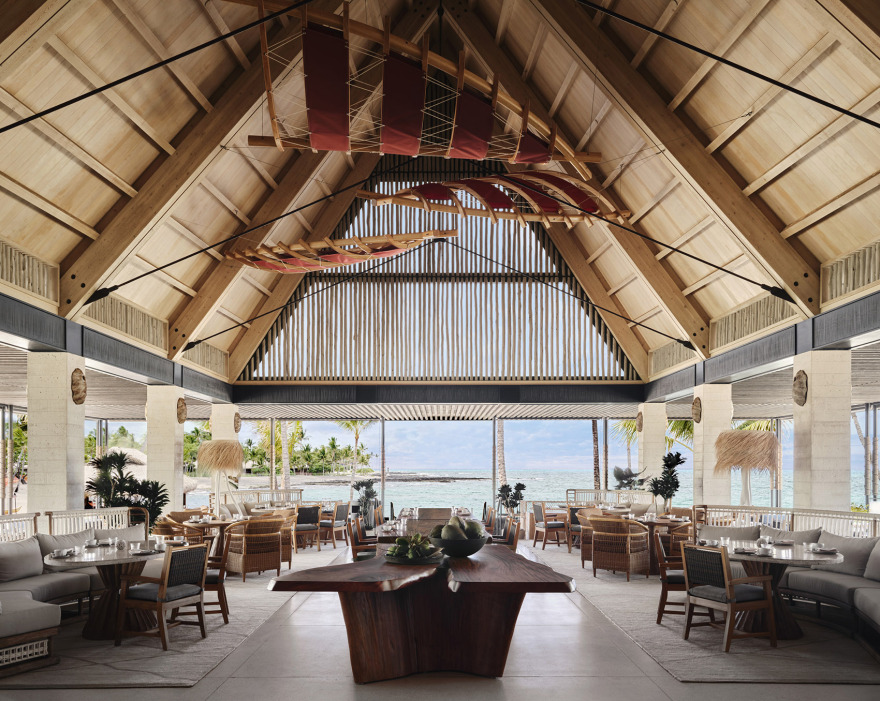
餐厅与酒吧同样唤起熟悉的情感记忆。由一艘沉船帆船构建而成的Shipwreck Bar被精心修复,重现昔日风貌;Talk Story Bar则延续其原有的海滩位置。度假村的标志性餐厅Moana也重新回归,尽管相较原址略有后退。其标志性的茅草屋顶延续了原有设计,而室内则以更现代的方式诠释曾经强调共享的用餐体验。
The restaurants and bars also conjure a familiar feeling. Shipwreck Bar, constructed from a shipwrecked schooner, has been lovingly restored to its former glory, while Talk Story Bar is situated in its original beach location. Moana, the resort’s signature restaurant, also reemerges as a key fixture, though slightly set back from its previous site. Its iconic thatch roof mirrors the original design, with interiors showcasing a modern approach to the communal dining that was quintessential to the concept in years past.
▼由一艘沉船帆船构建而成的酒吧,Shipwreck Bar, constructed from a shipwrecked schooner©Douglas Friedman

或许最具代表性的历史遗存,是四栋独一无二的客房hale。它们坐落于临近海崖的位置,保留在原有基础之上,不仅拥有开阔的海湾视野,也提供了当今其他客房难以比拟的临海体验。
But perhaps the most impressive of the legacy landmarks are four inimitable guest hale. Located mere feet from the ocean cliffs, these accommodations rest on their original foundations, providing sweeping views of the bay and direct access to the shoreline that few other accommodations can offer today.
▼坐落于临近海崖的位置的客房浴室,guest hale’s bathroom located mere feet from the ocean cliffs©Douglas Friedman

尊重土地
Honoring the Land
设计团队对场地原有的动植物生态进行了全面研究,尤其关注曾栖息于此的濒危及特有物种,以确保其在施工过程中的保护。与Walker Warner密切合作的VITA Landscape & Planning负责整体景观设计,其灵感来源于当地自然环境以及长期影响该地区的本土动植物文化意义。
The design team conducted a thorough examination of the native plant and animal life in the area, with a particular focus on the numerous endangered and endemic species that had previously inhabited the site. This was done to guarantee their preservation during construction. VITA Landscape & Planning, who worked closely with Walker Warner, developed the resort’s prominent landscape design, which was inspired by the natural surroundings and cultural significance of the native flora and fauna that have influenced the region for centuries.
▼尊重周围环境,respect the surrounding environment©Douglas Friedman

Asaya水疗中心嵌入熔岩岩体之中,并面向Hualālai火山景观,体现大地的疗愈力量。其设计根植于“mana”(能量与力量)这一神圣概念,为追求身心健康的宾客提供理想的栖居之所。熔岩之上的静谧空间为疗愈前后提供放松时刻,并通过独立路径连接各个疗愈房间。其独特设计从粗粝的自然地貌中汲取灵感,使其在整体度假村中独具辨识度。
Asaya Spa, nestled into the lava rock with views of Hualālai volcano, embodies the earth’s healing powers. Rooted in the concept of ‘mana,’ a sacred Hawaiian term for energy and strength, it offers an ideal haven for wellness seekers. Tranquil spaces atop the lava rock provide moments for relaxation before or after treatments, with a separate pathway leading to and from treatment rooms. Asaya’s unique design draws inspiration from the rugged landscape, setting it apart from the rest of the resort.
▼熔岩之上的静谧空间,Tranquil spaces atop the lava rock©Douglas Friedman


文化与历史的连接
Connection to Culture and History
在对这一标志性度假村进行重塑的过程中,团队深知这片神圣土地始终只是“被借用”的存在,因此必须连同其历史一同被保护。设计团队将工艺与艺术作为叙事媒介,使整个度假村如同一座“开放的展览馆”,展示一系列经典与当代作品,共同讲述Kaʻūpūlehu丰富的历史、文化与遗产。
With the redesign of the iconic resort comes the understanding that the sacred land will always be borrowed, and therefore, it should be protected along with its story. The team saw an opportunity to tell these chronicles through craftsmanship and art, resulting in a property that serves almost like a gallery, showcasing an assortment of works, both classic and contemporary, that speak to the rich history, heritage, and culture of Kaʻūpūlehu.
▼整个度假村如同一座“开放的展览馆”,a property that serves almost like a gallery©Douglas Friedman


在拆除旧度假村的过程中,团队回收并保留了大量历史遗物,包括照片与历史物件,如今分布于度假村各处。除了保存这些原有珍宝之外,团队还与King Kamehameha School合作,引入新的展品,以进一步向访客讲述这片土地的历史。这些特别委托的作品不仅延续了Kona Village的历史叙事,也让新一代夏威夷艺术家与工匠得以被更多人所认识。
A myriad of artifacts from the original property were salvaged during deconstruction, including photographs and historical objects, which are now dispersed throughout the resort. Beyond preserving the remaining treasures, the team worked closely with King Kamehameha School to introduce new items to further educate guests on the land’s legacy. These unique commissions convey the storied history of Kona Village, while introducing a new generation of Hawaiian artists and craftspeople to a wider audience.
▼整个度假村如同一座“开放的展览馆”,a property that serves almost like a gallery©Douglas Friedman

▼整个度假村如同一座“开放的展览馆”,
a property that serves almost like a gallery©Douglas Friedman

可持续性
Sustainability
这片占地81英亩的场地通过微电网系统运行,利用超过8,000块光伏板,可满足接近100%的能源需求。遵循夏威夷对于自然资源的价值观,项目采用了综合水资源管理策略,包括场地雨水滞留、废水处理、反渗透过滤井水系统以及用于灌溉的潟湖系统。设计团队与Re-Use Hawaii合作,对旧度假村进行拆解,将可回收材料再利用于当地社区,在减少对自然环境(包括熔岩地貌)影响的同时实现资源循环。为尊重场地的文化历史,所有沿海地下水池(anchialine ponds)、考古遗迹及岩刻(petroglyphs)均被详尽记录、保护并保留。
The 81-acre property operates on a microgrid, utilizing over 8,000 photovoltaic panels capable of meeting nearly 100% of the resort’s energy needs. In alignment with Hawaiian values regarding natural resources, a comprehensive water conservation strategy leverages on-site stormwater retention, wastewater treatment, wells filtered in a reverse osmosis facility, and a lagoon for all irrigation purposes. Collaborating with Re-Use Hawaii, the design team dismantled the remains of the old resort, recycling and repurposing salvaged materials for the benefit of the local community while minimizing the environmental impact on the landscape, including the natural lava flow. To honor the cultural history of the site, all anchialine ponds, archaeological features, and petroglyphs were meticulously documented, protected, and preserved.
▼场地平面,site plan©Walker Warner Architects

▼Moana平面,Moana plan©Walker Warner Architects

▼Moana立面图,Moana elevation©Walker Warner Architects

▼Moana剖面图,Moana section©Walker Warner Architects

▼Asaya Spa平面图,Asaya Spa plan©Walker Warner Architects

▼Asaya Spa立面图,Asaya Spa elevation©Walker Warner Architects

▼Ohana Kauhale平面图,Ohana Kauhale plan©Walker Warner Architects

▼Ohana Kauhale立面图,Ohana Kauhale elevation©Walker Warner Architects


▼Hip Hale平面图,Hip Hale plan©Walker Warner Architects

▼Hip Hale立面图,Hip Hale elevation©Walker Warner Architects


▼Shed Hale平面图,Shed Hale plan©Walker Warner Architects
▼Shed Hale立面图,Shed Hale elevation©Walker Warner Architects


▼Kahuwai Cookhouse平面图,Kahuwai Cookhouse plan©Walker Warner Architects

▼Kahuwai Cookhouse立面图,Kahuwai Cookhouse elevation©Walker Warner Architects

▼Black Sand Hale平面图,Black Sand Hale plan©Walker Warner Architects

▼Black Sand Hale立面图,Black Sand Hale elevation©Walker Warner Architects


Completion:July 2023
Location:Kona Village, A Rosewood Resort72-300 Maheawalu DriveKailua Kona, Hawaii
Client:Kennedy Wilson
Operator:Rosewood Hotel Group
Cost:Confidential
Sustainability:LEED Gold


南京喵熊网络科技有限公司 苏ICP备18050492号-4知末 © 2018—2020 . All photos and trademark graphics are copyrighted by their owners.增值电信业务经营许可证(ICP)苏B2-20201444 苏公网安备 32011302321234号
苏公网安备 32011302321234号客服
消息
收藏
下载
最近