

创作上传
VIP
收藏下载
登录 | 注册有礼
查看完整案例



收藏

下载

分享

翻译

Space stirs our emotions and creates precious memories in our life. But how do architects – the major players in defining and shaping space – really function behind the scenes? To find out, Frame visited Benoy's Shanghai office, and talked with Qin Pang, Benoy director and head of Shanghai studio, about his vision as an architect. He shares why those in his position must serve as 'balancers', the value of 'warm' design and the importance of viewing cities as ecosystems.
Benoy's Shanghai office is located in IAPM, one of the large urban mixed-use destinations designed by the firm in China. 'The whole building, from inside out, is a “showroom” for Benoy,' explains Qin Pang, when asked why this place was chosen for the Shanghai office. Completed in 2012, IAPM still stands out among other subsequent commercial developments in the city. The site was formerly a famous clothing wholesale market, a place that carries the memory of Shanghai's past commercial activities.
Even years after IAPM was built, mysterious salesmen would pop up from nowhere and ask pedestrians, 'Wanna buy a luxury handbag?', Pang jokes. Before the old building was torn down, people were looking forward to a new building with new retail spaces. When it opened, IAPM proved to be bit overwhelming for the people of Shanghai – it is composed of one luxury residential building, one upscale shopping mall and two Grade-A office towers, with connections to three subway lines. Its compelling glass curtain wall system, and the giant cruise ship-like facade of the six-storey Prada flagship store, also represent a major innovation in urban mixed-use design.

Qin Pang.
Architecture: a balancing act
Looking back on the design and construction process of IAPM, Pang reflects that 'the architect is not only a creator, but also a coordinator and a balancer.' In his words, the problems that need to be faced and solved in a comprehensive project are complicated. The uncertainty between the pace of the city and the new buildings cannot be tackled by a simple idea or by making a pretty shell. It is necessary to find the core 'contradiction' in each project at every stage from the perspective of city management, developers and users. That is to say – a dynamic balance must be obtained throughout the design process.
Introducing a 220,000-sq-m mixed-use complex to a plot that used to be occupied by a small two-storey building was a challenge, as it brought great traffic pressure to the surrounding communities and hugely impacted the daily lives of local residents. So Benoy connected the commercial podium to Nanchang Road, Shaanxi Road and Xiangyang Road, making sure that human-friendly connections weren't compromised by transportation. Cars either enter the garage directly or go up to the drop-off area on the second floor, while people enter the office buildings through the lobby. The design met the respective requirements for traffic, office and shopping mall in a way that skilfully navigated the restricted conditions. 'This is how we interpret design, not just merely thinking about simple questions like whether a round shape or square form is better for the building,' explains Pang.
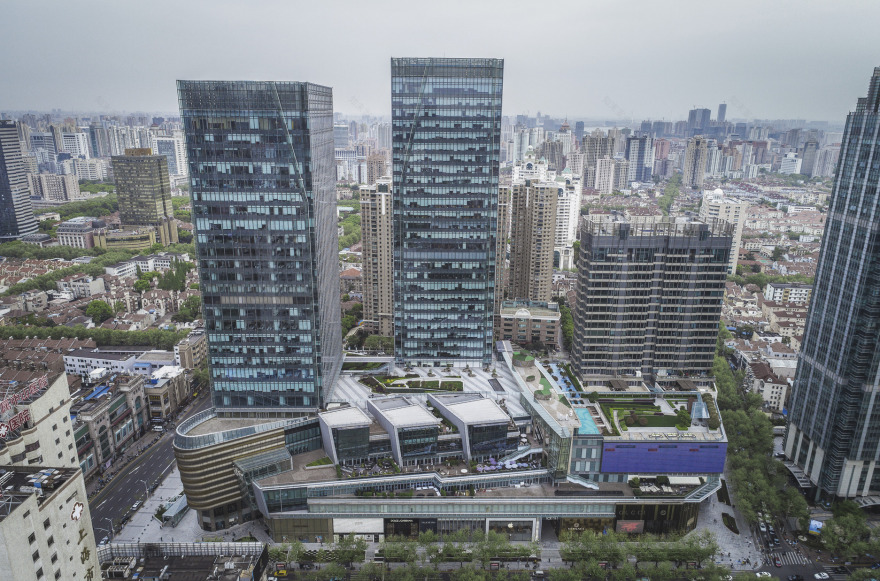
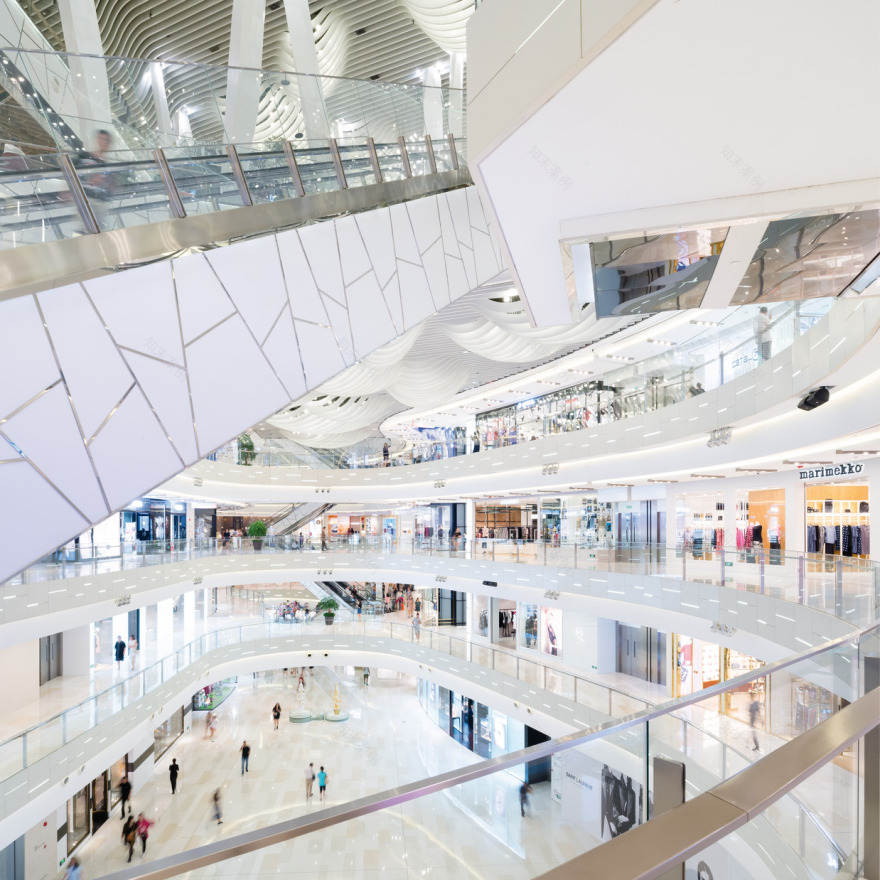

Designed by Benoy, Shanghai's IAPM building is a 220,000-sq-m mixed-use complex. The firm has its headquarters inside.
Many architects tend to set up lots of perceptual barriers, as they overemphasize the sentimental and philosophical aspects of design while neglecting common sense. In Pang's view, sensibility and philosophy are necessary for humanized design, as they provide the soil in which design ideas grow. However, design itself is more about what fruit grows from the soil. In particular, architectural projects come alive when the design process starts, and grow with the design team going forward. The requirements of schedule, investment, launch, engineering, municipal coordination and more constitute a potential framework, with a combined force that restrains power from all sides. In this way, the implementation of a project cannot be arbitrarily changed at will. Instead, architects must find the most appropriate and optimal solution under the status quo.
Moreover, there are contradictions at every stage, and new problems will pop up anytime to disturb the existing balance, which then needs to be rebalanced. Therefore, architects should be balancers. And, according to Pang, a top-down approach to make sure a project is always on track is the most basic criteria a design leader should meet. 'Long-term dual thinking (i.e. “either-or” thinking) always ends in compromise. I regard this as a process of using experience and professional knowledge to see the big picture, finding a glimpse of a solution among accumulated contradictions, capturing so-called inspiration, then achieving the balance among various aspects. This sounds romantic, or accidental, but ultimately it is mainly the result of rational thinking. Of course, I don't think rational thinking can solve all problems. It's quite contradictory,' he observes.


Mango West Bund Plaza, designed by Qin Pang of BENOY, will open early next year.
The value of 'warm' design
Always focusing on 'humane care', Pang and his team's design work reveals their true values. 'When you anticipate all the problems ahead, your choice determines the character of the completed building. When you take people's feelings as the central focus, you come out with something warmer, something that resonates more with people than those schemes that mainly focus on commercial considerations.'
The IAPM project embodies the principles of such 'warm' design. 'People want their memories to be preserved and their hopes to resonate in a new space. Everyone is nostalgic and wants to find something familiar, to feel that they're connected to the city, rather than being cut off from the past and being completely isolated in a brand-new urban space,' says Pang. Considering the well-established built environment of the adjacent tree-lined shopping street Huaihai Road, Benoy created a series of catering areas on the terraces of the IAPM complex. Those areas are embedded within the building like 'boxes', creating a comfortable outdoor dining atmosphere.


In 2020, Pang and his team won a top international design competition for their master planning and architectural design for the Alibaba Central China Headquarters & Industrial Community.
'We don't want people coming here to confront an oppressive seven-story building that stretches 200-m wide along Huaihai Road. Therefore, we set the higher area back to reduce its visual impact. People can sit here and enjoy the beautiful skyline of the city. This is the benefit that good design provides for its users – it looks ordinary, but in fact shows respect to the users and to the city.'
Visualizing the future metropolis
During conversation, Pang once again mentions the concern he has raised more than once before in public – is urban construction accelerating contemporary cities towards an unpredictable future? The recent floods in certain cities in Central China and Europe are in fact a warning for mankind – Should city architecture be built for people? Or should it first respond to the climate, geography and nature of the region in which it is located?
'It's too easy to say that every region should preserve its own historical memory,' says Pang. 'Many actions in this regard are merely about making antique-style historical buildings or superficially simulating old buildings. The logic of a building's existence in a place should be the geography there. For example, buildings in a place with abundant rainfall should be constructed on steep slopes; houses in Scandinavian countries must be designed with a narrow roof to avoid snow cover; waterfront buildings in tropical areas should be stilted to prevent flooding. These buildings are responses to local climate; they are the results of long-term development and iteration.'
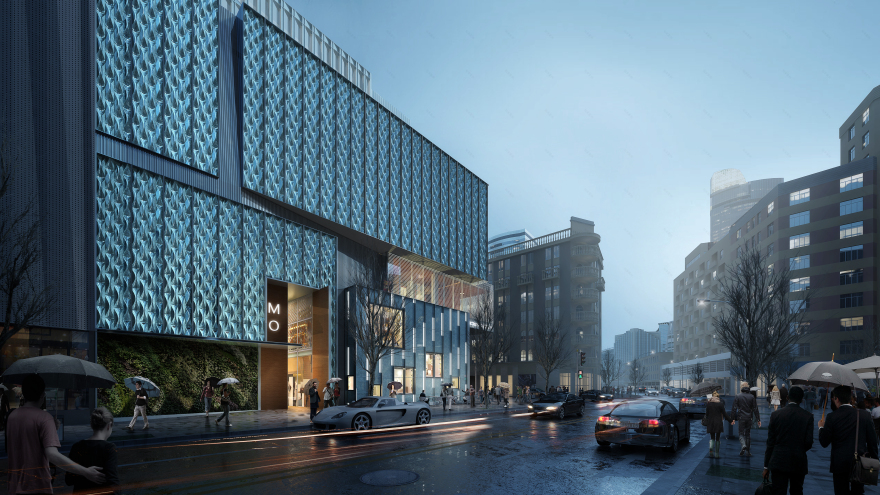

Benoy's proposal for the renovation of Mosta Plaza is to create a new image for the existing shopping destination on West Nanjing Road.
'Maybe the ultimate “city” – if this term will still exist – will function like the natural world,' he reasons. 'For example, perhaps it will be able to absorb carbon dioxide, release oxygen and clean the air as forests do, or collect and filter rainwater as vegetation does. Every organism in nature has a certain function, and so should every piece of architecture in a city. Buildings nowadays are only for human use. What if we change our perspective? Why can't a building's primary function be garbage collection, energy production or sewage treatment? Why can't we reverse the logic of urban master-planning?'
The city as an ecosystem
'Shanghai is one of top metropolises in the world, but there is still room for improving the diversity and profundity of its urban space,' explains Pang. 'For instance, as human beings who are mostly less than two-m tall, we don't have a natural affinity with large-scale objects. The night view of Lujiazui Station from Puxi is spectacular – this is how a city should be; but the diversity of the “ecosystem” is more important to a city. A city is like a forest, which has the greatest vitality when its ecosystem is particularly rich, tolerant and resilient,' he adds.
Unfortunately, in the process of China's rapid urban development, many places have destroyed urban fabrics and scale. Pang recounts that, over past decades, Chinese cities referred to modern urban planning practices in the US, dividing urban areas by function. This way of urban master-planning hasn't naturally evolved over a long period of time – nor does it have a human-friendly scale. On the other hand, some villages, without any planning, have achieved real harmony because the fabric of these places is formed by neighbourhood relationships, fully responding to human life and conflicts.
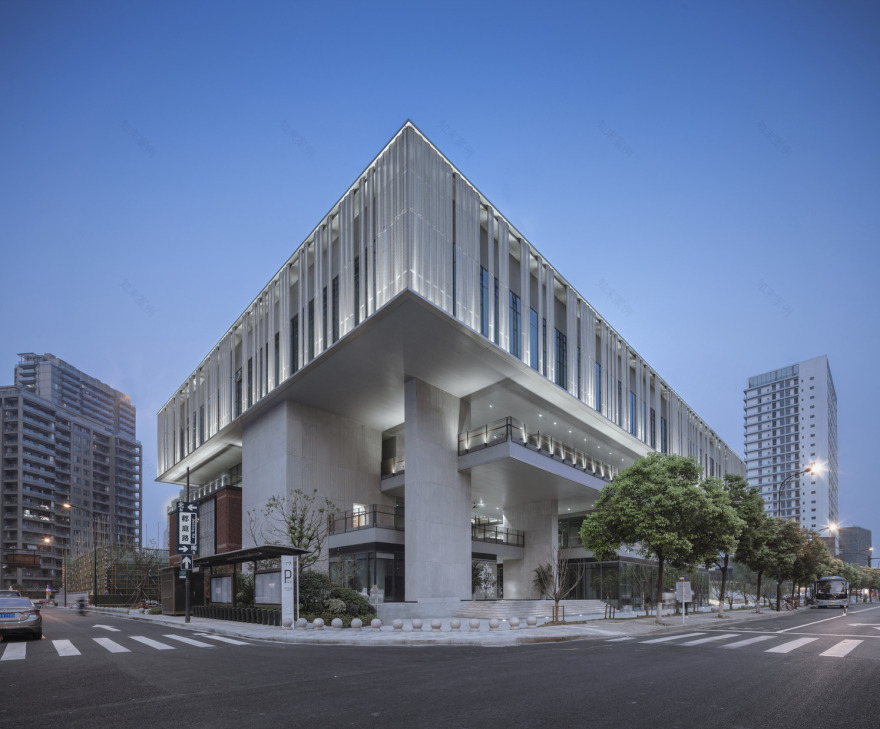
Benoy developed Hangzhou Canal Arts Center, the first park-style cultural and art space in the city, from a former thermal power plant.
'Nowadays, barely any new buildings are being constructed in Europe, for the sake of preserving the urban fabric,' he says. 'Meanwhile in China, the need to improve living conditions and inject new blood into cities and meet increased housing demands has resulted in an urban construction boom. It's a sad truth we must face at the earlier stage of urban development. However, the government has been aware of this issue, and is making steady efforts to restore and remedy the problem, aiming to bring back memories of the city.'
'As an architect, I can try a lot of different things and understand from a broader and deeper perspective,' Pang reflects. 'Have you noticed that architects live a longer life? They've seen what's happening in the world and how it works – they won't struggle and can live with it.'

 194
1942021/04/08 11:45:00
2422016/04/21 00:00:00
2092021/06/15 16:53:09
682017/10/20 22:16:00
272016/09/28 20:29:00
1592021/12/21 00:00:00
9672022/01/28 00:08:58
612021/06/24 15:17:02
962022/03/28 10:17:21
1752019/09/24 05:56:44
南京喵熊网络科技有限公司 苏ICP备18050492号-4知末 © 2018—2020 . All photos and trademark graphics are copyrighted by their owners.增值电信业务经营许可证(ICP)苏B2-20201444 苏公网安备 32011302321234号
苏公网安备 32011302321234号客服
消息
收藏
下载
最近