

创作上传
VIP
收藏下载
登录 | 注册有礼
查看完整案例



收藏

下载

附件

分享

翻译


Architect:VARDAstudio
Location:Limassol, Cyprus; | ;
Project Year:2013
Category:Offices
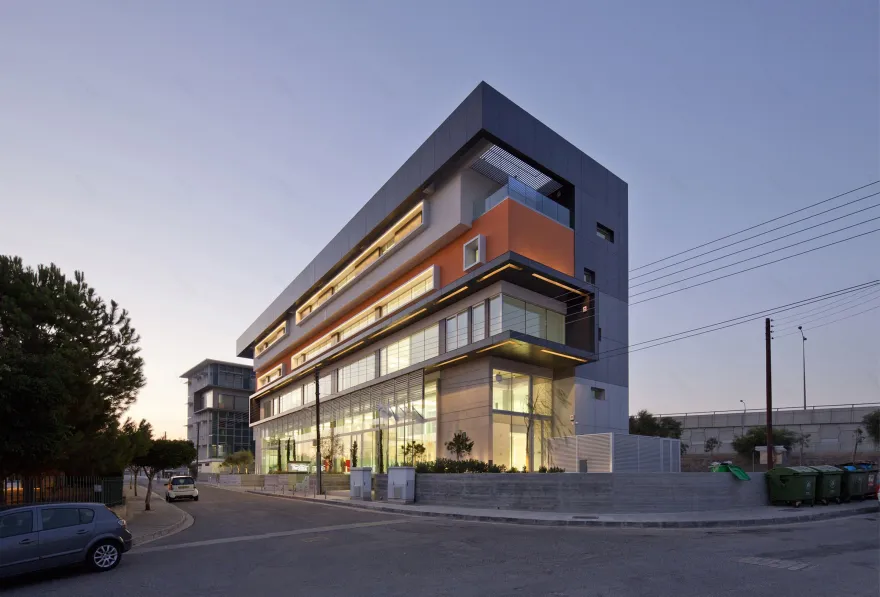
The site is near the Mesa Yitonia round about, and bound on one side by the Limassol – Nicosia motorway.
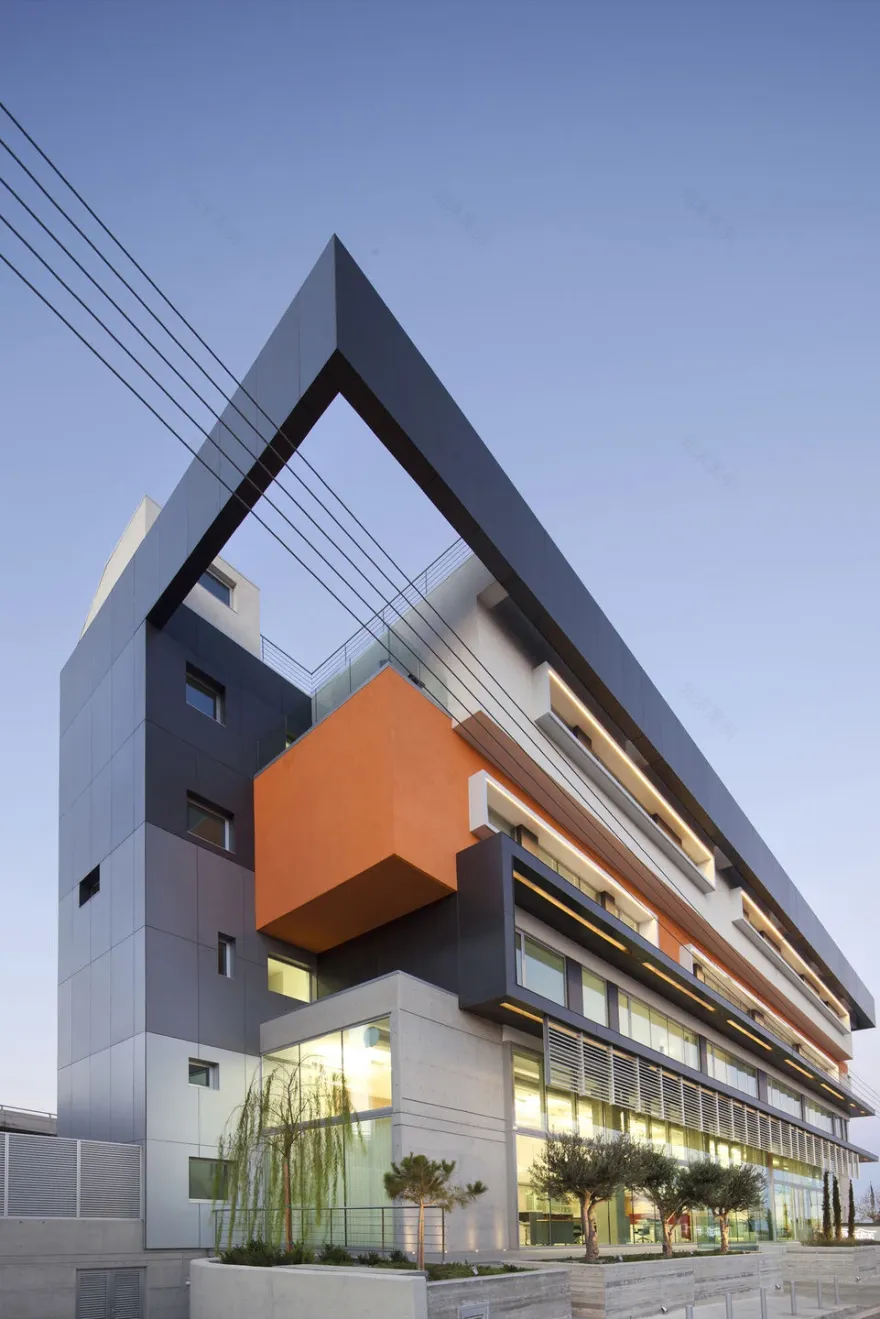
The building form acknowledges the linearity and speed of the motorway creating a protective wall towards it, complimented by a playful south-facing elevation. The upper floors benefit from long views to the sea.
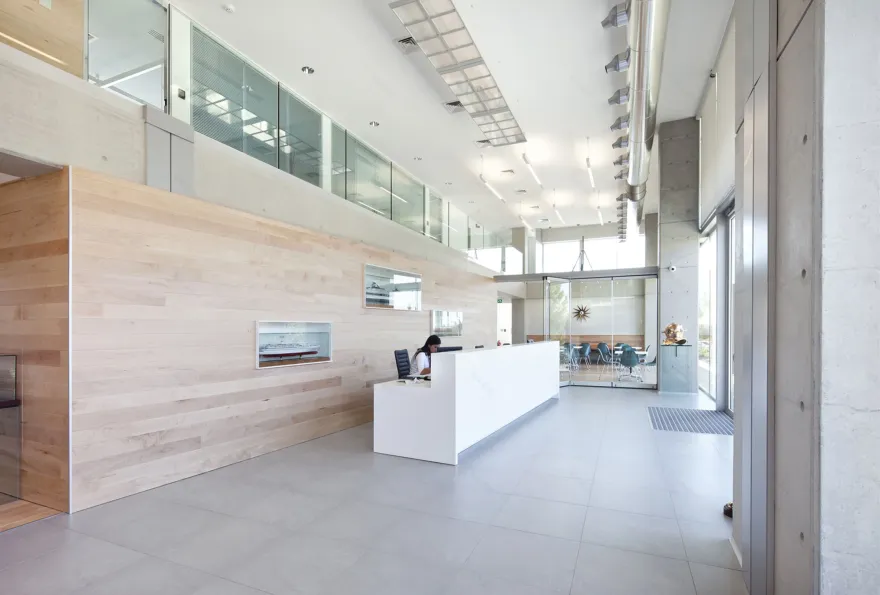
The intention is to design a building where a complex programme generates the aesthetic and creates a dynamic form and appearance. Any decoration or ornament is avoided to provide spaces that are calm and uncluttered, thus creating an optimal work environment for the occupants.
A key programmatic feature of the project is flexibility. The combination of structure systems enables spaces to be open and seamless without the interruption of large structural elements. In this way the internal layout of the offices is fluid and customisable.
The offices occupy the three upper floors, whilst the ground floor consists of a foyer, a cantine and restaurant, conference rooms and a gym.
The building structure consists of a re-enforced concrete frame combined with metal cellular beams.
The external envelope as well as internal partitioning are made up of dry construction, whilst the exterior is clad in High Pressure Laminate panels.
Internal floors are suspended and covered in a rubberised material, chosen for its sound-absorbing quality.
The Energy strategy of the project aims to provide an
through an ambitious bioclimatic design that goes beyond the conventional obligations of building owners and designers.
The utilisation of local bioclimatic characteristics (the sun, wind and earth), recyclable building materials and energy efficient systems, as well as active cooling and ventilation systems that run exclusively on energy from renewable sources ensure that the construction and use of the building is in line with the owners' and designers' vision for a responsible, sustainable development that adapts to the current social and economic context.
External horizontal or vertical louvres, overhangs and cantilevers are all strategically placed to selectively control passive solar gains and shade the building. The orientation and time of use of each space was carefully considered to ensure optimal light internally. The type of glazing was also carefully selected and its performance evaluated to suit the building's energy needs, whilst the amount and orientation of the glazing is also important.
A basic element of the sustainable design was the use of a cooling system that runs on renewable energy. Specifically, the climate control of the building is achieved using a hybrid solar and geothermal system, installed at the roof of the building and in the soil under it respectively. The geothermal system specifically uses vertical elements to take advantage of the high geothermal potential of the area. This system provides adequate heating and cooling throughout the year without using any conventional (fossil fuel) energy. The result is a building that achieves a high degree of thermal and optical (light) comfort using minimal conventional electrical energy.
▼项目更多图片





南京喵熊网络科技有限公司 苏ICP备18050492号-4知末 © 2018—2020 . All photos and trademark graphics are copyrighted by their owners.增值电信业务经营许可证(ICP)苏B2-20201444 苏公网安备 32011302321234号
苏公网安备 32011302321234号客服
消息
收藏
下载
最近