

创作上传
VIP
收藏下载
登录 | 注册有礼
查看完整案例



收藏

下载

分享

Later in this year of the rat SPARK will have been working in Asia for 20 years
.
To commemorate this amazing milestone we will over the next 12 months publish a number of our projects that have been instrumental in formulating what we do, how we did it and the values generated that have become
SPARK’s DNA
.
I guess this 12 month progression is an easy way to understand us and the ideas generated via the SPARK design process we use to avoid the “this is how we do it” pit-fall of repetition.
It used to be
de rigeur
to call this process “
thinking outside the box
” we now call it the “
SPARK factor
”. It revolves around an understanding of our clients and experience in the typologies we are best known for designing. A process of questioning: questioning the problem, questioning assumptions, and questioning the social and environmental implications of the project.
We try to reframe everything in a
human-centric
way, developing ideas and adopting practical approaches through our idea testing.
As a process it is a wonderful catalyst for change, discovery and evolution resulting hopefully in a clear communicable
SPARK narrative
.
TRANSFORMING NOT CONVERTING

Stephen Pimbley. August 2020
“
Even before the staggering impact of Covid-19 has been fully revealed, those that write about cities are busy concocting strategies for their transmutation. Perhaps we should be first bearing witness to this mass cause of death, and pause for a moment of reflection. This is not the time to accelerate pre-pandemic agendas for more of those untested urban ideas based on solely observation and historical navel gazing. We use science to combat the pandemic so perhaps we should be using science to reinvent our jaded notions of urbanism? Jane Jacobs’ urban theories are leaden “
boots not meant for walking
” and have not moved an inch since her 1960’s book
The Death and Life of Great American Cities
.

▲
Jane Jacobs‘s The Death and Life of Great American Cities
©Baidu
Post Covid-19 we need ideas that produce better outcomes for the city, it is simply not enough to plant walls and roofs, green fingering the city whist building tall in the name of the demi-god of densification. We can say with total certainty this will not help to reduce global warming targets falling lamentably short of the Paris 2-degree target. It will neither provide the post pandemic panacea we need to get us out of our homes and back to places of collective endeavour. I for one do not want to spend the rest of my life talking to people via a Tencent application.
The complex nature of the city is impossible to reduce to a predictive algorithm, so the notion that the city really be studied and predicted is I guess no more than Sim City urbanist hubris?
Place-making and urbanism has suffered from remorseless obscurantism from the great gardener Ebenezer Howard to father of machine modernism Le Corbusier, these still revered putative figures that still influence many a regurgitated idea on how we should plan a city, including me!
Jane Jacobs was right in the sense that a neighbourhood to have staying power, must constantly change and reinvent itself, stability through the seeming paradox of stability through change.

▲ SPARK's Vision City: transforming
©SPARK
Slowly the work at SPARK is moving away from the mega city project towards the infill, the regeneration, the transformation and the small urban addition. Projects that contribute to the Dr Who like regeneration of the city, you may not recognise the face but it has afamiliarity, a feeling of connectedness and continuity.
The following projects illustrate a number of projects we have been lucky to work on that are focussed on the tactful transformation of the city. An antidote to them is placed voracity for paving over nature, a deliberate avoidance of eye candy and Blade Runner technology, an attempt to fix the mistakes and misconceptions of the recent past to support the notion of a life between the buildings.
”

Vision City
Client: Quill Retail Malls
The transformation of an abandoned partially complete shopping mall into a sustainable naturally ventilated shopping mall centred around an activated terraced public space.

▲
S
PARK's
Vision C
ity: before
©SPARK

▲
S
PARK's
Vision C
ity: after - facade along the street
©SPARK

Starhill Gallery
Client: YTL
The somewhat introverted Starhill Gallery was reinvented as an iconic urban landmark that now features heavily in advertising Malaysia’s attributes to the World. SPARK designed a complex and cutting edge envelope which wraps the existing building in a crystalline skin of glass and stone panels, providing valuable visual connection to Bukit Bintang.

▲
SPARK
‘
s Starhill Gallery: before
©SPARK

▲
SPARK
‘
s Starhill Gallery: after – diamond shape facade
©SPARK

Capital Tower Singapore
Client: Capitaland
SPARK redesigned the interiors of Capitaland’s headquarters Capital Tower, replacing the dated interior with a contemporary classic threshold experience that maximises the value of the space with a clutter-free plan that enlivens the arrival experience via carefully choreographed lighting and a comprehensive new material palette that extends from the primary lobby, to the mezzanine, the typical floor lift lobbies, and lift cars.
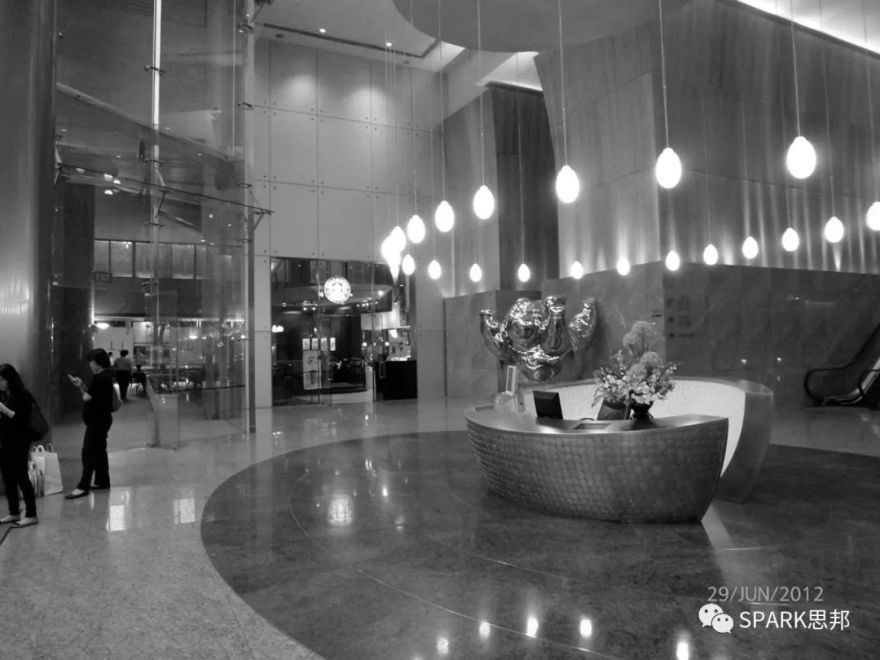
▲
SPARK
‘
s
Capital Tower: before
©SPARK
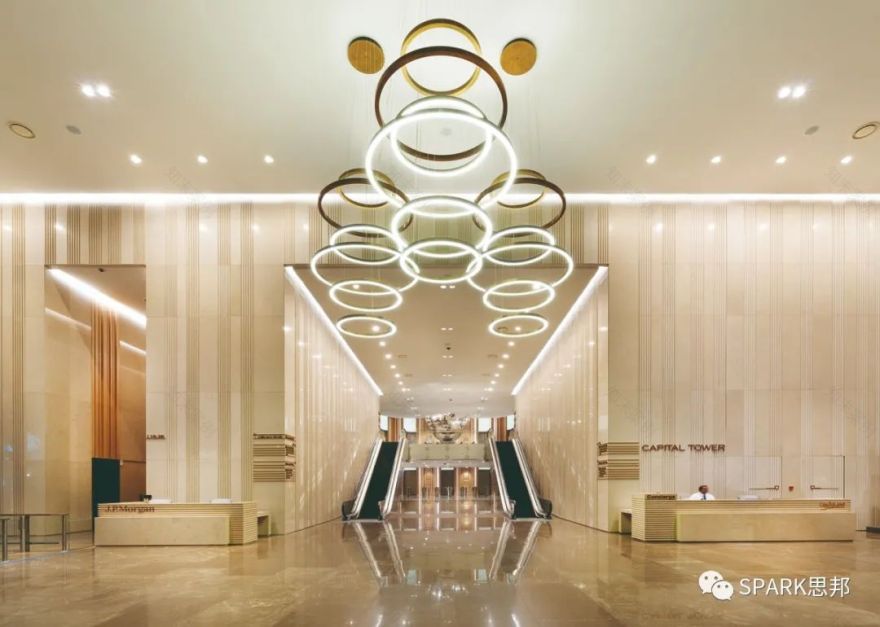
▲
SPARK‘s
C
apital Tower: after – lobby
©SPARK

One Mont Kiara
Client: Capitaland Malaysia
SPARK designed to add a roof to the
existing outdoor
courtyard, and transforming the space into a comfort indoor shopping mall. In the meanwhile, renovated the finishes of interior with a pixelated “floral” floor surface that provides the space with a unique identity and pays homage to the building’s tropical context. The atrium roof is constructed using linear ETFE cushions that moderate the amount of sunlight entering the mall reducing heat gain and energy consumption whilst contributing to the thermal comfort of the mall.

▲
S
PARK's
One Mont kiara
:
the internal structure of the roof
©SPARK

▲
S
PARK's
One Mont kiara
: courtyard
roof section
©SPARK
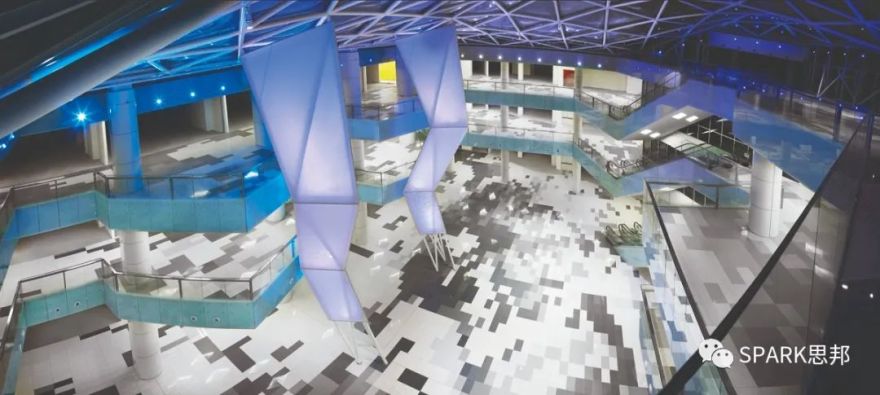
▲
S
PARK's
One Mont kiara
: Interior design
©SPARK

Jizhou Master Plan
Client: Jizhou Government
China’s expanding high speed rail network will stop at Jizhou in 2022. SPARK’s proposal seeks to maintain the qualities of the pastoral community by inserting appropriate new functions to the north of the new railway station bordered by an existing lake and river. The southern side of the tracks are planned with a higher degree of real estate density and programmes required to economically support the future growth of the city.

▲
SPARK
‘s
Jizhou Master Plan: before
©SPARK

▲
S
PARK
‘s
Jizhou Master Plan: after -
aerial view
©SPARK
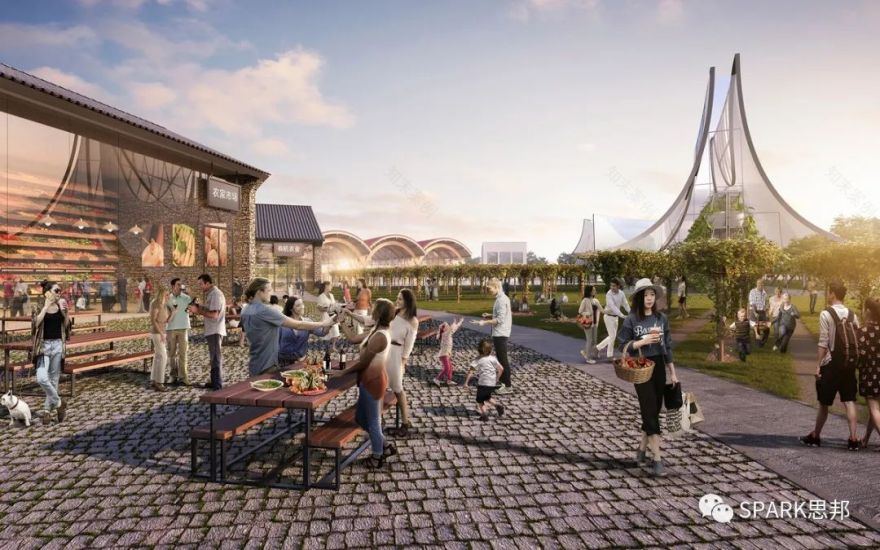
▲
S
PARK
‘s
Jizhou Master Plan: after - farmers’ market, green axis
©SPARK

▲
SPARK
‘s
Jizhou
M
aster Plan: after - high speed rail platform
©SPARK

Minhang Cangyuan Riverfront
Client: Minhang Government
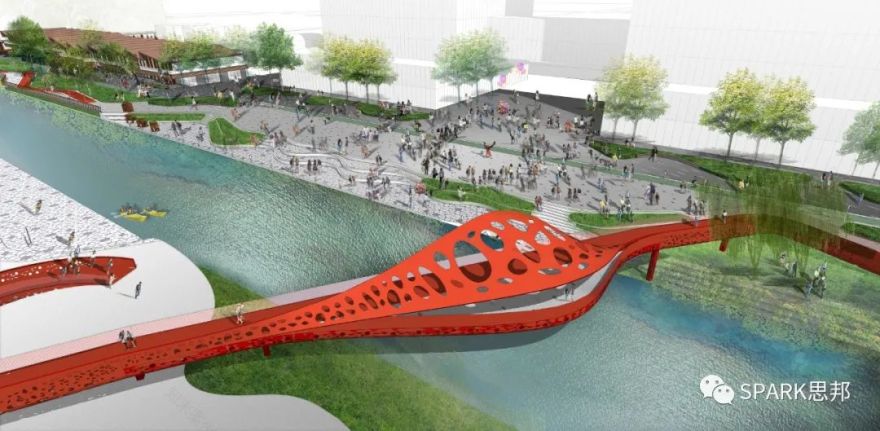
Our idea for the riverfront uses an ecological theme for renewing the river environment. We have abstracted the Diatom form into two- and three-dimensional objects that animate the river embankment telling the story of a river and environment in regeneration.

▲
SPARK‘s Minhang Cangyuan Riverfront: bef
ore
©SPARK
▲
SPARK
‘s
Minhang Cangyuan Riverfront:
after
–
landscape bridge and waterfront recreation area
©SPARK

▲
SPARK
‘s
Minhang Cangyuan Riverfront:
after
–
recreation area
©SPARK

Mumbai Tetra Tower
SPARK research project
The Mumbai Tetra tower is an investigation into how to house sustainably those that live in the Mumbai slums in a hybrid tower manufactured from concrete, timber and recycled Tetra Pak cartons.

▲
Slums in India
©Google

▲
SPARK’s Mumbai Tetra towers:a vertical solution to slums in India
©SPARK

▲
SPARK
’s Mumbai Tetra towers
:
concept
©SPARK

▲
SPARK’s Mumbai Tetra towers
:
tower components
©SPARK
END
往期阅读:
SPA
RK 20周年品牌故事7月特刊:甜蜜的青春鸟

SPA
RK 20周年品牌故事6月特刊:
批判的认知,是一门艺术
SPARK 20周年品牌故事5月特刊:
媒介即是讯息

SPARK 20周年品牌故事4月特刊:地球日50周年,SPARK谈ESG-企业对环境永续的社会责任

SPARK 20周年品牌故事3月特刊:织造复合的城市语境

SPARK 20周年品牌故事2月特刊: 幸福和安康
SPARK 20周年品牌故事1月特刊:艺术是通往建筑的最佳途径

关注SPARK思邦
创意是
我们的基本信仰
!

 106
1062021/08/03 20:00:00
24002021/01/11 21:20:11
1212021/07/26 08:10:26
2122021/08/07 13:32:00
5362023/04/12 08:30:00
1362022/08/05 12:30:53
542020/11/19 08:00:00
742018/11/22 12:23:31
1832020/10/22 17:00:00
102020/10/30 16:58:34
02020/09/30 15:38:54
252020/07/30 17:30:00
南京喵熊网络科技有限公司 苏ICP备18050492号-4知末 © 2018—2020 . All photos and trademark graphics are copyrighted by their owners.增值电信业务经营许可证(ICP)苏B2-20201444 苏公网安备 32011302321234号
苏公网安备 32011302321234号客服
消息
收藏
下载
最近