

创作上传
VIP
收藏下载
登录 | 注册有礼
查看完整案例

收藏

下载

分享
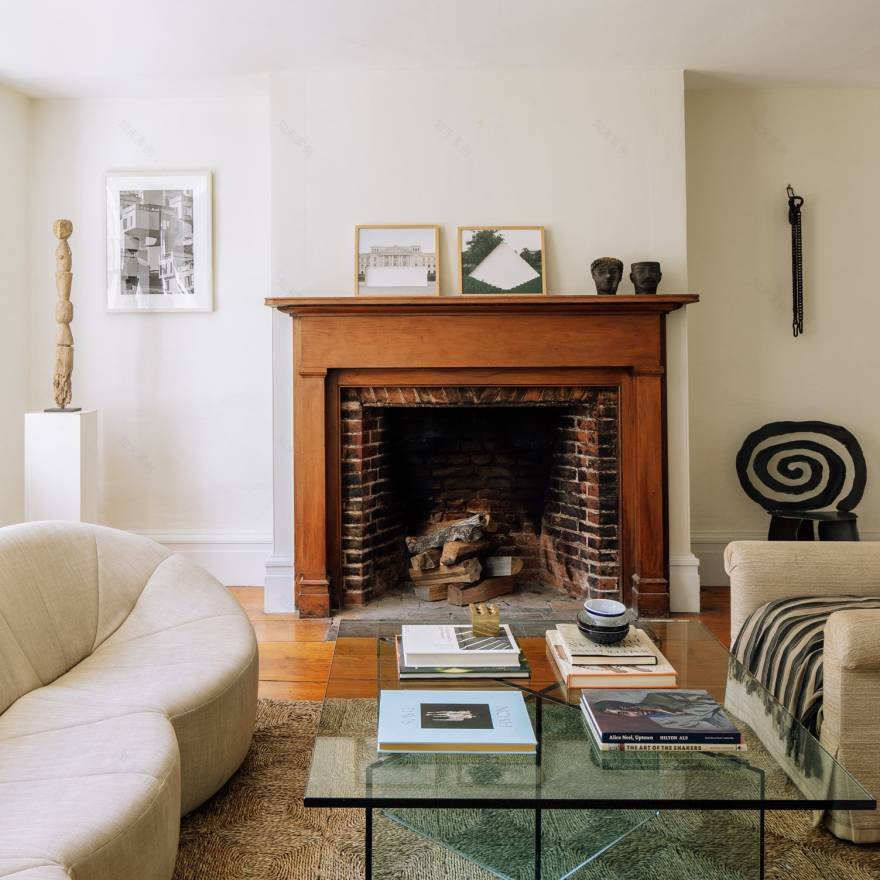
About six weeks after she moved into her Dutch Colonial in Beekman, New York, Alyse Archer-Coité’s excitement shifted to hesitation. Her anxiety peaked when she started reaching out to contractors to begin home renovating discussions. “I felt like they would come to the house with an expectation, and then I would open the door,” she recalls. Archer-Coité didn’t want word to get out that the ivy-covered brick home on the hill of a predominantly white and middle class neighborhood was owned and occupied by a single Black woman—she would often wait for cars to pass before getting the mail. “I had a fear that I was going to end up with a burning cross in my yard.”
Fifty-five years after passing the 1968 Fair Housing Act—a law preventing discriminatory practices around renting, buying, selling, or financing a home in the face of redlining—racism continues to pervade the house buying experience. But what of the BIPOC buyers, like Archer-Coité, who finally get their keys? Homeownership literacy is driven by financial resources and budgeting, experience in the field, and relationships with contractors—all of which impact the design, integrity, and longevity of a home, and are often byproducts of generational wealth and privilege. After speaking with a mix of Black homeowners, housing advocates, and real estate professionals, it’s clear that the history of undermining Black wealth indeed continues with home improvement.
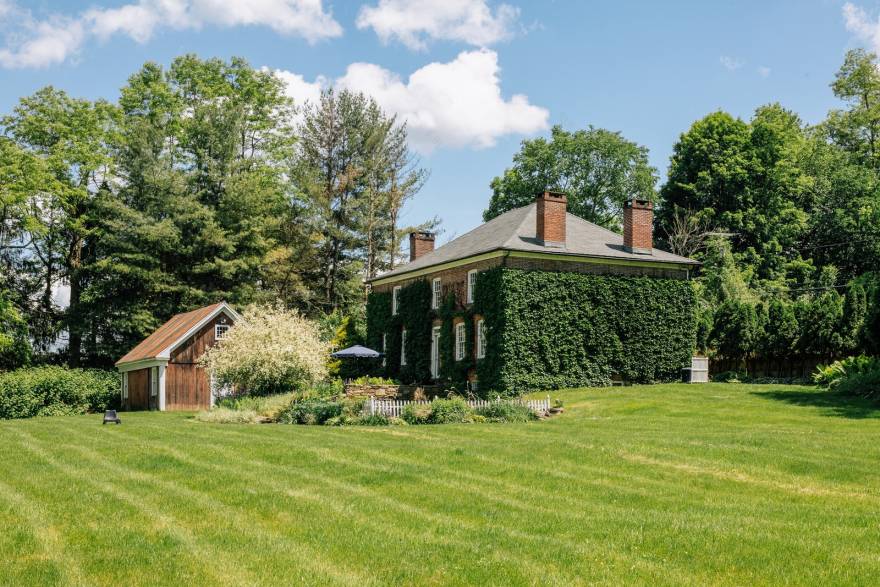
While Archer-Coité does not regret buying her home, the “expectation versus reality has definitely shifted,” she says. “I underestimated my need to be dependent on an upstate network of people who are just very different from me.”
Photo: Hali Mason/Sotheby’s International Realty
In their experience overseeing the Center for NYC Neighborhood’s Black Homeownership Project, Sabrina Bazile has witnessed how “Black homebuyers are being pushed to certain neighborhoods [where] a lower cost pool of homes just need more work.” Between plots that already require more maintenance and “Black women not being able to find trustworthy contractors,” Bazile emphasizes how there’s a higher risk of home deterioration. “Systemic discriminatory practices that have existed for decades continue to keep Black homeowners from making improvements to their home that will increase its value, especially for [those] who may not have as much liquid cash in reserves as their white counterparts,” adds Blondel Pinnock, CEO of Bedford-Stuyvesant Restoration Corporation.
Both organizations are providing services that, in Pinnock’s words, respond to “the pitfalls of purchasing older homes and what they need to be prepared for as far as maintenance and upkeep,” including financial resources, homeownership preparedness counseling, home repairs, and weatherization support, along with other assistive services to sustain Black homeownership and build generational wealth. “So many of us have been conditioned in an environment where [strong financial] principles were not in practice,” says Billy Ross. As both a broker and homeowner, Ross underlines that budget line items for maintenance or a sinking fund that exists solely for repairs are necessary because “we’re coming into it, we’re thin, and we don’t have the reserves or the capacity to take care of it.”
For Debbie Wright, a realtor with more than 20 years of experience and multiple properties under her belt across Florida, Washington, D.C., and New York, a big issue stems from home improvement contractors being mostly men. Wright emphasizes how this directly “ties into how men are going to relate to Black women in contracting,” describing how often contractors patronize her expertise or “challenge how [she] wants to do things,” like when she built a home from scratch in Florida and knew it needed steel trusses. While more expensive material-wise, steel is less laborious and means avoiding the deterioration of wood trusses by termites. But because a contractor gets the benefit from labor costs, Wright knew the contractor would try to push toward wood, eventually depleting the house’s value in the long run. As she further explains, “you end up spending the money just to shut them up,” because the act of changing your contractor once they’ve gotten permissions is costly and long.
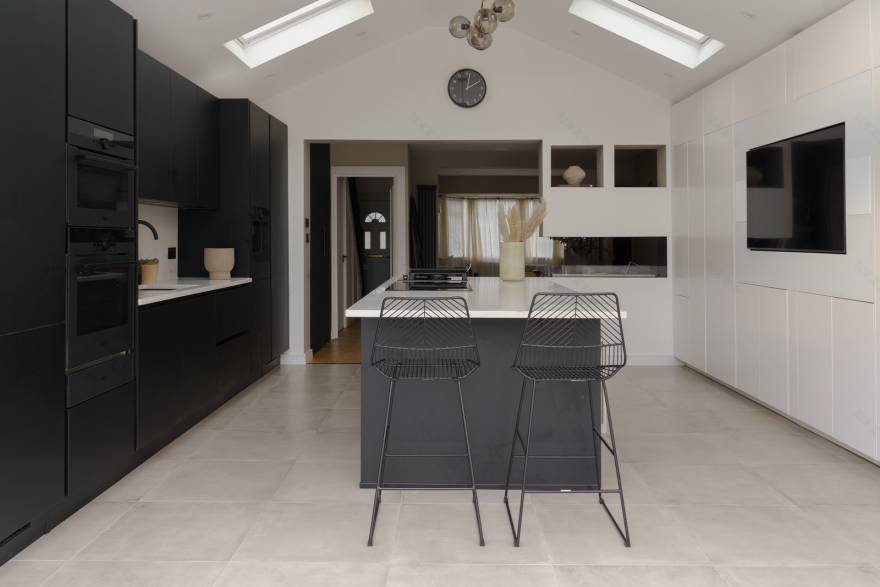
Working on her new home was Agbontaen’s first project that she fully managed herself. She had underfloor heating done in her kitchen, a process that involved multiple contractor quotes to get to a fair price. “Every step of the way I’d watch DIY videos,” she says. “Even if I didn’t know how to do it myself, I’d know how it was done.”
Photo: Irene Agbontaen
For those without professional experience working on home renovations, turning to trusted advocates or stand-ins can make the process a bit smoother. During the pandemic, Irene Agbontaen began to notice how project rates on her London home would triple once the contractors spoke with her in person. (She had done comparative DIY research on YouTube.) A specific incident comes to mind; when she called out a contractor for charging a higher rate for the underfloor heating that she wanted done in her kitchen, the contractor said he needed to go to the car quickly—and simply drove off. “I always felt like everything that I said was questioned,” Agbontaen says. “It was almost a fight with the contractors to say what I wanted and to get things done.” Eventually, she started bringing friends that were men in on conversations with the builders to act as her partner, creating “the illusion that there’s someone else in charge.” The only time this didn’t happen? When, in her exhaustive research, Agbontaen found a woman contractor who ended up “going above and beyond” while microcementing her bathrooms.
Similarly, Archer-Coité experienced ludicrous quotes, like $14,000 for an 11-foot wooden gate that she wanted at the end of her driveway. Between her aforementioned fear of “being found out” and the astronomical renovation and repair quotes, Archer-Coité admits that she’s been “unmotivated to renovate” because she doesn’t feel “empowered to give feedback like ‘This is wrong,’ or, ‘Can you do better?’” Over time, she got closer with her next door neighbors: the wife who knew everyone in town became a walking partner and the husband helped identify a vetted “network of men” that did home renovations. With him as a source of accountability, Archer-Coité was better able to trust the process of setting up maintenance jobs.
“It feels almost like in the ’50s when women couldn’t open bank accounts without men,” Archer-Coité says about being in this situation as a single Black woman homeowner. “I can’t hire a contractor without a white go-between.” That said, she’s proud to own this particular property. “It was built by a notorious colonizer who owned slaves, so I’m grateful to bust up the narrative,” Archer-Coité adds.
When it comes to overcoming barriers to entry and pursuing long-term investments in Black communities through homeownership, Kai Avent-deLeon is attempting to lead the charge in what she dubs “the Bed-Stuy of upstate” in Sullivan County, New York. Amidst the area’s “stunning prewar limestone brick buildings, like old banks,” she purchased a 2.5-acre lot featuring a 1960s mobile home, bringing along her grassroots contractor who she previously worked with on her Brooklyn brownstone. Unlike builders who skip steps for profit, her contractor had a more intentional approach, even staying upstate full-time for the six-month renovation project. Working with both a BIPOC broker and contractor was the key to making Avent-deLeon’s upstate endeavor feel safe, and she hopes that more BIPOC homeowners have similar home renovating experiences. “We cultivated a good relationship, which I learned is really important in this process: someone advocating for you.”
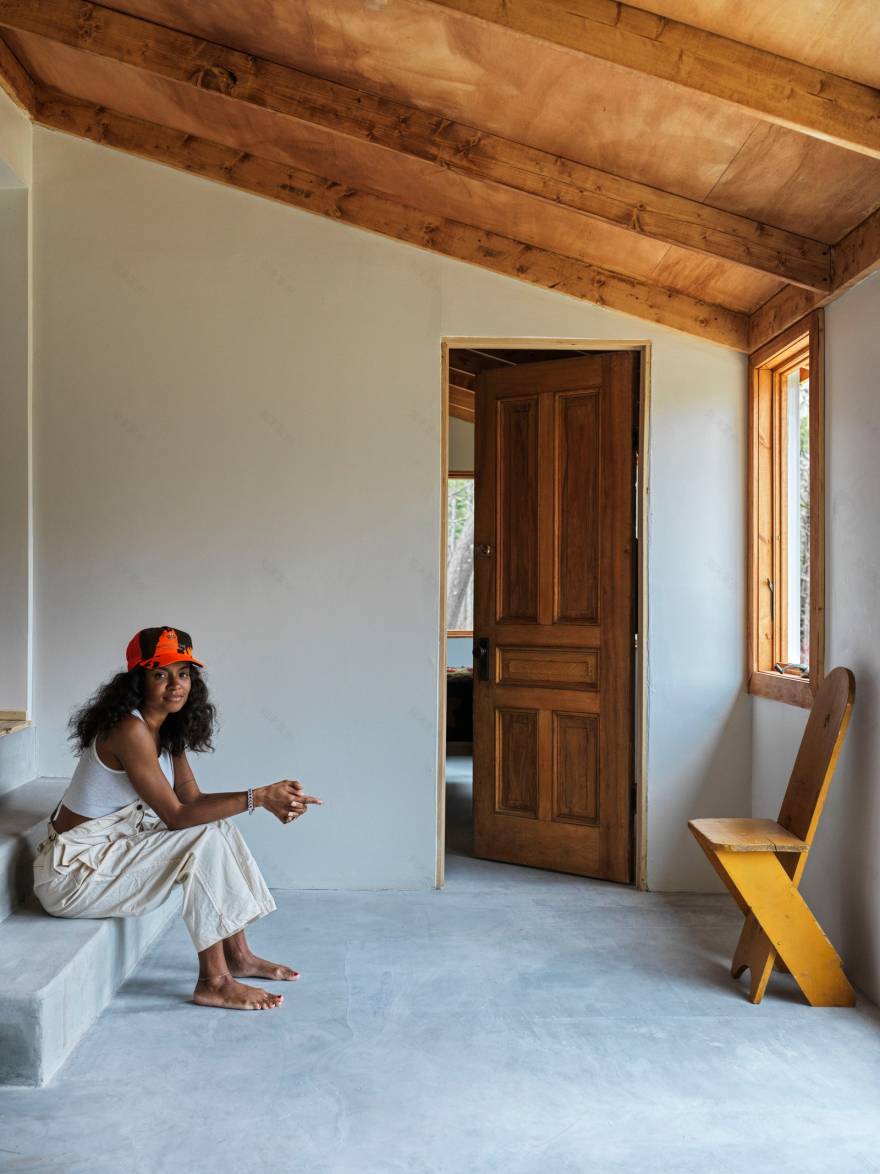
Kai Avent-deLeon, one of the founders of Building Black Bedstuy, thinks homeownership is part of the path toward Black liberation.
Photo: Chris Mottalini

 467
4672021/01/12 13:42:00
1282016/10/19 00:00:00
802018/03/29 19:57:14
192017/01/04 03:03:00
1712016/10/18 02:01:54
832017/02/22 20:47:13
1232020/09/15 16:53:57
22020/04/27 14:12:33
42020/03/01 20:12:16
1302021/03/05 17:19:06
172018/06/28 13:06:23
13052022/02/10 10:11:00
南京喵熊网络科技有限公司 苏ICP备18050492号-4知末 © 2018—2020 . All photos and trademark graphics are copyrighted by their owners.增值电信业务经营许可证(ICP)苏B2-20201444 苏公网安备 32011302321234号
苏公网安备 32011302321234号客服
消息
收藏
下载
最近