

创作上传
VIP
收藏下载
登录 | 注册有礼
查看完整案例



收藏

下载

分享


Taliesyn 是班加罗尔一家成立十年之久的建筑事务所,全新的事务所工作室代表了 Taliesyn 的设计理念,彰显出他们在创造、合作、实验性材料,以及面对不断变化的后疫情时代的敏感性。新工作室空间安静地反映了工作室的意识形态和工作精神。设计语言以极简主义为主,旨在唤起建筑师们的灵感,促进人们的创作激情与合作精神,同时迎合工作室非传统的工作方式。工作室位于班加罗尔南部,设计通过乡土概念和亲生物的建筑外壳引发了人们对于对现有植被和环境的关注。
The new Studio space for Taliesyn, a decade-old architectural practice in Bengaluru, is representative of their design ideology that harbours creation and collaboration, experimental material palette and sensitivity towards the changing post-pandemic world. The new studio space for Taliesyn is a quiet reflection of the studio’s ideologies and work ethos. The design language is choreographed in a minimalist manner to evoke a culture of inspiration, creation and collaboration while fostering the unconventional studio workings. Located in the southern side of Bengaluru, Taliesyn studio draws attention to the existing foliage and context through vernacular concepts and biophilic inclusions.
▼项目概览
overall of the project
© Niveditha Gupta

在 2400 平方英尺(222.96 平方米)的场地上,现有的场地条件定义了整体空间的叙事基础,以不同的隐私层次营造出流动的、开放的空间关系。沿南北轴线布置的两层工作室空间以及沿东西轴线布置的材料图书馆,均有一侧立面面向场地中央的庭院。场地整体规划包含了一系列开放和半开放的景观区域,为建筑创造出片刻的喘息,同时也体现出事务所从多年的学习与实践得出设计经验。
Spread across an area of 2400 sq ft, the existing site conditions dictate the overall spatial narrative based on the hierarchy of privacy and a fluid, open-built relationship. Arranged perpendicular to the central court is the two-storey studio space along the North South axis and the material library along the East West. Garnered from the practice of interactive learning and dialogue, the overall planning encompasses a blend of open and semi-open landscape areas that offer respite from the built.
▼工作室立面夜景,exterior night view of the studio© Niveditha Gupta

建造 The Built
新工作室的设计模糊了建筑和开放的景观之间的界限,拥抱了工作室的亲生物哲学。设计大胆地将建筑的主体结构暴露了出来,并以一系列半圆形拱门和内置的金属结构定义了工作室体量的外观。从面向中央庭院的立面向内看,首先看到的是一处双层通高空间,再往里则是两个工作区楼层。立面由上半部分的赤陶土块和下半部分的混凝土拱门组成,而暴露的金属结构则均匀地加强了两者的并列性。同时,这些材料的组合也增强了建筑在视觉上的丰富度,以及立面的通透性,为室内引入交叉通风,营造出舒适凉爽的室内体感环境。
Blurring the boundaries between the built and open embraces the biophilic philosophy of the studio. Anchored by a bold exposed framework that forms the structural skeleton, the main studio space encompasses a series of semi-circular arches and built-in metal sections. The double-storey studio space viewed on the exterior by a single tall facade, is broken by volumes on the inside. This single-storey facade is bifurcated horizontally by terracotta blocks on the upper half, and cement arched panels on the lower. While the metal sections homogeneously reinforce the beautiful juxtaposing materiality of the two. Concurrently, the combination of these materials offers visual interest and porosity to break from the heat and allow cross-ventilation.
▼工作室入口,entrance of the studio© Niveditha Gupta

▼立面上连续的拱门,arches on the facade© Niveditha Gupta

▼由室内看外墙,viewing the exterior wall from interior© Niveditha Gupta

▼墙体材质与结构细部,details of the material and structure© Niveditha Gupta

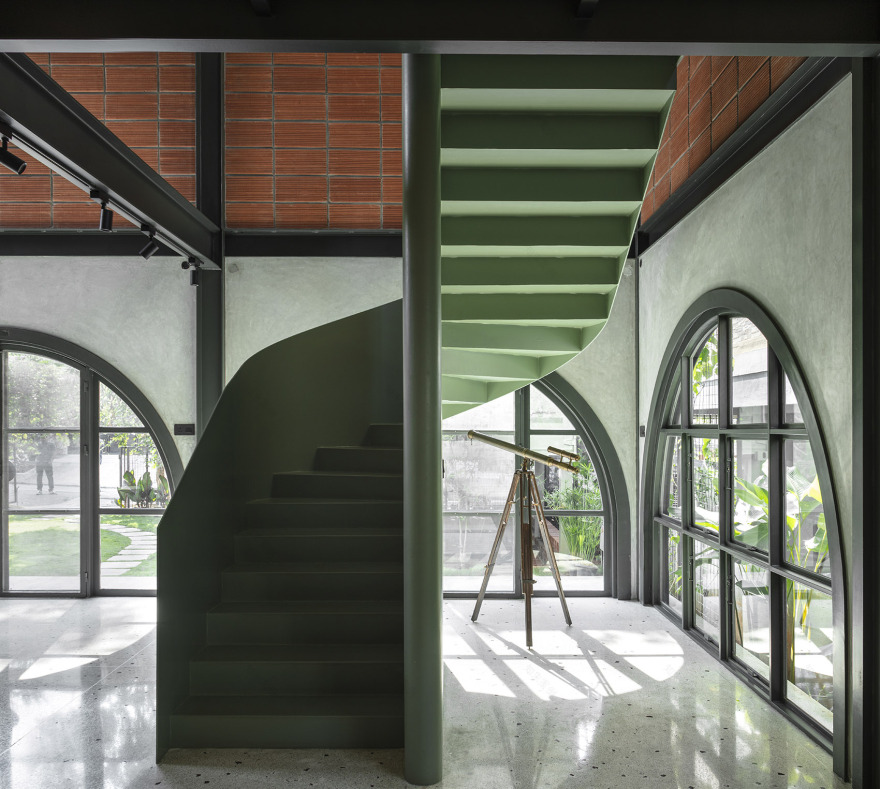
室内空间体量相互交错,与材料并置的外立面形成鲜明的对比,同时增强了整个工作室内部的视觉联系,推动了协作学习的极限。踏入工作室大门,整个宽敞明亮的工作空间便一览无余,底层空间中包含了一系列专用的工位以及卫生间,上部夹层则提供了团队的讨论空间。一部被漆涂成鼠尾草绿色的半圆形金属楼梯成为了整个工作室的视觉焦点,其设计理念旨在反映周围景观的色彩。
▼分析图,analysis diagram© Taliesyn

Displaying a stark contrast from the external experience, internal volumes are staggered to augment visual connections across the studio, pushing the envelope of collaborative learning. The vast expanse of the studio space can be perceived from a single point of entry with dedicated workstations, a powder room on the ground floor, and a mezzanine discussion area on the first. Taking centre stage in the interiors is a sage green circular metal staircase that is envisioned to reflect the colours of the surrounding landscape.
▼靠近花园立面的双层通高空间,the double-height space along the facade that facing the garden© Niveditha Gupta

▼旋转楼梯,spiral staircase© Niveditha Gupta

▼鼠尾草绿色的半圆形金属楼梯形成视觉焦点,the semi-circular metal staircase in sage green forms the focal point© Niveditha Gupta
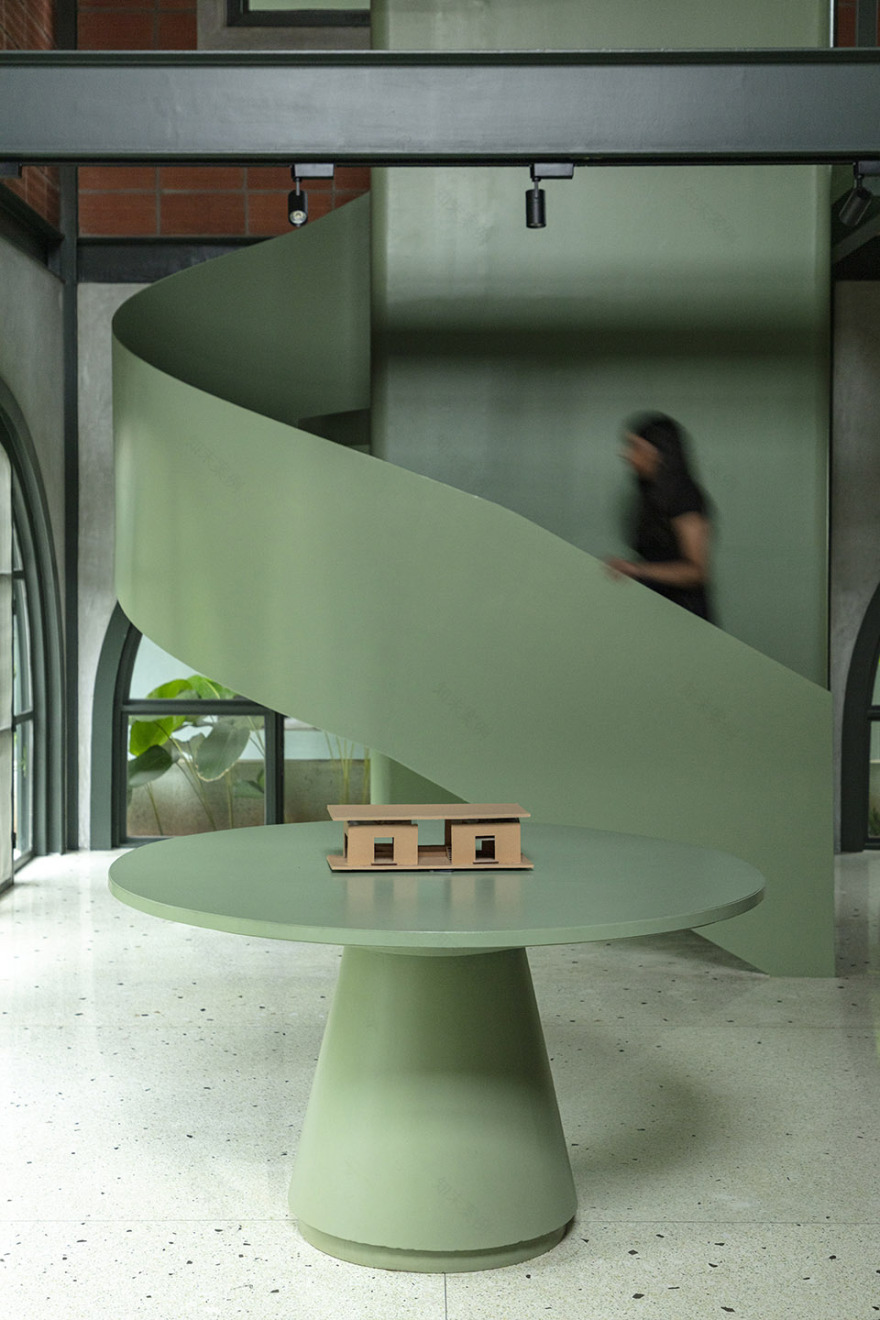

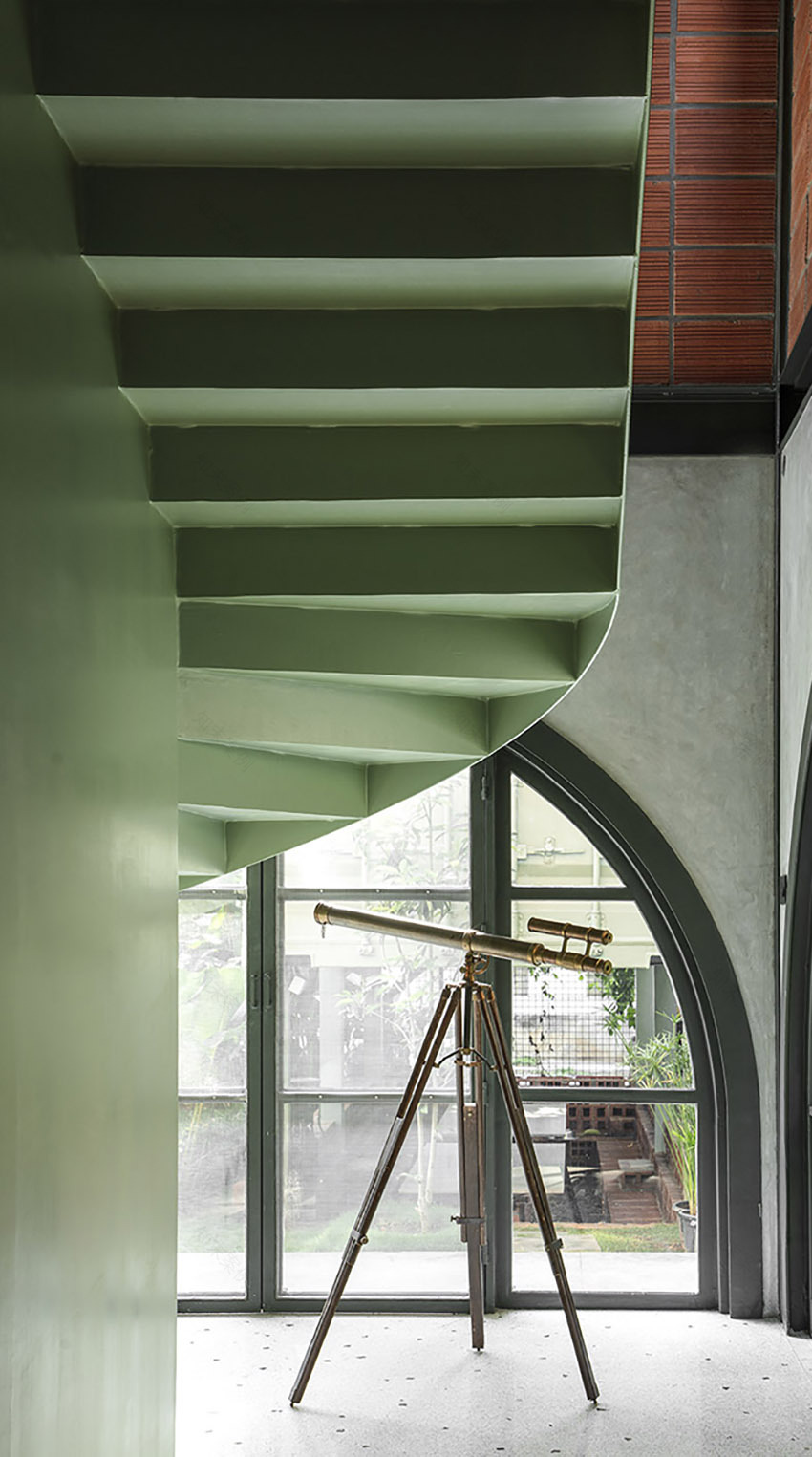
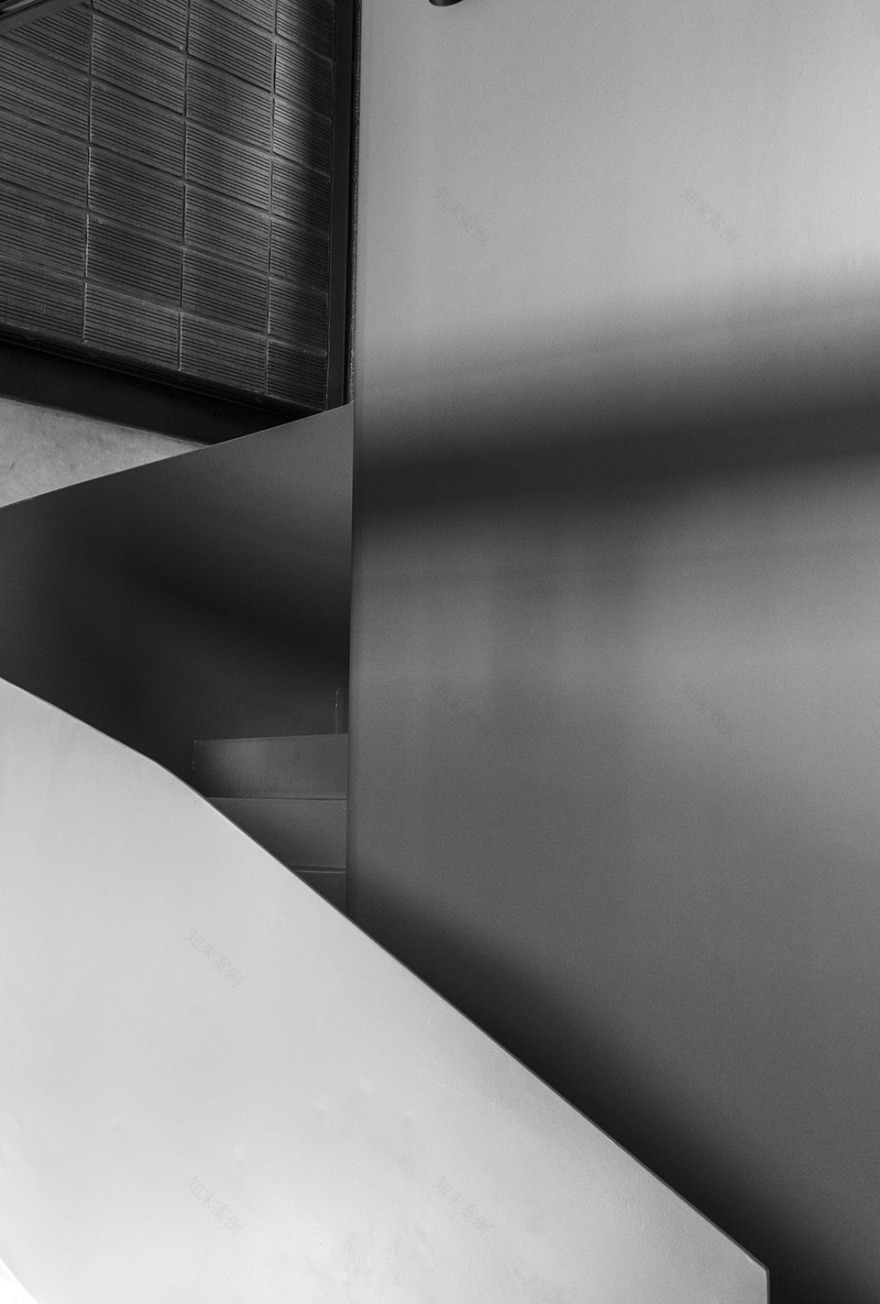
▼楼梯细部,details of the staircase© Niveditha Gupta
▼俯视桌面,top view of the round table© Niveditha Gupta

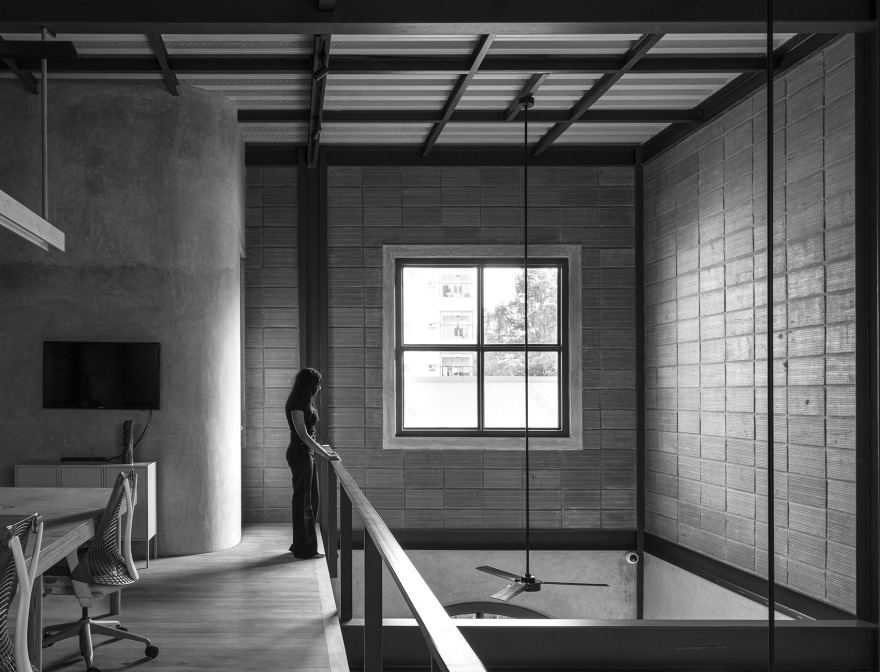
整栋建筑以金属框架为主体结构,上层是事务所创始人的私人办公空间,兼作会议和讨论空间使用。然而,它与工作室的其他部分并没有明显的界限,而是与楼梯和整个工作室空间融为一体,俯瞰一楼的活动区域与两种材料构成的坚实立面。楼梯的扶手延伸出来,自然形成夹层的栏杆。外立面墙体的上半部分由赤陶土砌块建造,封闭的立面为夹层空间创造出所需的隐私,而两侧立面的方窗则将自然光线与新鲜的空气引入室内。两层的洗手间都隐藏在最右侧,并采用了与立面相同的材质,作为一个统一的空间进行处理。
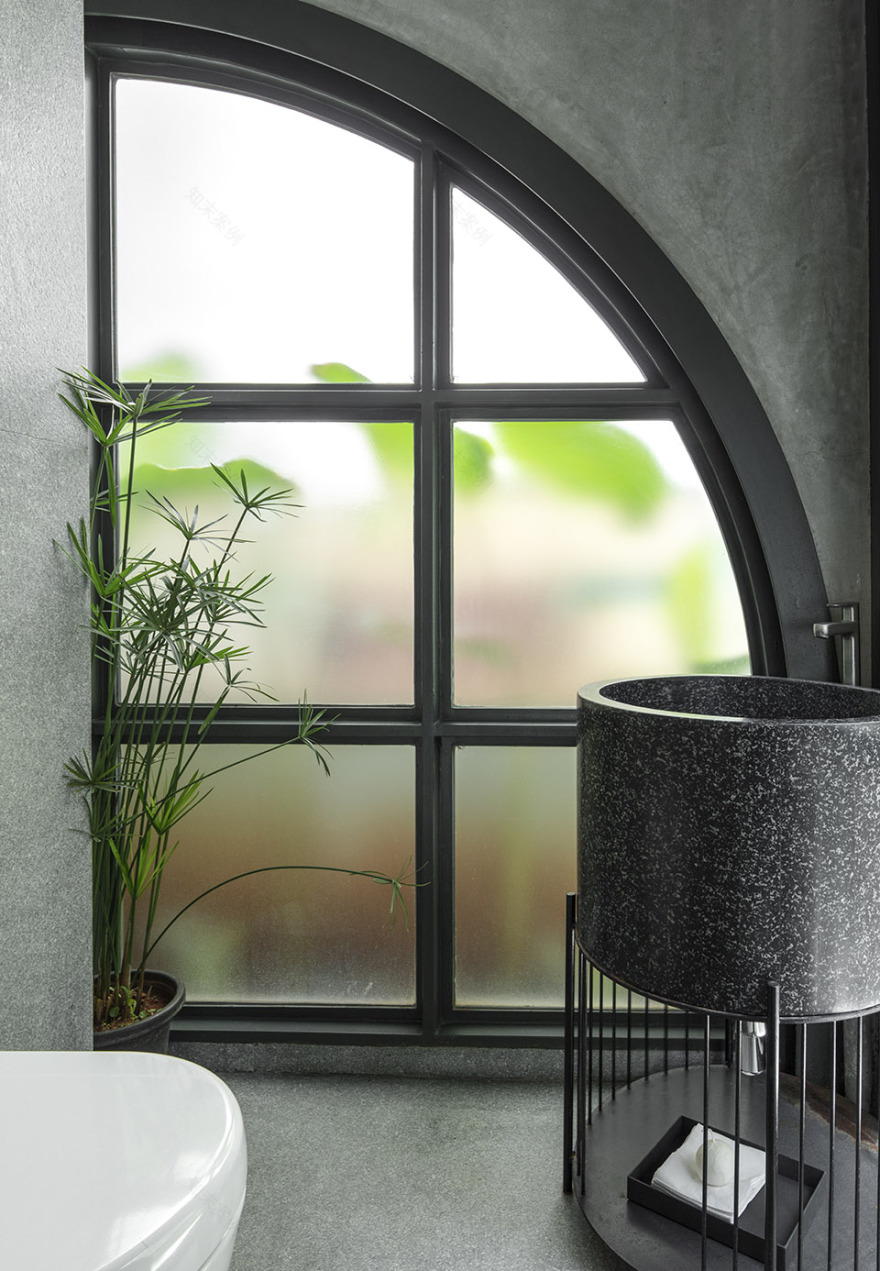
Built on metal frames, the upper floor is a private sanctuary for the founders and doubles up as a conference and meeting space. However, there is no envelope segregating it from the rest of the studio. Instead, the staircase railing extends further to form a parapet on the mezzanine, overlooking the ground floor activities and the solid bilateral facade. The wall at that level, built with terracotta blocks, is percolated with rectilinear windows that breathe in daylight and fresh air, while its elevated level grants it the required privacy. The washrooms at both levels are camouflaged on the extreme right end, and are treated as a tall mass with the same finishes as the wall.
▼二层空间概览,overall of the mezzanine© Niveditha Gupta

▼封闭的砖墙保护了二层的隐私,enclosed brick walls provide privacy on the mezzanine© Niveditha Gupta


设计旨在最大限度地利用自然资源,例如地面上诱人的水磨石地板就是用回收的碎石在现场制作的,与此同时,所有的家具都呼应了极简主义的设计感,采用了桦木台面与金属支撑,所有的办公桌、椅子和桌子也都是在现场制作的。建筑的顶部采用了简单的三层平屋顶,屋顶之上设置了大面积的太阳能电池板,其产生的能源可以满足工作室的所有电力需求。除了利用太阳能外,雨水收集系统被纳入到项目之中,在减少碳足迹的同时,坚定了事务所秉承的可持续未来的信念。
Maximising natural resources, the alluring terrazzo floors on the ground level are cast on-site using recycled broken chips. At the same time, all the furniture echoes a minimalistic design sensibility, with all the work desks, chairs, and tables crafted on-site with birch ply perched on metal legs. A simple flat roof on top is built in three layers which house a widespread system of solar panels that meets all the electricity needs of the studio, a small step towards reducing their carbon footprint. A rainwater harvesting system is incorporated to reinforce their beliefs for a sustainable future.
▼工作区,workstations© Niveditha Gupta

▼工作区细部,details of the working area© Niveditha Gupta


▼一二层卫生间,toilets on the ground and upper floor© Niveditha Gupta

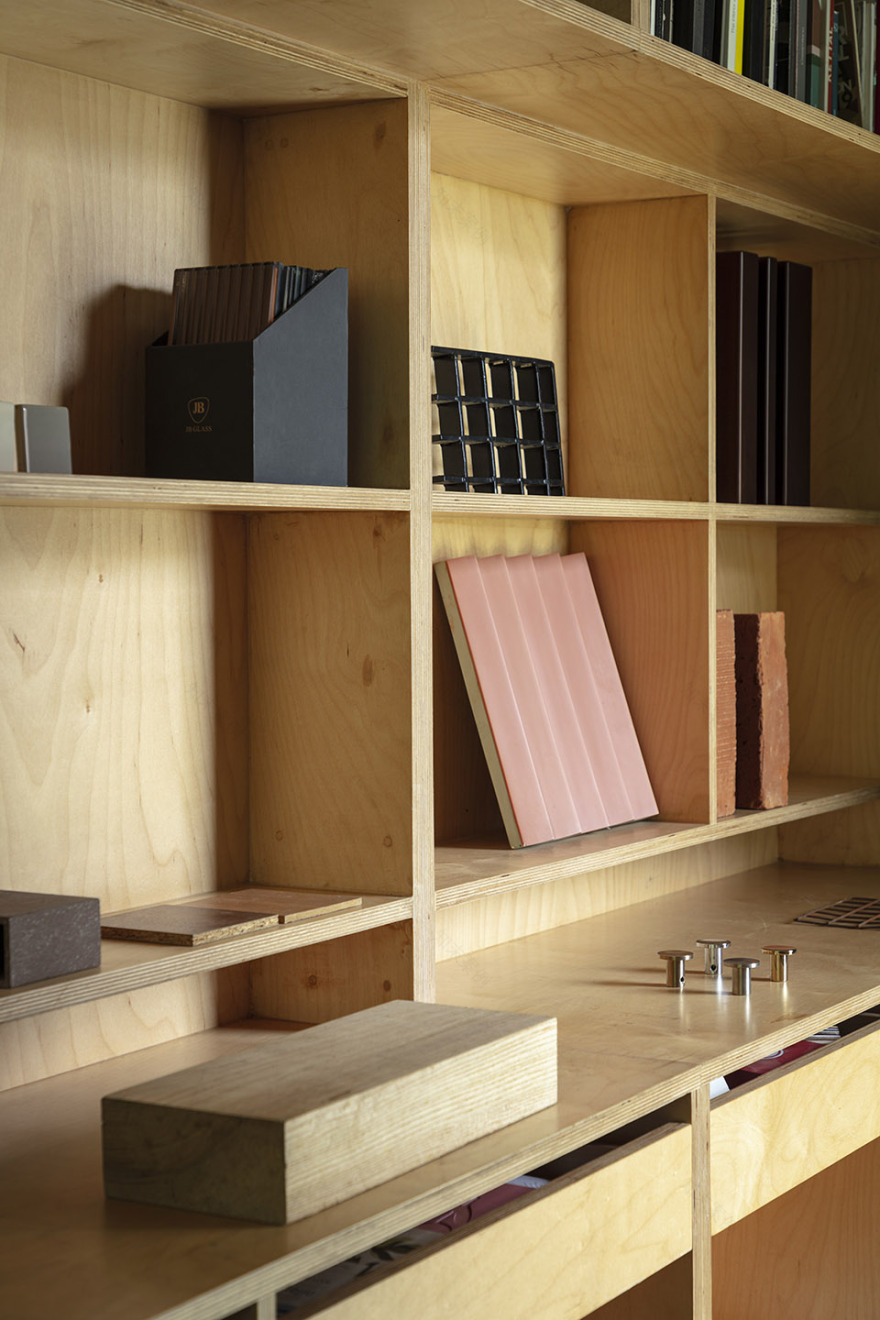
材料图书馆由集装箱改造而成,旨在引导设计师们进一步探索、反思和研究他们项目的材料性。
The material library, originally a shipping container, is retrofitted into the new workspace to build a space that engages the designers to explore, introspect and research the materiality of their projects.
▼分析图,analysis diagram© Taliesyn

▼集装箱改造的材料图书馆、厨房与餐厅,the container is transformed into a material library, kitchen and dining room© Niveditha Gupta

▼餐厅,dining area© Niveditha Gupta

▼材料图书馆,material library© Niveditha Gupta

景观核心 Landscape nucleus
现有的场地条件为设计师们创造出围绕本土植物深化景观概念的机会,印度山毛榉树(原产于 HongeMara)构成了南部和西部两侧建筑的视觉焦点。整个场地在空间上被划分为开放和半开放的景观空间、材料研究和实验空间以及工作室空间。场地中央的庭院构成了进入工作室的第一个入口空间,这是一个风景优美的花园庭院,一条由石瓦制成的小路从花园延伸到建筑之中。建筑与景观的特性在这里相互交织,展示出材料未经处理的原始之美,并最大限度地发挥了它们的自然物理特性,也隐喻了 Taliesyn 事务所自身的设计理念。
The prevailing site conditions offered opportunities to conceptualise around the exciting foliage, where an existing Indian Beech tree (native Honge Mara) takes the focal point flanked by the built on the South and West sides.
The overall site is spatially zoned into spaces for social interaction in the open and semi-open landscape spaces, material research and experimentation, and the studio space.
Forming the first entry is the central court, a beautifully landscaped garden laden with a pathway made from stone tiles that gradually bleeds into the built.
Spaces that are holistically weaved create an ambience that embraces the materials’ honest untreated characteristics and maximises their natural physical properties; a Taliesynian form of self-expression.
▼花园庭院,garden© Niveditha Gupta

开放庭院中设有一系列不同地坪高度的景观空间,例如材料图书馆下方半开放区域中的下沉式座位和用餐区。座位由空心陶土块和从现场回收的材料制成,这种材料不仅为空间增添了丰富的肌理与图案,同时也带来了温暖的触感,降低了人们对于空间的抵触。建筑向景观前院开放,以亲切的姿态邀请着人们来到这里合作、聚会、参与一系列非正式活动和社交活动。朴素简洁的饰面彰显了材料的内在美学,揭示出 Taliesyn 事务所在可持续设计上的理念与探索精神。
An array of levels have been 构思 in the open court, with a semi-open area stilted below the material library is a recessed seating and dining area. Made from hollow terracotta blocks and recycled materials from the site, creating patterns and textures to alleviate spatial curiosity. The premises open to a landscaped front yard, acting as an inviting space for collaboration, gathering, informal events and social activities. The lack of any ornate material finishes exhibit the inherent aesthetics of the materials; a sustainable approach manifested in Taliesyn’s ideologies and ethos.
▼集装箱立面,facade of the container© Niveditha Gupta


场地的设计体现了工作室的价值观与设计哲学,采用了富有敏感性的设计方法,并在施工过程中采用了可持续的材料,同时巧妙控制了空间之间的流动性。项目整体设计唤起了一种怀旧之感,实现了新旧工作室之间的传承,并将这个简单的工作空间化作事务所合作精神的实践。如今,Taliesyn 事务所依旧在以诚实和崇高的方式在人、空间和物体之间创造着引人入胜的对话。
The site embodies the pedigree of the design studio that takes a sensitive design approach, embracing materials in the construction process, while enabling a controlled fluidity across spaces. Building on a sense of nostalgia to connect the old studio and new, this simplistic workspace inculcates the collaborative effort interwoven in the studio’s identity as a practice. The studio for Taliesyn continues to create an engaging dialogue between people, spaces, and objects in an honest and sublime way.
▼集装箱下部的灰空间,leisure space under the container© Niveditha Gupta

▼底层平面图,first floor plan© Taliesyn

▼二层平面图,second floor plan© Taliesyn

▼工作室剖面图,sections of the studio© Taliesyn


▼材料图书馆剖面图,section of the material library© Taliesyn




南京喵熊网络科技有限公司 苏ICP备18050492号-4知末 © 2018—2020 . All photos and trademark graphics are copyrighted by their owners.增值电信业务经营许可证(ICP)苏B2-20201444 苏公网安备 32011302321234号
苏公网安备 32011302321234号客服
消息
收藏
下载
最近