

创作上传
VIP
收藏下载
登录 | 注册有礼
查看完整案例



收藏

下载

分享


Text description provided by the architects.Studio Gang, the international architecture and urban design firm led by Jeanne Gang, announced the completion of the David Rubenstein Treehouse at Harvard University. Establishing Harvard's first university-wide hub for convening,the building anchors the new Enterprise Research Campus (ERC) in Allston, which is dedicated to fostering innovation and collaboration.The Rubenstein Treehouse is also the first mass timber building on Harvard's campus, setting a model for holistically sustainable buildingsinBostonand institutions worldwide.
"As a Harvard alumna and faculty member, it's so rewarding to have the opportunity to help define a new chapter for Harvard's campus, "said Jeanne Gang, Founding Partner of Studio Gang and Kajima Professor in Practice of Architecture at the Harvard Graduate School of Design. "The Rubenstein Treehouse is a building that opens itself up, welcomes all people, and serves as a visual and programmatic anchor to the ERC. Its exposed mass timber structure demonstrates Harvard's commitment to a more sustainable future."

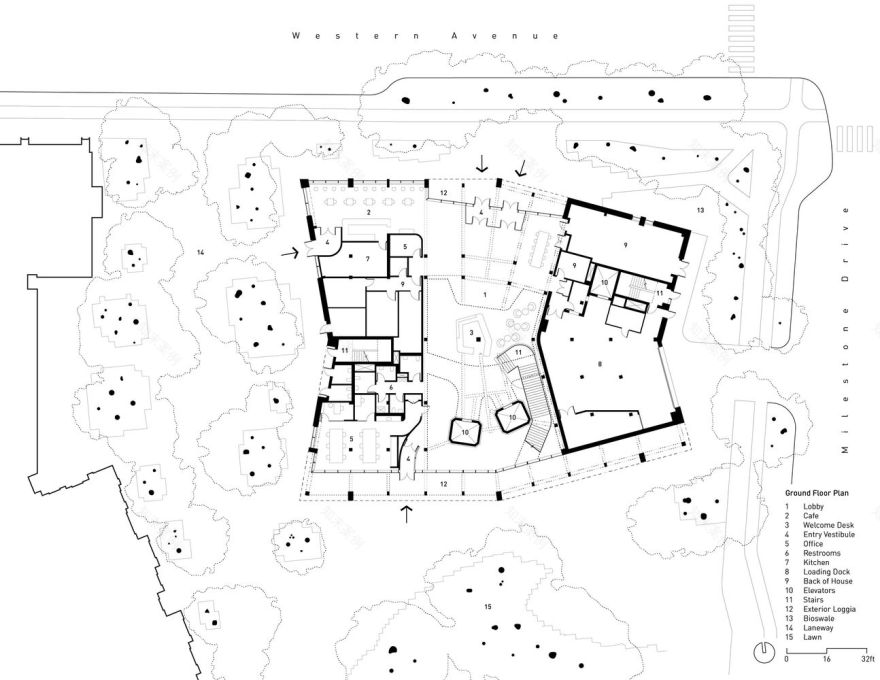
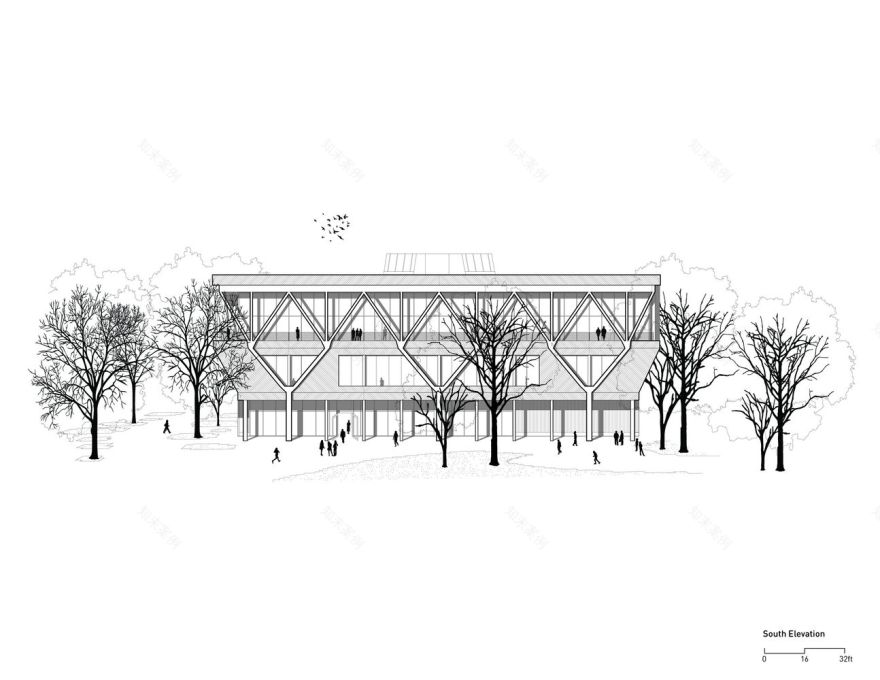
Evoking the wonder and excitement of climbing up into a treehouse, a central stair, lit by skylights from above,immerses guests in the natural warmth of the building's mass timber structure. Upper floors support meetings and events through a series of spaces that vary in size and can accommodate different uses. The building's main space, the Canopy Hall, features an adjoining open-air terrace and expansive views of the city framed by the structure's timber columns. Additional spaces that encourage informal convening and interaction are designed into every floor.


The designintegrates numerous sustainability strategiesthat optimize the performance of the Rubenstein Treehouse. The building's structure significantlylowers its embodied carbon, which is 55% less than that of a similar buildingusing conventional materials, through the use of healthier, low-carbon materials. These include responsibly sourced wood and concrete made from ground glass pozzolan, a cement replacement derived from post-consumer glass containers. Further, the design supports zero fossil fuel combustion on-site and a significant reduction in energy use throughnatural daylighting and self-shading, rooftop solar panels, a raised floor that conditions the interior while concealing major building systems, and a connection to Harvard's District Energy Facility, which provides the building with heating, cooling, and electricity.





南京喵熊网络科技有限公司 苏ICP备18050492号-4知末 © 2018—2020 . All photos and trademark graphics are copyrighted by their owners.增值电信业务经营许可证(ICP)苏B2-20201444 苏公网安备 32011302321234号
苏公网安备 32011302321234号客服
消息
收藏
下载
最近