

创作上传
VIP
收藏下载
登录 | 注册有礼
查看完整案例



收藏

下载

分享
荒川之家是对一座20世纪70年代的两层木结构建筑的改造,该建筑位于东京大都市东北端的荒川地区。建筑底层曾是一家电子产品商店,从布置来看,商店的楼上可能是店家的居住区。在新主人联系Roovice事务所为建筑进行改造之前,该建筑已经空置了7年多。
▼外观概览,exterior view © Akira Nakamura

▼建筑外观,exterior view © Akira Nakamura


考虑到原建筑的尺度与其原有的分散式布局,新主人准备将其改造为可出租的住宅或多功能空间,并决定参与Roovice事务所的Kariage改造翻新计划。
Kariage计划发起于2015年,旨在应对日本日益严重的秋屋问题(空き家),因为日本目前有超过1000万套空置房产。在该计划中Roovice将以零成本对业主的房产进行翻新,然后负责转租这些老旧的空置房屋。
Given the property’s big dimensions and fragmented inconvenient floor plan, the owner struggled to find tenants and decided to renovate within our Kariage project. At zero cost for the owner Roovice renovates and then takes care of subleasing old vacant houses.
Kariage started in 2015 as a reaction to Japan’s worsening akiya (空き家) problem, as there is more than 10 million empty properties in Japan.
▼改造前,before renovation © Akira Nakamura


在过去的几年里,本项目建筑经历了许多次不同的改造与翻新,这导致了其非典型的布局以及外部楼梯的缺失。
Roovice事务所从头开始重新思考该建筑中的区域划分和使用方式,并决定设计两个独立的垂直单元,每个单元都以底层的商店或工作室空间以及上层的住宅为特色。
The house had obviously been through many different modifications during the past years, which resulted in an atypical layout and a missing external staircase. We started by rethinking from scratch the way the areas were divided and used and decided to design two independent vertical units – both featuring a shop or atelier space on the ground level and a residence on the upper one.
▼夜景,night view © Akira Nakamura

▼外观夜景,night views of exterior © Akira Nakamura

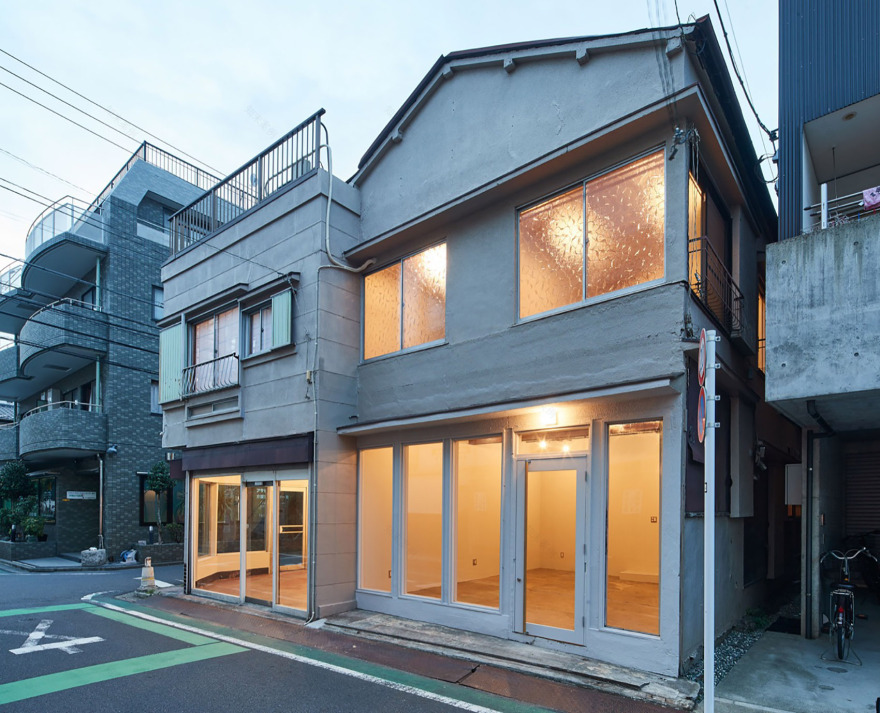
一单元 Unit 1
面对建筑来看,一单元坐落于建筑的左侧。建筑师保留了底层商店的正立面以及前部较低的地板部分。高度不同的地面将平面分隔为两个区域,并标志出上部楼层的楼梯入口。建筑师则选择将墙体拆除,将楼梯与公用设施区域暴露出来,营造出开放的空间氛围。商店橱窗下安装了全新定制的lauan胶合板货架单元,该货架也可以作为长凳使用。此外,建筑师还将原有的吊顶拆除,将横梁结构暴露出来,并漆涂为白色以照亮空间,并安装了照明轨道。上层区域采用了柚木拼花地板,厨房一侧则使用PVC地板,并增设了一堵隔墙,在视觉上将厨房分开。
▼一单元入口,entrance of the Unit 1 © Akira Nakamura

Unit 1 is located on the left side, when facing the building. The shop facade and the lower level flooring in the front were left untouched. The higher level floor in the central part of the room marks the position of the wall that used to separate the two areas. We removed it and exposed the staircase and the utility area.
A new custom-made lauan plywood shelving unit was installed under the central shop window. It can be used also as a bench. The ceilings boards were taken off, the exposed beams were painted white to enlighten the space and lighting rails were installed. A teak wood parquet was applied on the upper level area and a PVC sheet flooring was used for the kitchenette side.
A partition wall was added to visually separate the kitchenette.
▼一单元侧入口,side entrance of Unit 1 © Akira Nakamura

▼一单元入口玄关,entrance area © Akira Nakamura

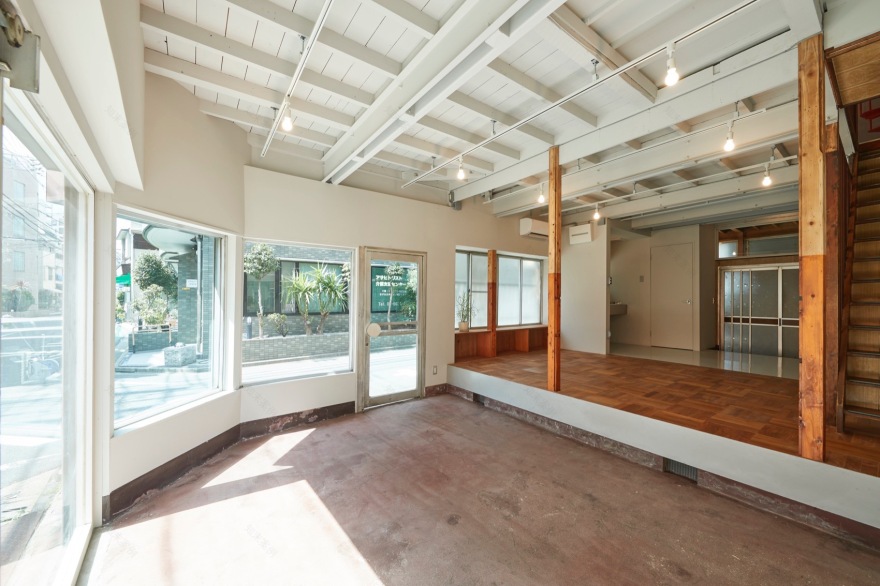
▼由玄关看室内,viewing interior from the entrance © Akira Nakamura

▼底层商业空间,ground floor store area © Akira Nakamura

▼由室内看入口,viewing entrance from interior © Akira Nakamura


▼楼梯,staircase © Akira Nakamura
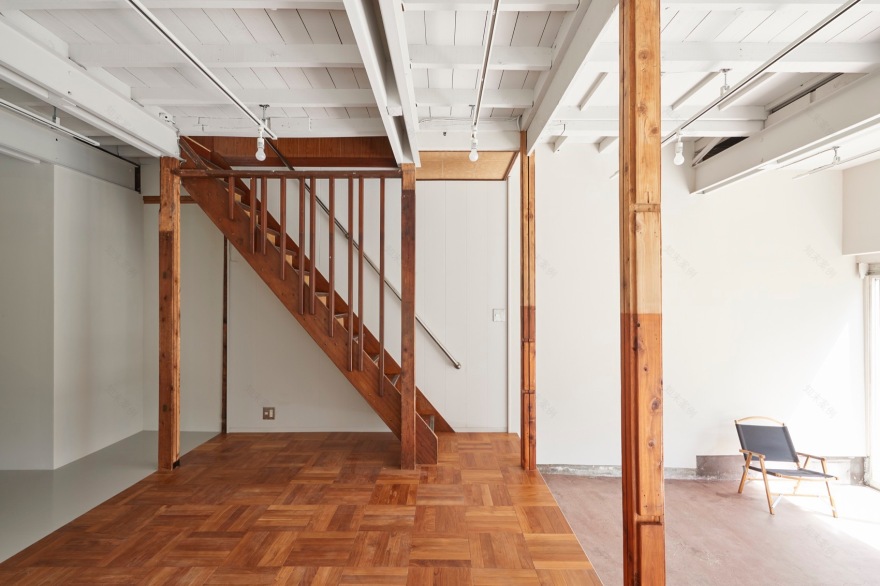
▼楼梯细部,details of the staircase © Akira Nakamura


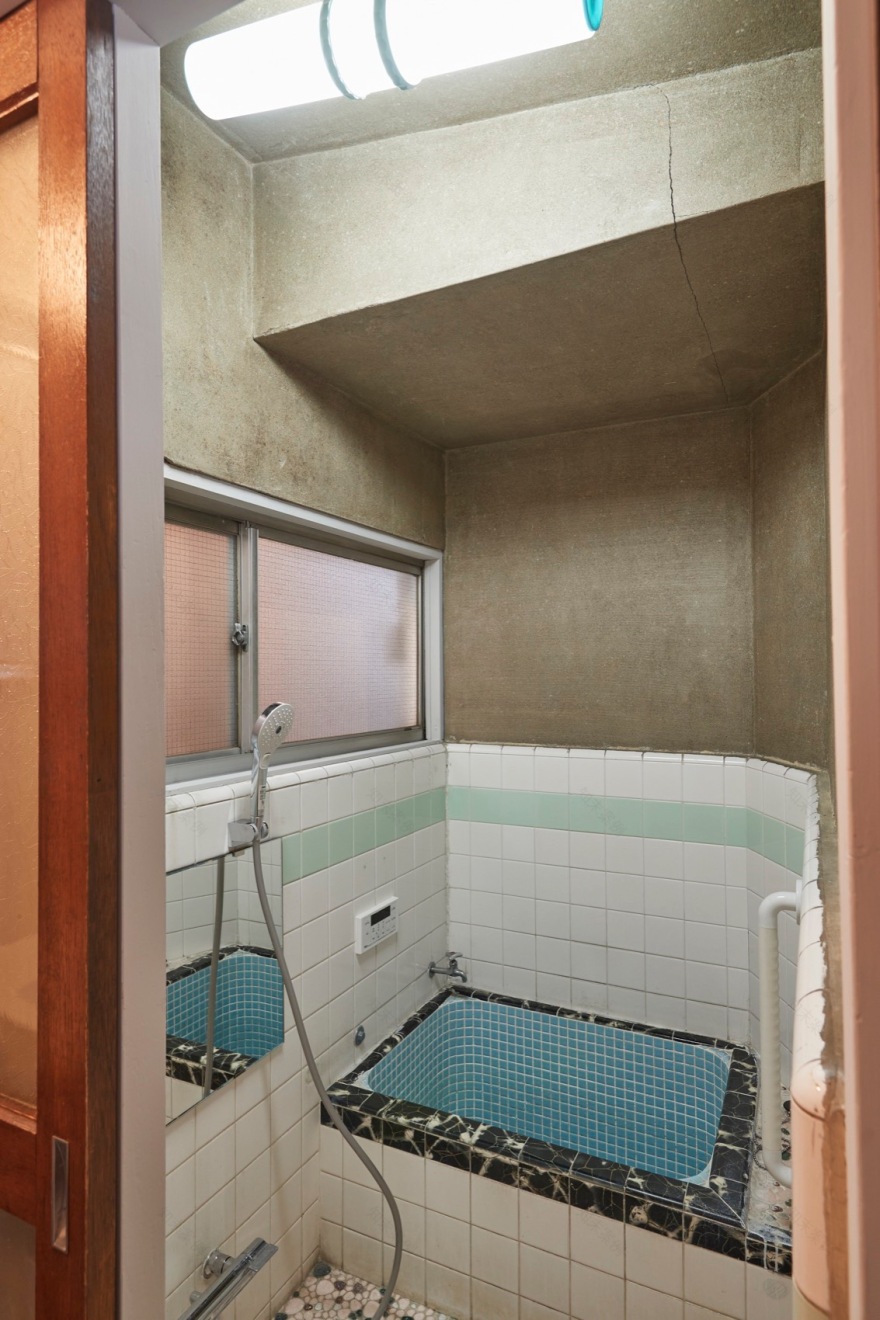
洗手间经过了翻新,但浴室和厕所的部分瓷砖则保留了下来,这些瓷砖体现了房屋建造时期的典型特征。
The washroom was renovated, but the bathroom and the toilet have been partially preserved with their tiles typical for the period in which the house was built.
▼洗手间,washroom © Akira Nakamura

▼卫生间,toilet © Akira Nakamura

▼浴室,bathroom © Akira Nakamura

在改造过程中,建筑师发现原建筑入口处的顶部设有一个大开口,是当时用来通往屋顶储物空间的。但建筑师决定封闭该空间以更好地隔热,并安装一个固定的窗户,为商店带来更多的阳光。
We found there was a large opening in the wall on the top of the back entrance, made to access the space on the back roof, which was apparently used as storage.
We decided to close it for better insulation and install a fixed window to bring more daylight to the shop.
▼入口处顶部的开口被封闭了起来,
the opening at the top of the entrance was closed © Akira Nakamura

▼二层入口,entrance of the upper floor © Akira Nakamura

上部楼层中,半透明的日式屏风门将私人空间与公共空间隔开,厨房一侧的天花板被拆除,但其余空间都被保留了下来。
The upper floor has been separated from Unit A by closing the connecting door with a white panel.
Ceiling boards were removed on the kitchen side but preserved in the rest of the spaces.
▼二层居住区,living area on the upper floor © Akira Nakamura

▼日式屏风,Japanese screen door © Akira Nakamura

传统的日式房间保留了原貌,里面设有一个小房间和一处用来祭祀祖先的祭坛。榻榻米部分保留了原状,其他房间铺设了新的lauan胶合板地板,厨房一侧则铺上了PVC地板。定制的lauan胶合板厨柜隐藏在半高的隔墙后面,对面的墙上窗户下方也设置了相同材质的定制置物架。通往屋顶的旋转楼梯采用了鲜艳的红色,成为整个空间中引人注目的焦点。
The traditional Japanese-style room with a ranma and a space usually dedicated for an altar worshiping the ancestors has been preserved as it was. The tatami have been kept there but in the rest of the rooms a new lauan plywood board flooring has been laid.
On the kitchen side, a PVC sheet flooring was applied. A custom-made lauan plywood kitchen was placed behind a half-height partition wall. Custom-made shelves from the same wood have been installed on the opposite wall, under the window.
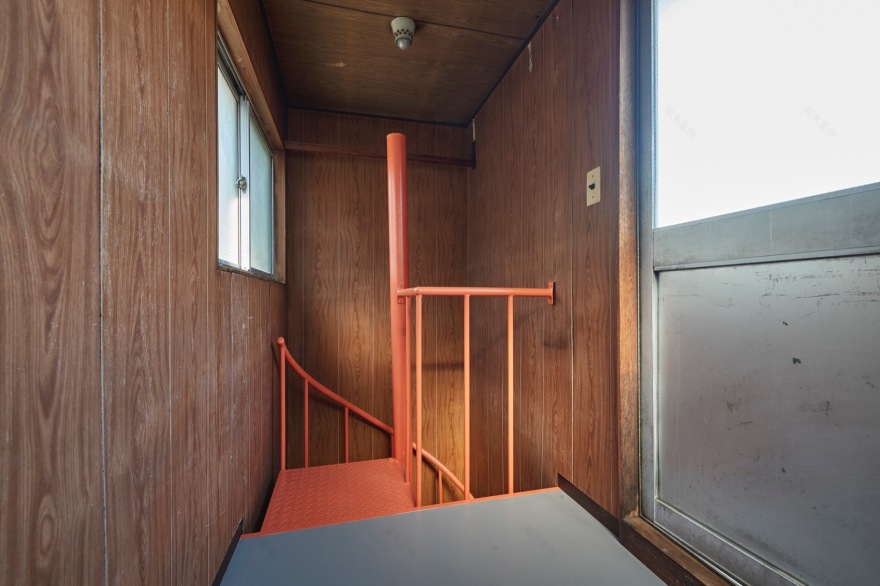
This unit had a round staircase to access the rooftop, which we decided to accentuate by painting it red.
▼红色旋转楼梯,red spiral staircase © Akira Nakamura
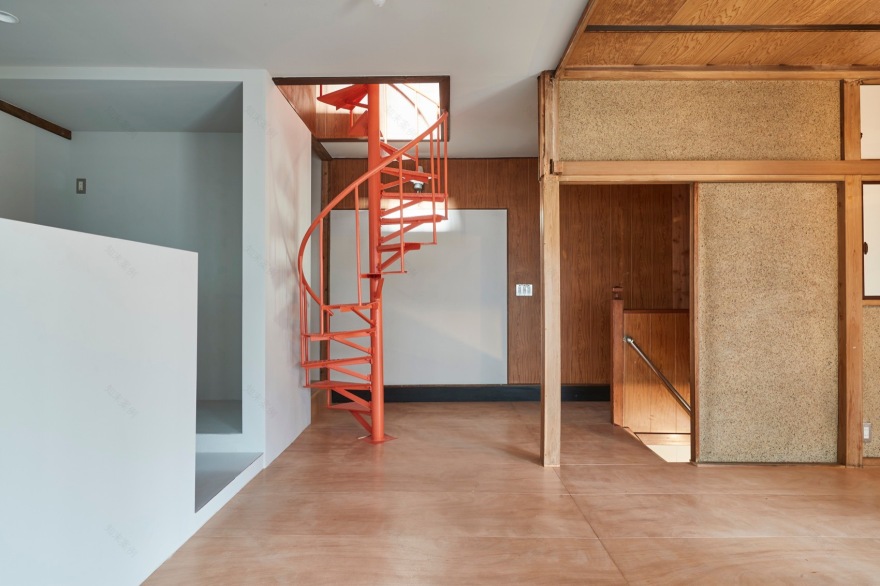
▼红色旋转楼梯,red spiral staircase © Akira Nakamura

▼扶手细部,details of the handrail © Akira Nakamura

▼楼梯通往天台,staircase leading to the rooftop © Akira Nakamura
▼厨房,kitchen © Akira Nakamura

▼走廊,hallway © Akira Nakamura
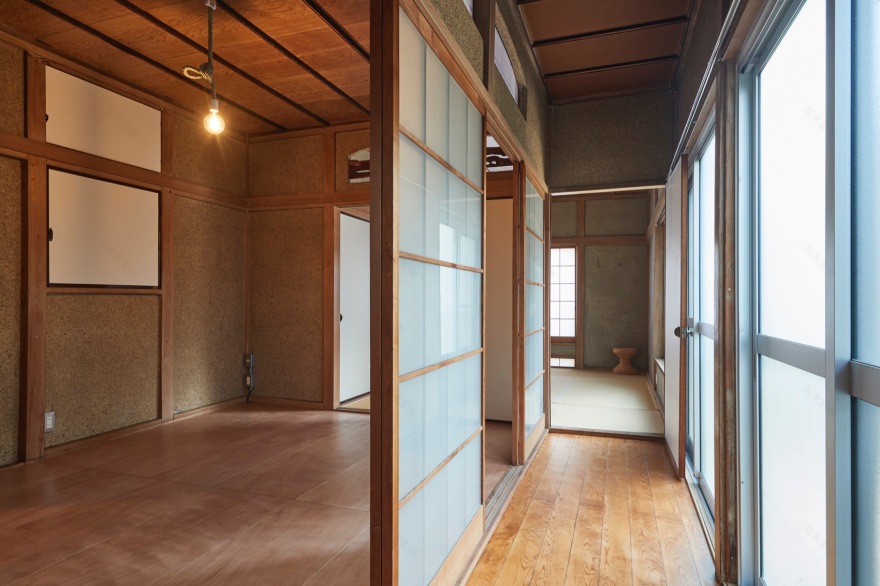
▼由日式房间看客厅,viewing the living room from the Japanese room © Akira Nakamura

▼日式房间,Japanese room
© Akira Nakamura


二单元 Unit 2
面对建筑来看,一单元坐落于建筑的右侧。底层商店区域的吊顶被拆除,墙壁和商店橱窗被漆成白色,并在裸露的天花板横梁上安装了轻轨。
▼二单元入口,entrance of Unit 2 © Akira Nakamura

Unit 2 is on the right side, when facing the building. Ceiling boards were removed in the shop area and walls and shop windows were painted white. Light rails were installed on the exposed ceiling beams.
▼二单元玄关,entrance area © Akira Nakamura

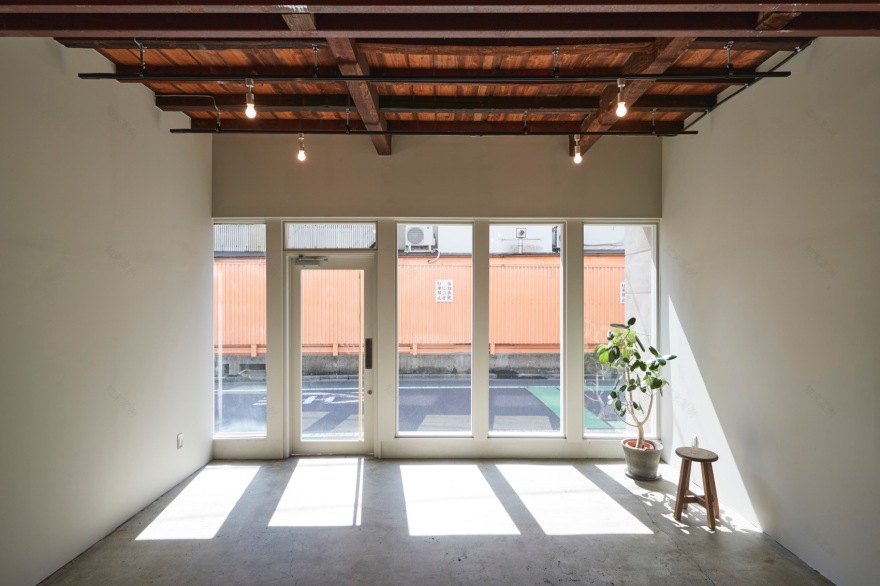
▼商业空间,store area of Unit 2 © Akira Nakamura

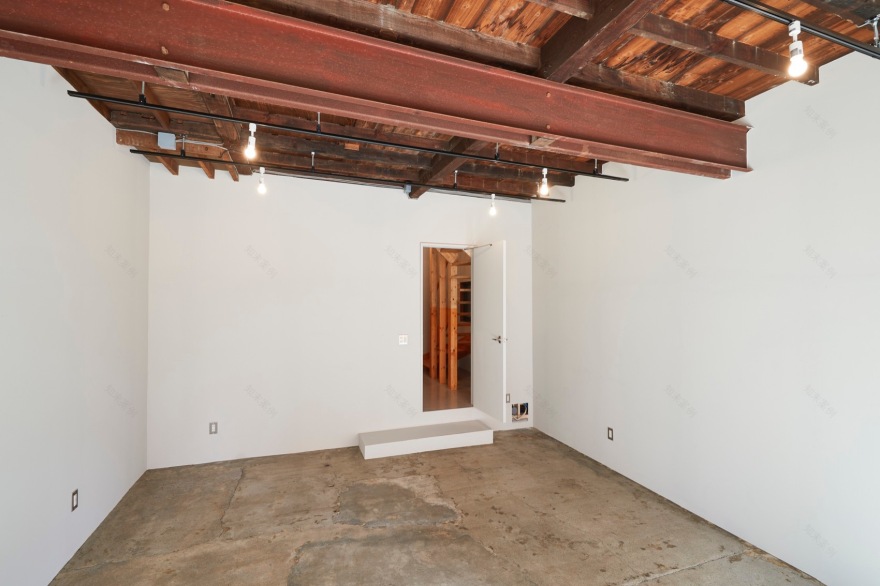
在本单元中,建筑师保留了原来的地板,并在进入后部区域的入口处增设了几步台阶,入口土间取消后,为商店释放了更多的空间。
在一单元中,其底层的商业区与住宅区没有明显的分隔,而在二单元中这两个区域则被一堵墙以及门扇严格地分离开来,这使得居民可以直接从后门进入浴室或通往楼上的楼梯。
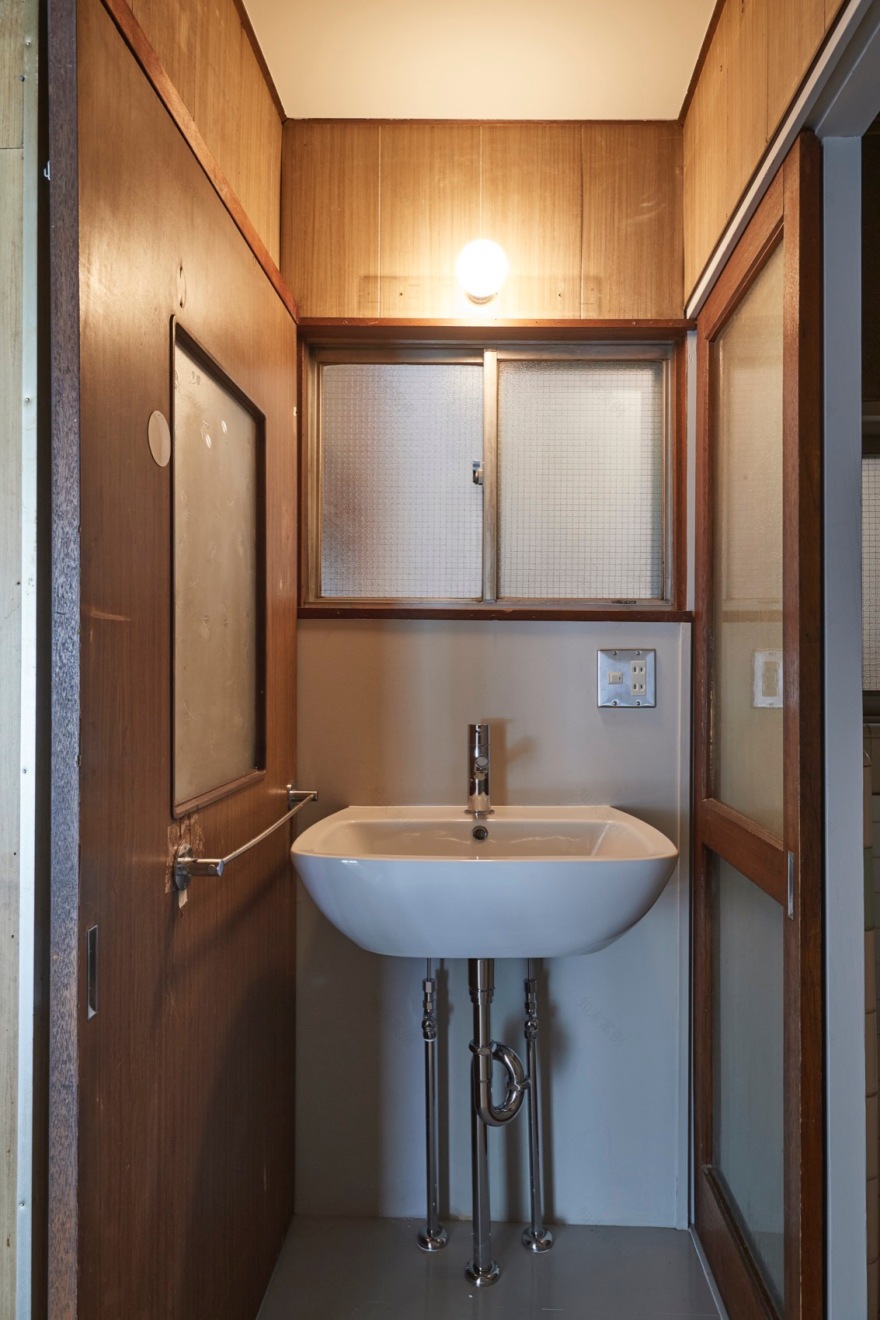
在洗手间中,镜子后面的木板是建筑师从其他房间的墙壁上回收的,以保持改造后的空间与建筑历史的联系。
We kept the original flooring and created one step at the entrance to the back area, which we reduced in size to gain more space for the shop. Contrary to Unit 1, where there is no separation between the commercial and residential areas on the ground floor, in Unit 2 these two areas are firmly divided by a wall and a door. This allows the residents to access the bathroom and the staircase leading to the upper floor directly from the back entrance. In the washroom, the wooden boards applied behind the mirror were recycled from walls of other rooms, to perpetuate the connection with the building’s past.
▼后部区域的入口处增设了几步台阶,step at the entrance to the back area © Akira Nakamura
▼楼梯与卫生间,staircase and toilets © Akira Nakamura
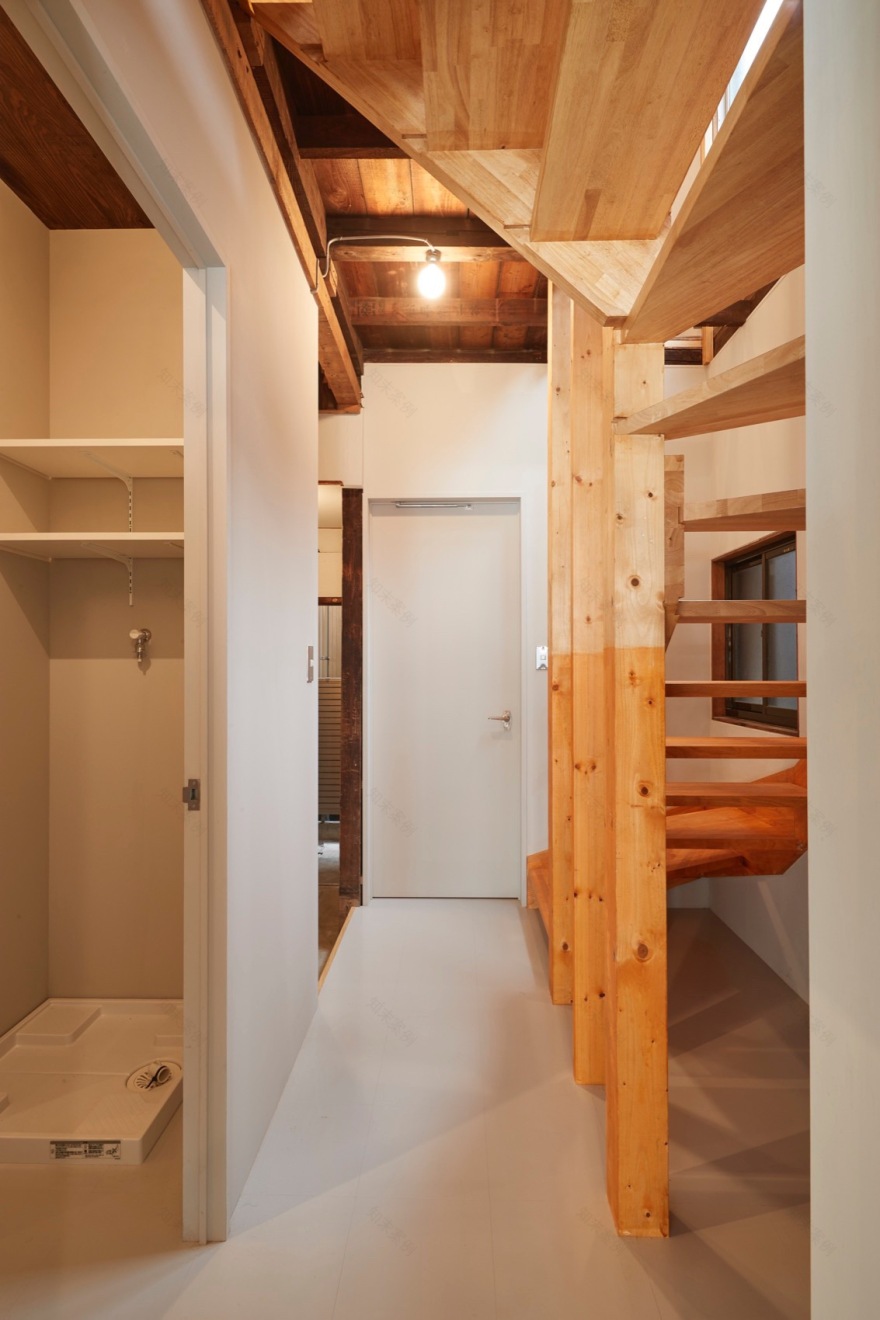
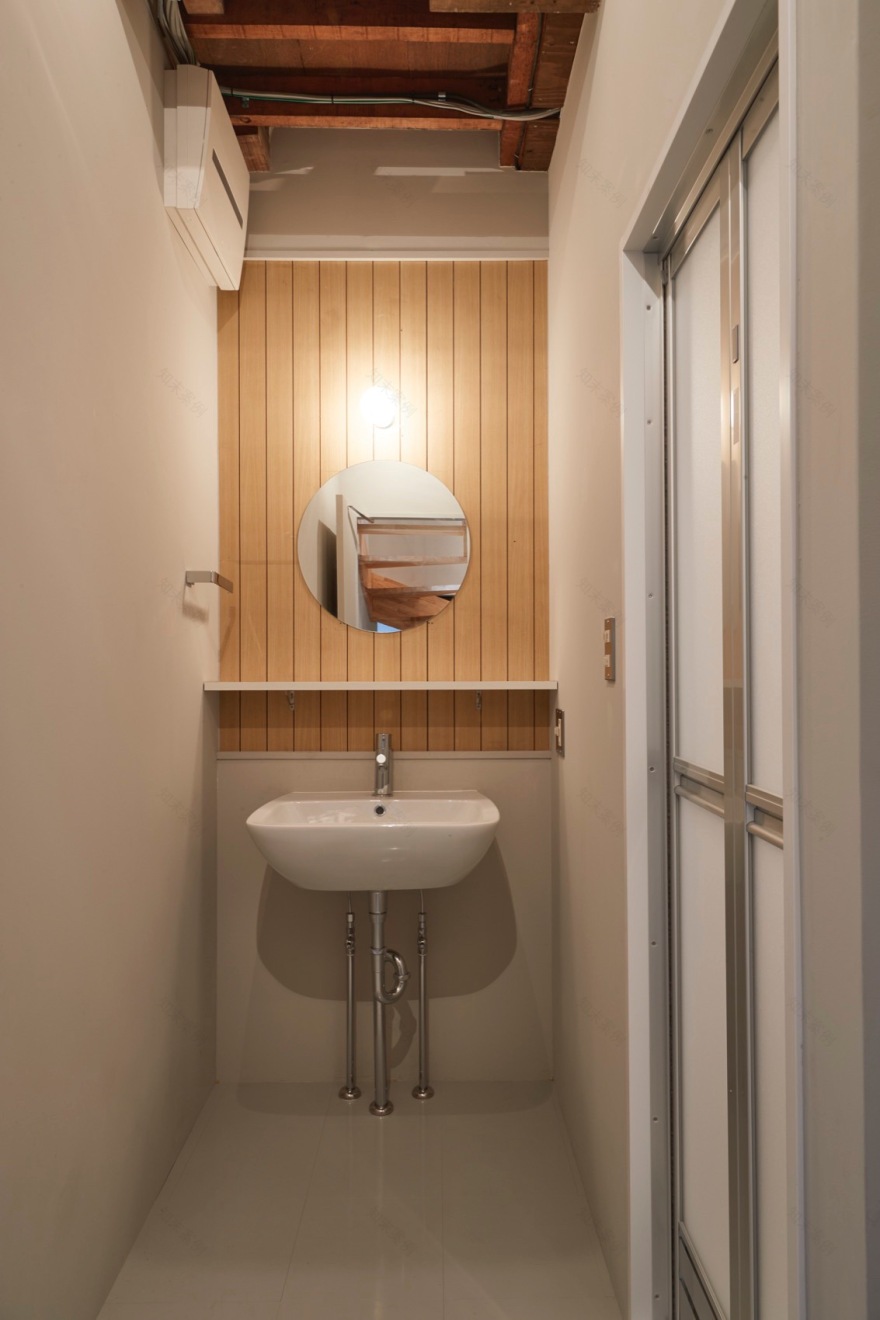
此外,建筑师还为该单元采用橡胶层压木材重新建造了一部楼梯。与其他地区一样,本项目中所采用的木材经过了抗白蚁溶液处理,并在外部添加了一层干净的饰面,以保护木材本身,同时保持木头的原始外观。
上部楼层中装饰性的浅奶油色金属栏杆,灵感来自1单元的红色金属楼梯。
To access the second ground we had to build a new staircase from rubber laminated timber. Same as in other areas, the wood was treated with an anti termite solution and covered with a layer of clear finish, to protect it while preserving the raw look of it.
On the upper floor we added a decorative light cream color metal railing, inspired by the red metal staircase of Unit 1.
▼二层空间,upper floor area
© Akira Nakamura

▼二层客厅,living room on the upper floor © Akira Nakamura


▼楼梯扶手,handrail of the staircase © Akira Nakamura

整个二层空间都铺设了Lauan板地板,并设置了一处由相同木材定制的简单厨房。以前将空间分隔为许多小房间的墙体被拆除,创造出开放的起居用餐空间氛围,只留下卧室作为独立的空间。
Lauan boards flooring was laid on the whole upper ground and a custom made simple kitchen from the same wood was installed. The former walls fragmenting the space into many rooms were put down to create an open living dining space, leaving only the bedroom separated.
▼厨房,kitchen © Akira Nakamura
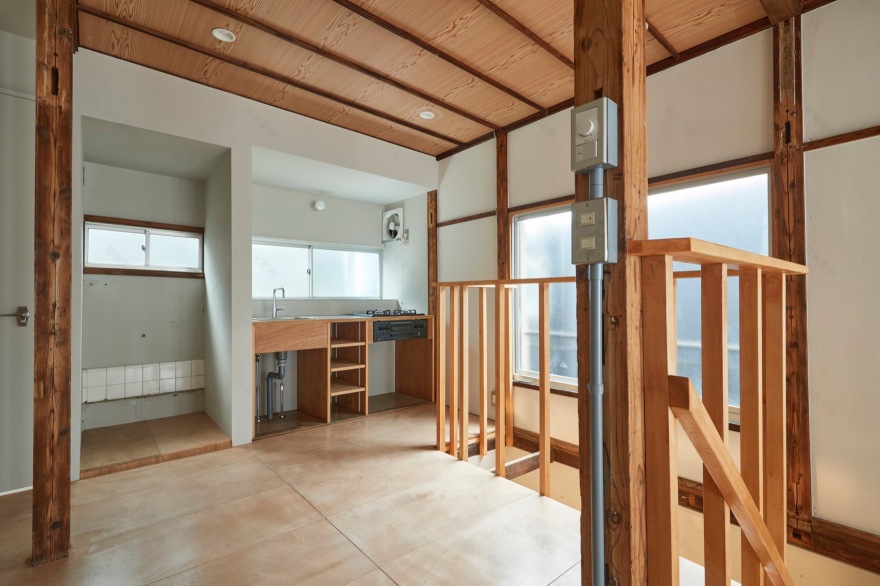
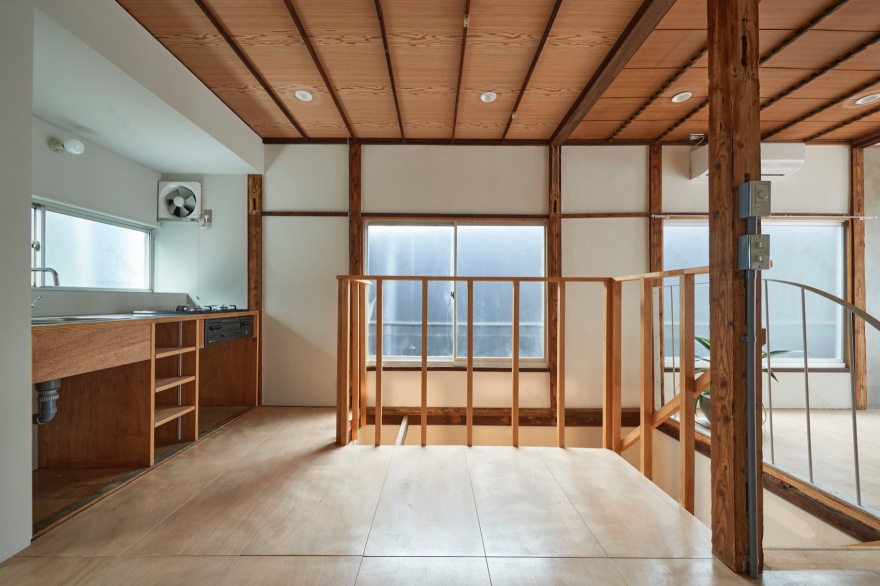
▼厨房近景,closer view of the kitchen © Akira Nakamura

二层的天花板被保留了下来,并安装了新的灯。
大部分墙壁都被重新漆涂为白色,只有少部分保留了传统的灰色油漆,以彰显出新旧之间的联系。
Ceiling boards were preserved and new lights were installed in them.
Most of the walls were newly painted white but we decided to keep some with the traditional gray paint.
▼二层独立卧室,bedroom on the upper floor
© Akira Nakamura


▼浴室,bathroom © Akira Nakamura


 368
3682022/08/11 15:46:28
1482022/08/24 17:08:13
1932022/10/24 12:11:50
192022/07/01 16:45:49
542023/08/10 20:00:00
南京喵熊网络科技有限公司 苏ICP备18050492号-4知末 © 2018—2020 . All photos and trademark graphics are copyrighted by their owners.增值电信业务经营许可证(ICP)苏B2-20201444 苏公网安备 32011302321234号
苏公网安备 32011302321234号客服
消息
收藏
下载
最近