

创作上传
VIP
收藏下载
登录 | 注册有礼
查看完整案例

收藏

下载

分享
你可能还喜欢
换一换
2017年,一项支持婚姻平等的全国调查促使澳大利亚议会通过了同性婚姻合法化的法案,这是 LGBTQI+群体争取平等的重要里程碑。同年,非营利机构Victorian Pride Centre获得维多利亚州政府的支持,建造澳大利亚首个专为LGBTQI+人群而设立的活动中心——维多利亚傲娇中心,随后为选址在St Kilda区Fitzroy街的该项目举办了一场公开的建筑设计竞赛。 2018年1月,BAU和GAA凭借优秀的设计方案脱颖而出,成为竞赛的优胜者。
In 2017, a national survey in favour of marriage equality lead to the Australian parliament passing the bill to legalize same-sex marriage, a milestone in the struggle for equality of the LGBTQI+ community. The same year, the Victorian Price Centre, a not-for-profit organisation, received funding from the Victorian Government for Australia’s first purpose built LGBTQI+ centre and subsequently held an open architectural competition for the design of the centre in Fitzroy Street, St Kilda. In January 2018 BAU and GAA were selected winners of the design competition.
▼项目概览,Preview
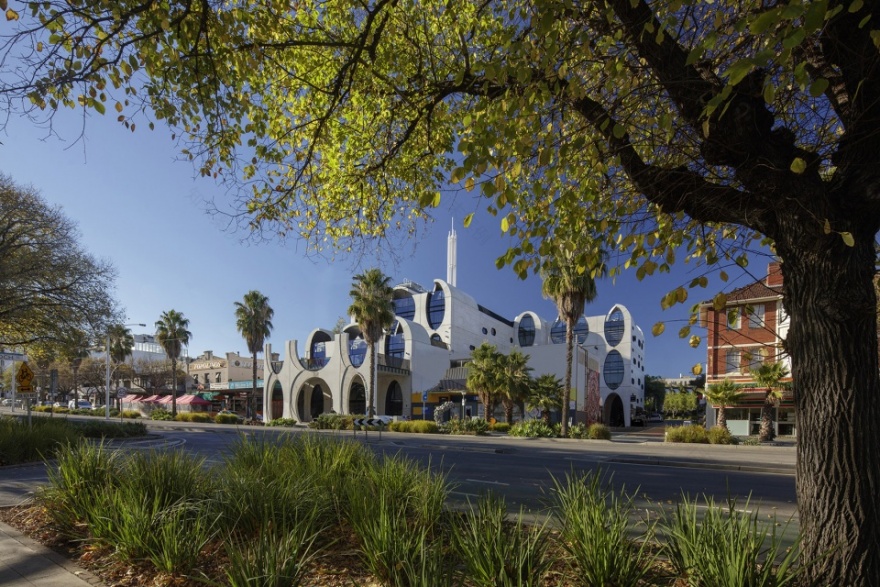
▼整体鸟瞰,Aerial view
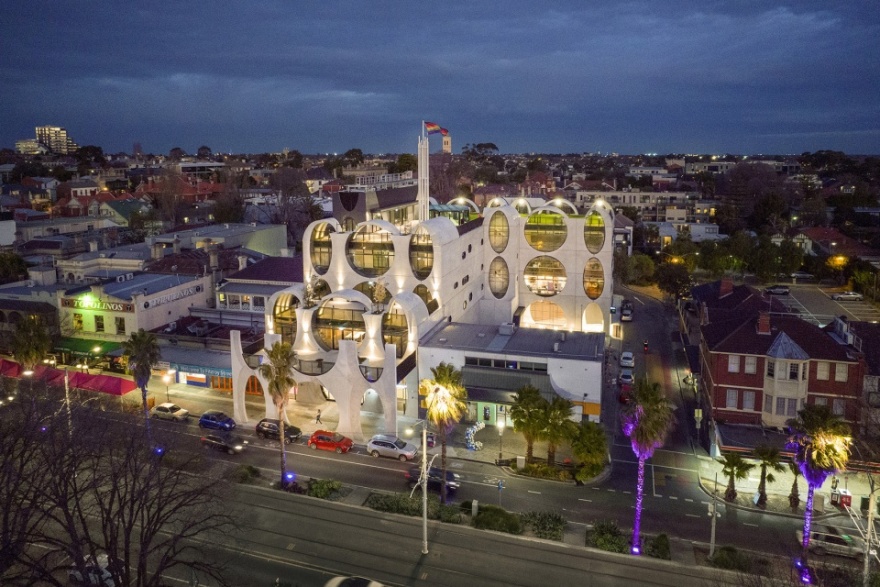
傲娇中心不仅是LGBTQI+群体的活动中心,也为其他群体提供会议和活动场所。建筑内设有共享办公空间、健康和福利中心、书店、剧院、档案室、屋顶露台和一个艺术画廊。咖啡厅、屋顶活动馆和社区花园也将于2022年陆续完工。
The VPC houses numerous resident organisations and welcomes dozens of groups for meetings, events, and projects. The building provides a public working hub, health and welfare centres, bookshop, theatrette, archives, roof terrace, and a gallery. Planned for 2022 are a café, rooftop events pavilion and community garden.
▼傲娇中心是澳大利亚首个专为LGBTQI+人群而设立的活动中心,Victorian Pride Centre is Australia’s first purpose built LGBTQI+ centre

▼屋顶露台,Roof terrace

为了不断完善设计方案,BAU和GAA邀请目标群体和当地土著居民参与研讨,从而使设计团队对当地的认知更加全面充分。我们最终的设计愿景是将傲娇中心打造成澳大利亚向包容性社会前进的重要标志,并使其成为一个充满人文关怀、令人感到安全的场所。在这里,人们也将更有勇气去追求自由、平等与包容。St Kilda的文化精神和LGBTQI+人群不断寻求改变的想法为傲娇中心的概念设计搭建了基础框架。
Augmenting the client’s excellent brief, BAU and GAA carried out workshops with user groups and the local indigenous community. Consequent ambitions for the architecture included the creation of a profoundly welcoming and safe place; a significant landmark of Australia’s cultural progress; and flexible workshop spaces for driving campaigns of equity, liberty and inclusivity further. Spirit of place and notions of becoming provided the conceptual frameworks for the design.
▼建筑外观,Exterior view


St Kilda开放的性别文化吸引了大批LGBTQI+群体聚集。在对St Kilda历史文化进行大量研究后,我们将其特有的异域风格、丰富的艺术文化、超现实主义和一系列当地传统文化,抽象地融入傲娇中心的设计。Fitzroy大街、海滩、浴场、月神公园、卡塔尼拱桥、滨海拱顶、歌舞厅和其他历史遗迹,都是我们的灵感来源。
St Kilda’s queer history unites many LGBTQI+ communities. Learning from St Kilda, the VPC includes and then abstracts cultural traditions of the exotic, the exuberant, the surreal, and the in-between. The Fitzroy Street strip, the beach, the baths, Luna Park, Catani arch, Esplanade vaults, dance halls, and other histories, all inform this process.
▼夜间外观,Exterior view by night

▼入口立面,Entrance facade

建筑空间由虚拟的巨型管道拉伸而成,空间抽象且稳固持久,不仅最大化建筑外壳,还创造出兼收并蓄的建筑空间和井然有序的拱门形态。为了处理这些虚拟的巨型管道,我们推演了城市问题,并从傲娇中心任务书中提取及增添细节。内部功能对管道的影响越多,建筑的形式和空间就越多样,最终塑造成一个包容且丰富的惊喜之作,并诞生了一种不断变化、始终处于前进的感觉,展现LGBITQI+群体为争取平等、自由而进行的不懈斗争。
▼方案生成示意,Generation

A series of conceptual tubes emerge as an abstract armature that maximise the urban envelope; provide relevant and significant architectural forms and spaces; and generates an overarching order. Most importantly, these conceptual tubes are then acted upon by extraction of the specifics of the brief; the more the internal program disrupts the tubes, the more the forms and spaces of a coexistence emerge. These emergent and surprising outcomes embrace difference, diversity, and inclusion. The resultant sense of a constant becoming, of a work in-progress, embodies the ongoing struggle toward equity, freedom and fellowship.
▼建筑空间由虚拟的巨型管道拉伸而成,A series of conceptual tubes emerge as an abstract armature that maximise the urban envelope
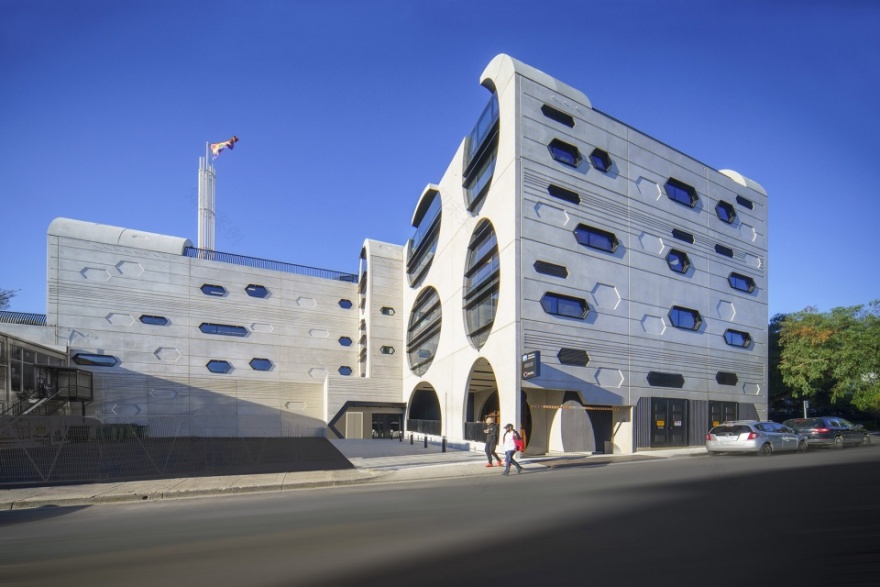
▼建筑内部概览,Interior view
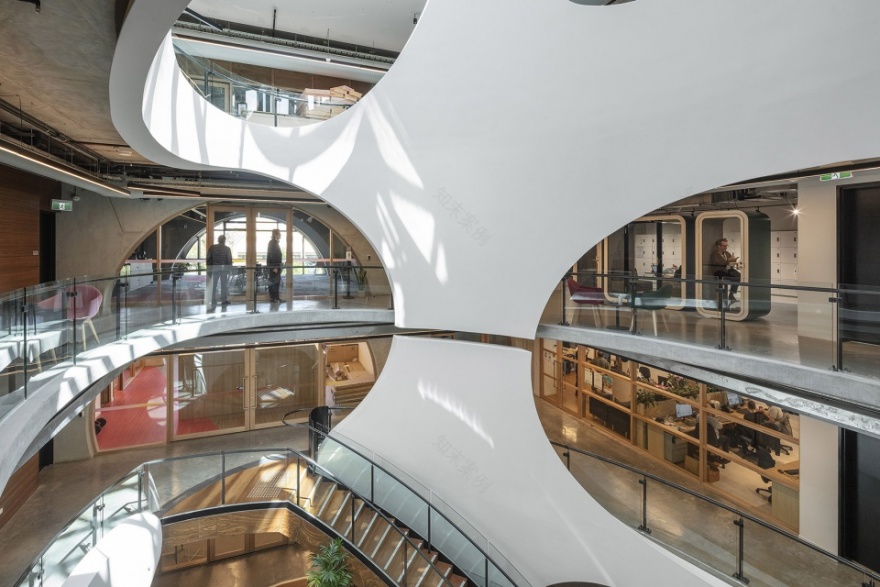
▼通高中庭,The full-height Atrium


▼各楼层空间围绕中庭布局,The floor spaces arranged around the atrium

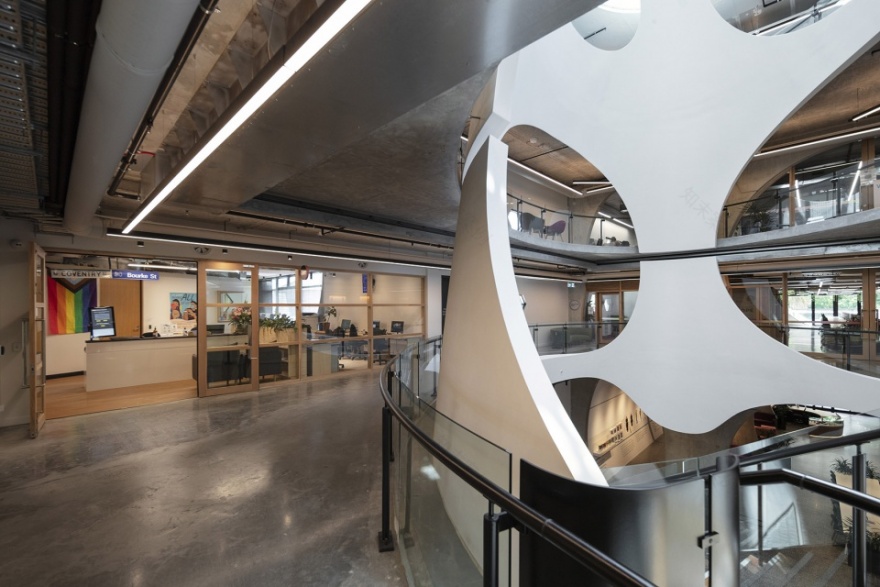
维多利亚傲娇中心意图超越传统用途和空间,挑战规范和阶级制度,创造灵活且不断发展的项目。交通流线围绕椭圆体中庭设置并向外发散,巨大的天窗为中庭提供充足的自然光线,大台阶不仅连接着上下空间,也是表演舞台和非正式圆形剧场,多样化的设计使其成为建筑中心的动态焦点,清晰易读。
The VPC aims to see beyond conventional uses and spaces, to challenge norms and hierarchies, to create a flexible and evolving program. Circulation radiates from the atrium, which provides legibility, natural light, a performance stage, an informal amphitheatre, and a dynamic focus at the heart of the building.
▼大台阶,Circulation

▼大台阶也是表演舞台和非正式圆形剧场,The grand stairs are also used as a performance stage and an informal amphitheatre


结构性与非结构性的构造简单明了,哪些结构不能改变,哪些可以随意改动,全部一目了然。我们将室内的原始结构混凝土和裸露的设备管线与暖色系材料相结合,如木材、彩色陶瓷和天鹅绒窗帘。这些共存进一步加深了包容美学的概念。
Structural and non-structural fabric is clearly articulated, explaining what is permanent and what is easily changed. The interiors combine raw structural concrete and exposed services with warm materiality including timber, coloured ceramics and velvet curtains. These coexistences further the notion of an aesthetics of inclusion.
▼多功能厅,Multi-purpose hall

▼接待台,Reception
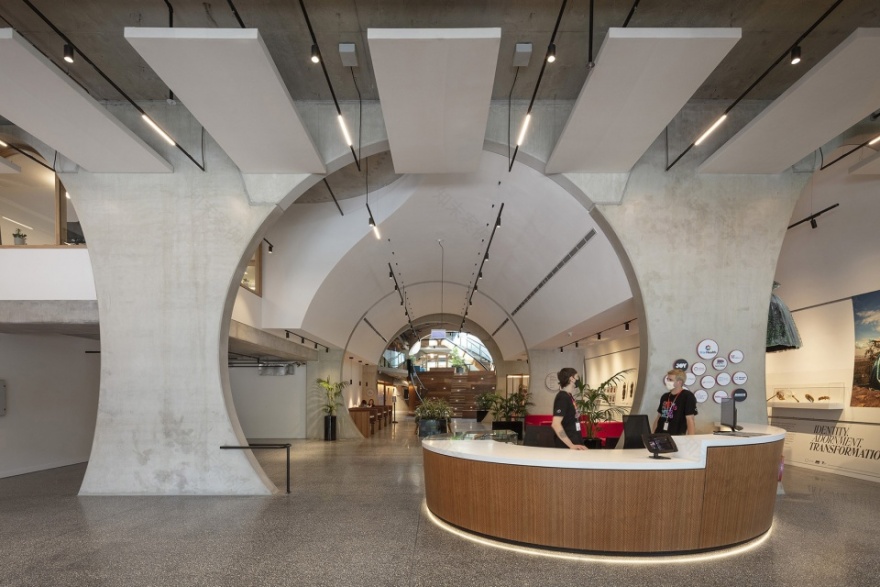
建筑中还设有一些类似于巷道门店的小型工作室。这些工作室的‘门面’采用了木质框架,墙壁上悬轨道和轨道照明,让人们在这温馨如家的地方舒适自如,表达真实的自我。
Smaller tenancies in the building resemble laneway shopfronts. A sacrificial timber framework integrated within these shop fronts along with hanging rails and track lighting above walls enable tenants to adapt and experiment with the spaces, enabling the emergence of an authentic self-expression.
▼共享办公空间,Public working hub

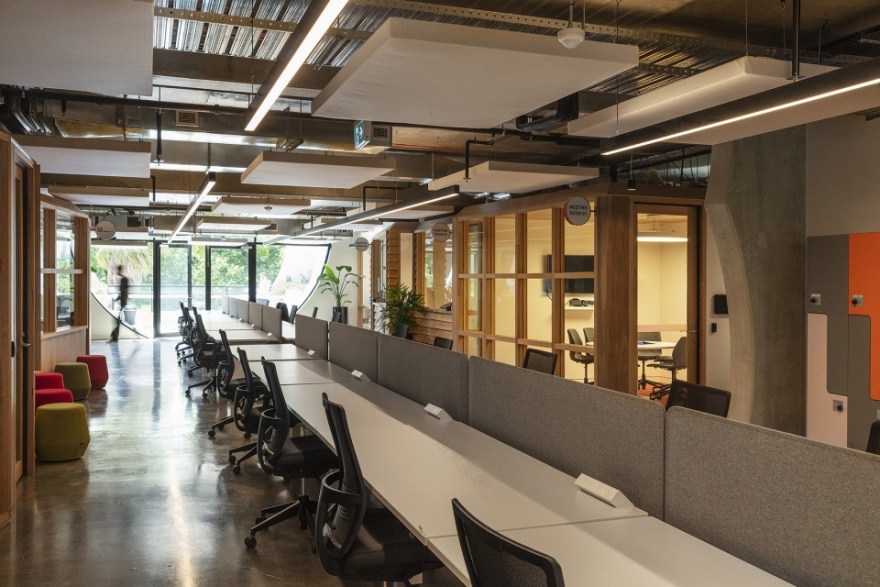
环境可持续设计 | ESD
建筑环境可持续性记分卡(BESS)工具已被广泛的应用于测试基准性能。 下面的汇总表突显了该项目取得BESS打分系统的最高级别“卓越级”。BESS的打分系统是测量一系列设计中采用的ESD具体措施,其结果等同于绿建5星或更高水准。
BESS评估类别项目分数
运行管理100%
节水50%
节能85%
雨水收集100%
居住环境质量33%
可持续交通50%
废物处理66%
城市生态环境62%
创新100%
总分71%
▼ESD措施剖面示意,ESD initiatives section

The Built Environment Sustainability Scorecard (BESS) tool has been used to benchmark performance. The summary table below highlights the project’s achievement of a score in the highest bracket “Excellence”. The range of specific measures adopted across the design and recognised by this high BESS score are viewed as demonstrating a similar overall sustainability performance outcome to a 5 Star or better Green Star rating
BESS Assessment Category Project Points
Management 100%
Water 50%
Energy 85%
Stormwater 100%
IEQ 33%
Transport 50%
Waste 66%
Urban Ecology 62%
Innovation 100%
TOTAL 71%
▼会议室,Meeting room

团队在ESD上采用了以下关键原则,并以此作为设计方案的基础:
– 尽量减少自然资源的消耗,包括水和原材料。
– 尽量减少施工对环境的影响,包括建筑材料的能耗和生态成本。
– 尽量减少运营对环境的影响,包括能源消耗、废物产生和污染物排放。
– 保持舒适的内部温度,同时尽量减少能源消耗,全年提供舒适的办公环境。
– 创造健康的环境,减少胶水、密封剂和油漆中有害挥发性化合物的使用,并防止灰尘和其他外部空气污染物。
– 提倡可持续的、综合的、便捷的出行方式。
– 可持续环保的设计,避免过度建造并简化维护需求。
– 促进城市生态。
The following key principles were adopted by the project team and underpin the design approach:
– minimise consumption of natural resources, including water and raw materials.
– minimise environmental impacts through construction, including embodied energy and the ecological cost of materials.
– minimise environmental impacts through operation, including energy consumption, waste creation and discharge of pollutants.
– maintain comfortable internal temperatures while minimising energy use, providing a comfortable office environment year-round
– create a healthy environment, including the reduction in the use of harmful VOCs in glues, sealants and paints, and protection from dust and other external airborne pollutants.
– provide sustainable, integrated, convenient travel.
– design that provides a sustainable outcome, avoiding over engineering and simplifying maintenance needs
– promote urban ecology.
▼户外平台,Outdoor terrace
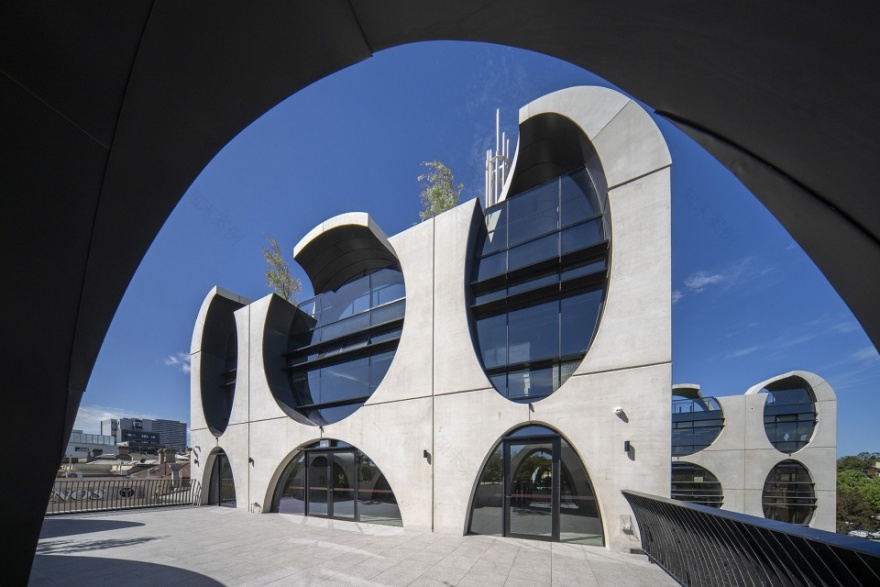

▼建筑外观,Exterior view

▼夜间立面,Exterior view by night
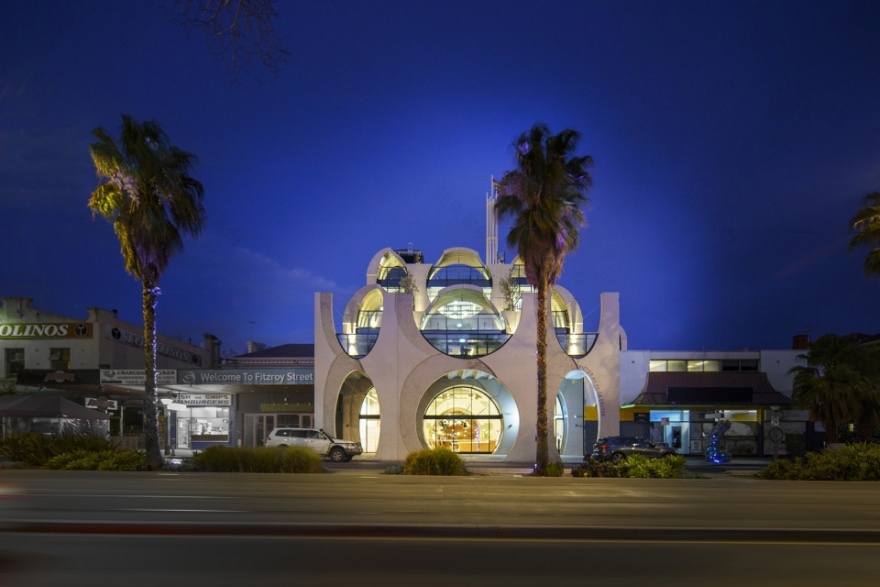
▼夜间鸟瞰,Aerial view by night

▼场地平面图,Site plan

▼首层平面图,Ground floor plan

▼夹层平面图,Mezzanine level plan

▼二层平面图,Level 1 plan

▼三层平面图,Level 2 plan

▼四层平面图,Level 3 plan

▼五层平面图,Level 4 plan

▼地下层平面图,Basement plan

▼南立面图,South elevation

▼北立面图,North elevation

▼东立面图,East elevation

▼西立面图,West elevation

▼剖面图1,Section 1

▼剖面图2,Section 2

Completion Date: 19/01/2022
Location: 77-81 Fitzroy St, St Kilda, Melbourne, Australia
Year: 2017-2022
Client: Victorian Pride Centre
Construction Cost: AUD 35 million
GFA: 6,200㎡
Program: Public shared work spaces; multi-function theatre; Joy FM 94.9; gallery; medical clinics; six shared meeting rooms; roof top terrace with events bar; community garden; book shop; café, children’s room; resident tenancies shared work space; four tea kitchens; Australian Gay + Lesbian Archives; Melbourne Queer Film Festival; Multi-Faith Australia; Switchboard Victoria; Minus 18 youth org; Koori Pride; Thorne Harbour Health; Monash Trans Health; Star Health.
BAU Project Team Competition: James Brearley, Steve Whitford, Jens Eberhardt (Partner in Charge), Fonarri Chen, Charles Hu
BAU Project Team Documentation: James Brearley, Steve Whitford, Jens Eberhardt (Partner in Charge), Fonarri Chen, Prague Unger, Adrain Coleiro, Manny Houdek, Tammy Li
GAA Project Team Competition : Grant Amon; Stephen Herbst; Estelle Peters; Karen McMull
GAA Project Team Documentation : Grant Amon; Stephen Herbst; Tony Trajikoski; Yiyang Xu; Bruno Rabl; Junbo Qu; Roberta Caione; Millicent Baddeley.
Local Council: City of Port Phillip
Town Planner: SJB Planning
Project Management: Case Meallin / Bates & Co
Quantity Surveyor: Slattery
Structural Engineer, Mechanical Engineer, Hydraulic Engineer, Electrical Engineer, Facade Engineer, Traffic Engineer, Fire Services, Fire Engineer: WSP
Acoustic Engineer: Resonate
ESD Consultant: Hip v. Hype
Building Surveyor: Checkpoint Building Surveyors
Landscape Architect: BAU Brearley Architects+Urbanists (Melbourne-Shanghai), Thompson Berril Landscape Design
Contractor: Hansen Yuncken
Lighting Consultant: Schuler Shook
Structural Concept Engineer: Peter Felicetti
Suppliers: Shape Shell – atrium pre-cast shell, Auscast Constructions – pre-cast concrete facades, Fade Australia – acoustic plaster.
Architecutre photographs: John Gollings
VPC opening photographs: Speech – Luke David, Audience – Anne Papadakis
Diagrams: BAU

 445
4452020/10/16 11:12:15
11042019/06/05 13:49:13
1202020/06/29 17:41:36
832019/11/11 12:12:37
1072019/11/08 17:58:01
1032019/06/04 15:13:41
642019/01/23 15:40:25
942018/11/16 19:28:35
462018/09/13 18:40:59
652018/07/24 14:59:17
1582018/05/28 18:27:55
622018/05/17 11:00:00
南京喵熊网络科技有限公司 苏ICP备18050492号-4知末 © 2018—2020 . All photos and trademark graphics are copyrighted by their owners.增值电信业务经营许可证(ICP)苏B2-20201444 苏公网安备 32011302321234号
苏公网安备 32011302321234号客服
消息
收藏
下载
最近