

创作上传
VIP
收藏下载
登录 | 注册有礼
查看完整案例

收藏

下载

分享

在慕尼黑Residenzstraße大街的巴洛克风格建筑普莱辛宫中,一颗玻璃球悬挂在漆黑的水池上方,它的反射光如同月光一样在深处移动。这就是“第四堵墙”——设计师Stefan Diez打造的临时艺术场所——第一个装置突出了他为Vibia设计的Plusminus照明系列的多功能性和美感。在整个空间中,Diez工作室打造了五种装置,展示出Plusminus的创造性潜能。Plusminus是一种全新的照明系统,它用灵活的导电纺织带替代隐形电线。灯具可以在纺织带的任何地方固定或断开,Plusminus也因此实现了光线的任意流动。
In the baroque Preysing Palais mansion on Munich’s Residenzstraße, a glass orb hangs suspended over a dark pool of water, its glowing reflection shifting in the depths like moonlight. This is 4th Wall, a new temporary arts venue from the designer Stefan Diez whose first installation highlights the versatility and beauty of his Plusminus lighting collection for Vibia. Throughout the space, Diez’s studio has created five different installations that show off the creative potential of Plusminus, a radical lighting system that replaces concealed wires with flexible, conductive textile belts. Thanks to a range of different lamps that clip onto and off the belt at any point, Plusminus lets light flow anywhere.
▼普莱辛宫,Preysing Palais

▼展览入口,entrance

每个装置突出照明系统的不同要素,并且都被安装在五扇窗户的框架之中,这些窗户面向普莱辛宫200平方米的空间——一个被拆除的商店空间,只剩下粗犷和赤裸。
Each installation highlights a different element of the system, and all have been installed such that they are framed by the five windows that look into the Preysing Palais’s 200sqm space – a stripped out store interior that has been left raw and bare.
▼空间概览,overall view of space

第一个装置以一系列14米长的带子为特色,它们划过天花,然后垂下来变成垂直聚光灯。这展示了Plusminus导电带的灵活性和功能性,导电带汇聚在一起,形成贯穿房间的纺织天蓬,同时通过聚光灯提供简单而优雅的照明。
The first installation, for instance, features a series of 14m-long belts that slice across the ceiling of the room before dangling down into vertical arrangements of spotlights. It’s a display that highlights the flexibility and functionality of Plusminus’s conductive belts, which come together to create a textile canopy that runs the length of the room, all while providing simple and elegant lighting through spotlights.
▼第一个装置:以一系列14米长的带子为特色
the first installation features a series of 14m-long belts

▼垂直布置的聚光灯,vertical arrangements of spotlights

如果说第一个装置突显了Plusminus的功能品质,那么第二个装置就发挥了设计的情感价值。在这里,一系列灯球吊在隐藏于天花中的电线上,它们位于漆黑的水池上方,水面承接并反射每盏灯的光,使其随着水的运动而荡漾。每盏灯之间的带子随着自身重力下垂,创造出由两个简单元素构成的情绪化灯光群。
While the first installation highlights Plusminus’s functio- nal qualities, the second plays with the design’s emotive value. Here, a series of globe lights have been suspended on invisible wires from the ceiling, dangling above dark pools of water whose inky surfaces capture and reflect the glow of each lamp, setting it rippling with the movement of the water. Between each lamp, the belt has been allowed to drape according to its own gravity, creating an emotional, evocative lighting constellation that is built up from just two simple elements.
▼第二个装置:由灯球和带子构成的情绪化灯光群,the second installation: the emotional lighting constellation composed of globe lights and belts

▼灯球悬挂在漆黑的水池上方,the globe lights dangle above dark pools of water

▼水面反射灯光,营造氛围感,the water reflects light to create an atmosphere


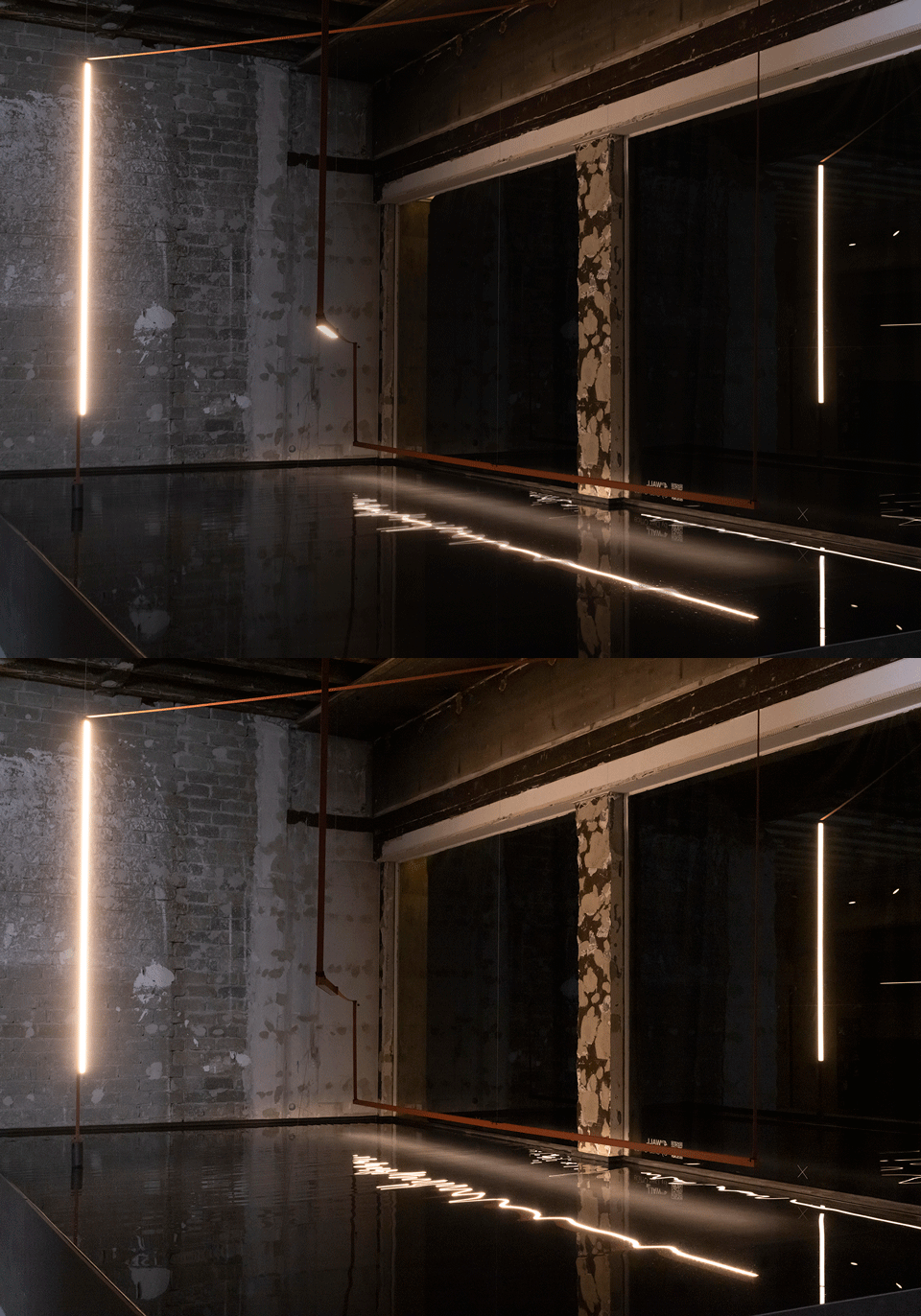
第三个装置利用Plusminus的线性照明,将带子拉成尖锐的、有棱角的形状,悬垂在水面上方。当带子弯折地穿过房间时,光线标记出其路径。该装置揭示了Plusminus可以在建筑中划分空间以及在空中创造轻质形式的潜力。
A third installation makes use of Plusminus’s linear lighting, with Diez having pulled the belt into sharp, angular formations suspended above the water. With light marking out of the passage of the belt as it zigzags through the room, the installation reveals the potential for Plusminus to employed architecturally to demarcate space, as well as to create new lightweight forms in the air.
▼第三个装置:线性照明,the third installation: linear lighting

▼尖锐的、有棱角的带子,sharp and angular belts

▼光线标记出带子路径,the light marks the passage of the belt
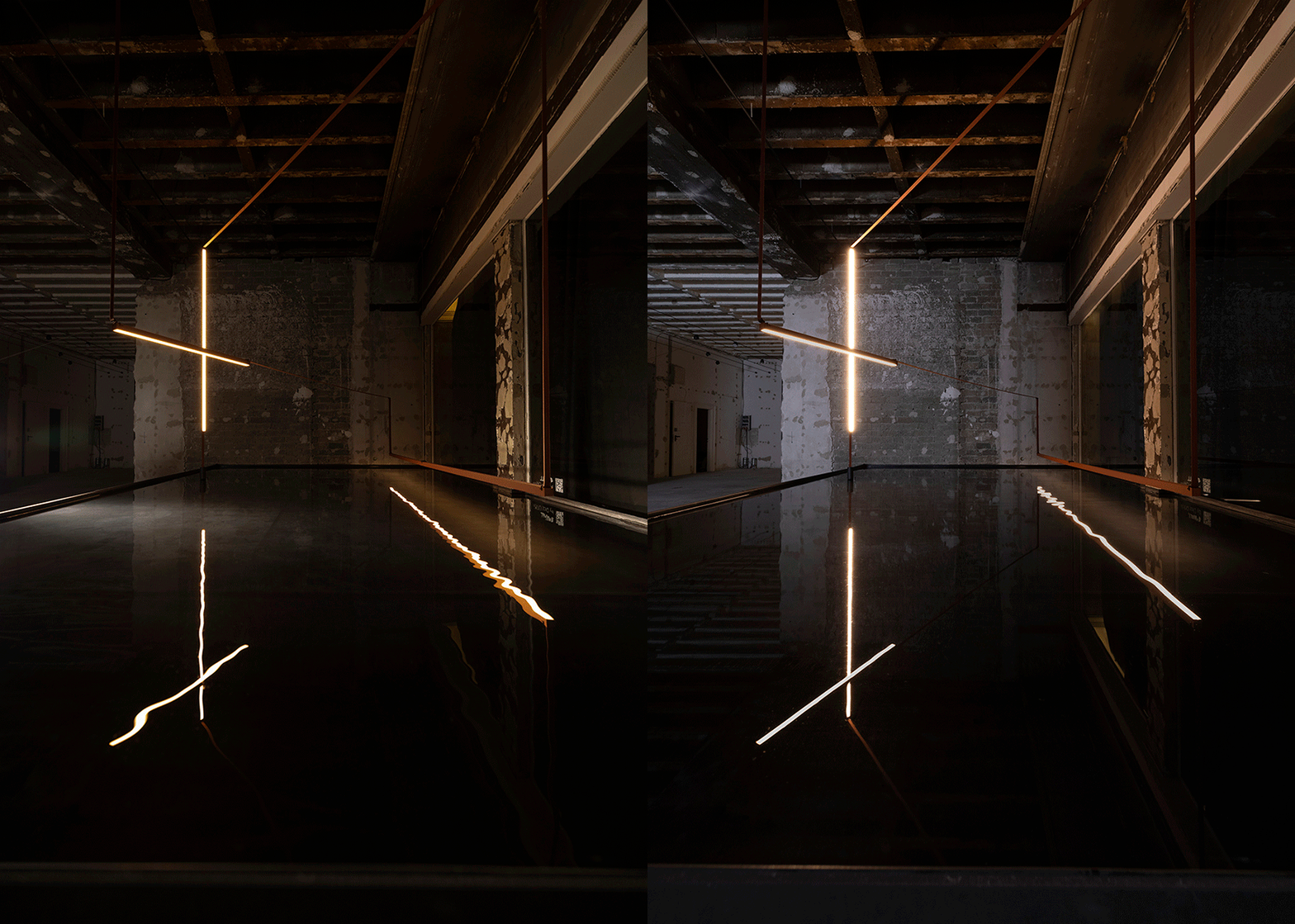
椎体照明构成第四个装置的核心,带子以精致的形式下垂,对应并补充灯的几何形状。在所有装置中,每个灯具都采用微芯片,这意味着Diez可以对灯具进行单独设置,从而编排整体灯光的移动。Plusminus将光从电网中解放出来,使设计师能够根据自己的意愿安排空间中的灯光。第五个装置是最朴素的,聚光灯被安置在空间中最小的窗户上。普莱辛宫受到德国法律保护,因而对空间的任何干预都必须是谨慎的、轻微的、最小化的。得益于Plusminus的适应性,以及纺织带确保装置不具有侵入性,Diez才能够仅仅通过光线就使空间完全改变。
Cone lighting takes centre stage in the fourth display, where the belt has been allowed to drape into delicate forms which correspond to and complement the geometries of the lamp. Across all of the installations, microchips included in each luminaire mean that the lamps can be individually programmed, allowing Diez to choreograph the movement of light across 4th Wall. With Plusminus, light is emancipated from the grid, giving designers the power to conduct electricity through a space however they might choose. The fifth installation is the most modest, installed with spotlights within the smallest window in the space. The architecture of the Preysing Palais is protected under German law, meaning that any intervention in the space needed to be sensitive, lightweight and minimal. Yet thanks to the adaptability of Plusminus, and the fact that its textile belt ensures that its installation is noninvasive, Diez was able to entirely transform the space using light alone.
▼第四个装置:椎体照明,the fourth installation: cone lighting

▼带子对应并补充灯的几何形状,the belts correspond to and complement the geometries of the lamp

“第四堵墙”旨在鼓励公众参与设计,Diez将空置的零售空间转变为面向公众的实验性设计。顾名思义,“第四堵墙”是设计与城市面对面交流的场所。根据这些目标,Plusminus展示了伟大的设计是如何照亮并提升它所触及的任何事物的。通过对纺织品形式的精心编排以及运动的光线所营造的气氛,“第四堵墙”将空旷的空间幻化成充满设计感的世界。
4th Wall was designed to encourage public engagement with design, with Diez having transformed an empty retail space into an outlet for experimental, public-facing design. As its name suggests, 4th Wall is a place where design and the city meet face to face. In keeping with these aims, Plusminus shows how great design can illuminate and elevate anything it touches. Through the careful choreography of textile forms and the atmosphere created by light in motion, 4th Wall takes an empty space and conjured it into a world where design comes alive.
▼细部,details

Photography: Monika Hoefler
Lighting design: Matthias Singer

 445
4452020/10/16 11:12:15
11042019/06/05 13:49:13
1202020/06/29 17:41:36
832019/11/11 12:12:37
1072019/11/08 17:58:01
1032019/06/04 15:13:41
642019/01/23 15:40:25
942018/11/16 19:28:35
462018/09/13 18:40:59
652018/07/24 14:59:17
1582018/05/28 18:27:55
622018/05/17 11:00:00
南京喵熊网络科技有限公司 苏ICP备18050492号-4知末 © 2018—2020 . All photos and trademark graphics are copyrighted by their owners.增值电信业务经营许可证(ICP)苏B2-20201444 苏公网安备 32011302321234号
苏公网安备 32011302321234号客服
消息
收藏
下载
最近