

创作上传
VIP
收藏下载
登录 | 注册有礼
查看完整案例

收藏

下载

分享

Serena Williams大楼是耐克世界总部中最大的建筑,提供了超过100万平方英尺的办公空间,可以容纳2750人工作。Skylab Architecture负责了这栋综合体全部的设计,包括核心筒和外壳、室内设计和家具选择,以及品牌整合。在巨大的尺度之上,项目面临着三个主要挑战:
1. 如何创造一个新型的面向设计师的工作空间,在大尺度下拉近人与人之间的距离,促进合作。
2. 如何利用再生原则,通过与自然的合作为基地和建筑使用者进行设计。
3. 如何抓住“运动”这一耐克传统特质以及Serena Williams的极限奋斗精神,后者是项目的名字来源。
▼项目整体鸟瞰,overall aerial view of the project

The Serena Williams Building—a workplace for 2,750 occupants at more than 1 million square feet—is the largest structure at Nike World Headquarters. We led the design of all aspects of this complex building and program, including core and shell, interior design and furniture selection, and branding integration. Beyond its sheer scale, the project presented three principle challenges:
1. How to create a new prototype for design-focused workspace that fosters chemistry and collaboration on an enormous scale.
2. How to leverage regenerative principles to design for both the site and the building occupants through a partnership with nature.
3. How to capture the ethos of sport, Nike’s heritage, and the spirit of Serena Williams, the ultimate warrior-muse and the building’s namesake.
▼建筑与室外活动场地,buildings and the outdoor activity spaces

▼建筑通过桥梁与自然相连,building connected with the nature through a bridge
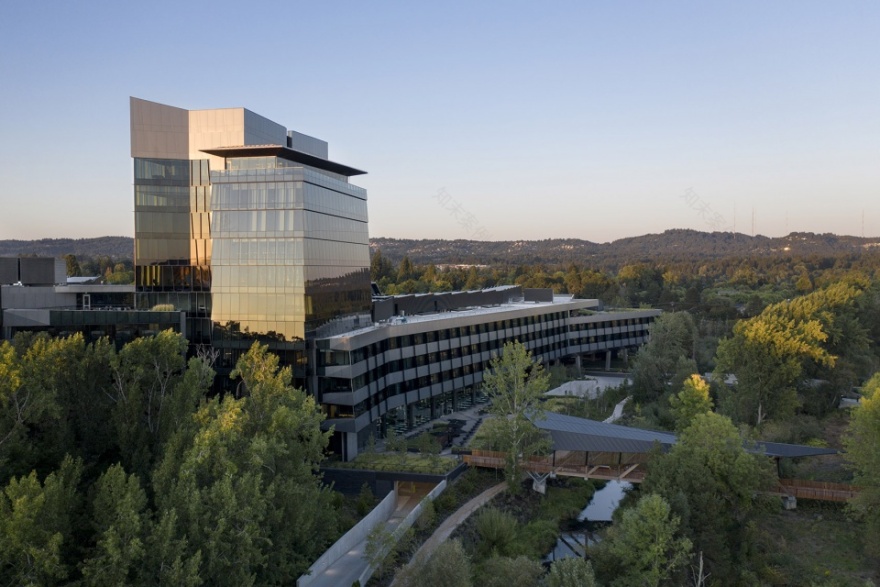
▼连桥外观,Shoe Dog Bridge design by PLACE

建筑包含四个部分,分别是:一个地下车库和卸货平台;一个原型展销中心;多类产品的复合设计工作室;一栋12层塔楼,为园区中的所有人提供共享便利设施。设计中融入了流动的概念,形成了流动状态的设计策略,既高效又开放。流动的设施在设计师和不同的商业部门之间形成意料之外的连接和各种可能性。设计创造了尺度丰富的集会空间,促进室内和室外的连接。功能组织上,每个品牌的设计师分别占据一个楼层,服务空间垂直堆叠在各个楼层之间。耐克有史以来第一次可以在同一个屋檐下实现产品从草图到原型,再到最终设计和零售定案的全部流程。
The building consists of four parts: an underground parking garage and loading dock; a merchandising center for prototype retail spaces; integrated design studios for multiple product categories; and a 12-story tower with shared amenities for all of campus. Integral to the design is the concept of flow — a fluid state design strategy that is both efficient and enlightened. Flow facilitates unexpected connections and possibilities, both among designers and between disparate parts of the business. We created a variety of scales of gathering spaces to foster identity and connectivity, both indoor and outdoor. The building is organized around a principle that all designers for each brand within the business occupy a single level, while the services stack vertically between levels. In a first for Nike, products can move from sketch to prototype to final design to retail fixture all under one roof.
▼入口广场,被不同功能体块围合,entrance plaza enclosed by various functional volumes

▼庭院,courtyard

此次设计之前,项目基地为一个停车场和一条通往相邻建筑的道路,基地旁边是一片被园区避开的美丽湿地。对于建筑师来说,再生设计需要将自然当作积极的合作伙伴,尊重基地环境,使用负责任的系统和材料进行智能施工。为了更好地与自然景观连接,设计将原本的道路和停车场埋入地下,最小化汽车和卡车的视觉影响。在体块方面,建筑每栋翼楼的南侧向后退台,形成舒适交错的绿色屋顶露台。一道260千瓦的光伏板屏障将屋顶机械单元隐藏在人们的视野之外。雨水将被收集并放回给湿地。
In its former life, the building site contained a parking lot and an access road to an adjacent building, all next to a beautiful wetland that the campus had turned away from. For us, regenerative design involves working with nature as an active partner towards both respectful site design and intelligent construction with responsible systems and materials. To better connect to the natural landscape, we buried the existing access road along with all parking and loading to minimize the visual presence of cars and trucks. In terms of massing, each of the building’s distinct bars, or wings, cascade to the south and feature inhabitable, interlacing green roof terraces that overlook the wetland. A 260 kW photovoltaic array screens rooftop mechanical units from view. Stormwater is collected and returned to the wetland.
▼从屋顶露台看向地下通道,view to the buried road from the roof terrace

▼屋顶绿化和休息空间,landscape on the roof and resting areas


▼水池,pool
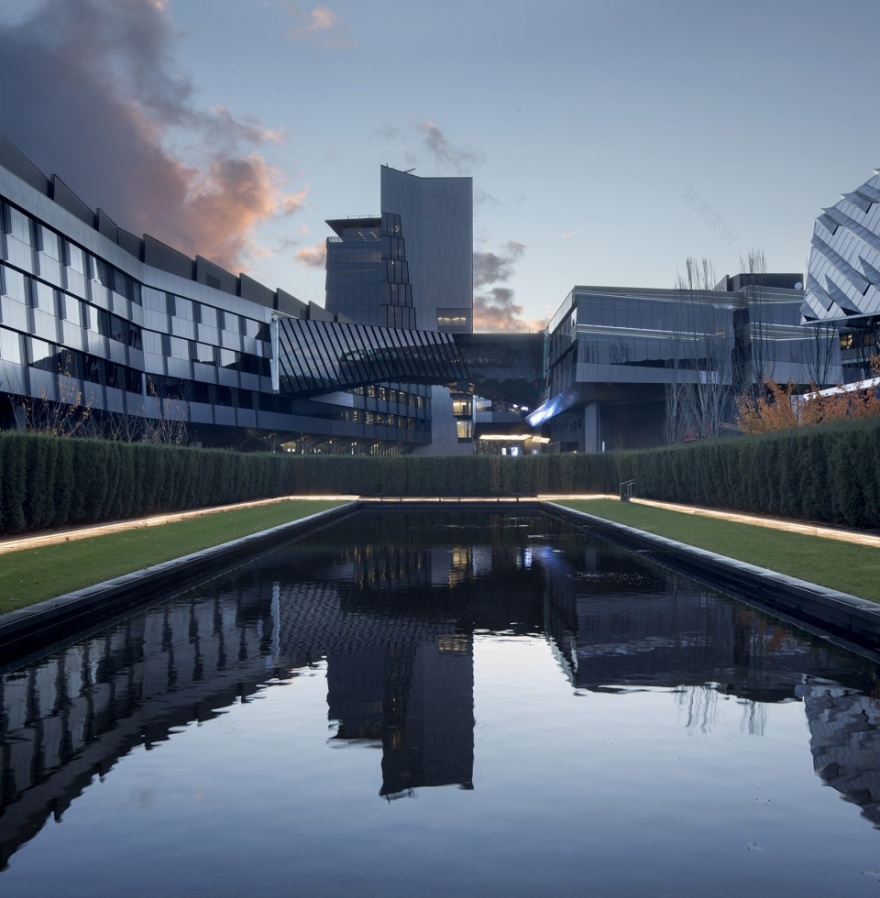
▼建筑立面,光伏板遮挡屋顶机械单元,building facade, mechanical units hidden behind the photovoltaic screen
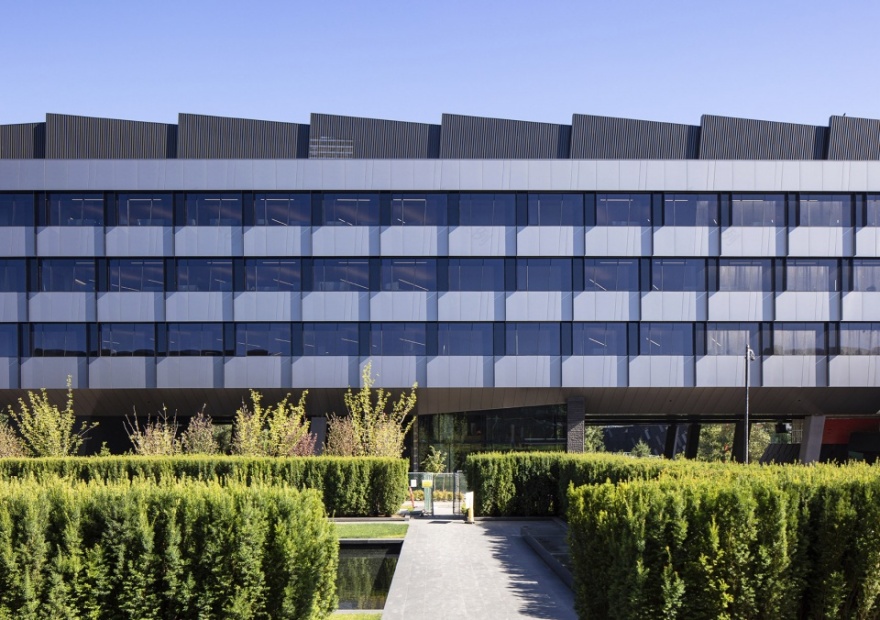
▼室外休闲区,outdoor recreation space

▼材料细部,material details


交错的条窗形成的消极空间采用与室内相同的敏锐设计手段。庭院、花园、广场和下沉式网球场打碎建筑尺度,提供非正式的室外工作、休闲和放松空间。自然光通过两侧的条形玻璃幕墙和连通楼梯上方的天窗洒满工作空间。室内裸露的混凝土表面为设计工作室提供了一个未经修饰的开放色盘,在关键节点处展现了建筑的结构。项目中还使用了置换通风和防辐射帆板等节能机械系统。当建筑设计达到城市设计的尺度时,可持续性就成为了不容商榷的议题。
The negative spaces created by the branching bars are treated with the same sensitivity as the interior spaces themselves. Courtyards, gardens, plazas and a sunken tennis court break down the scale of the building and provide informal outdoor spaces for work, recreation and relaxation. Natural light floods the workspaces along each bar from glazing on two sides and skylights above communicating stairs. Exposed concrete on the interior provides a raw, open palette in the design studios and expresses the building’s structure in key moments. Energy efficient mechanical systems include displacement ventilation and radiant sails. When building design reaches the scale of urban design, sustainability is non-negotiable.
▼入口与logo,entrance and the logo

▼展销大厅,lobby of the merchandising center

▼办公区,充满自然光,workplace filled with natural light

▼多种办公空间,multiple working spaces
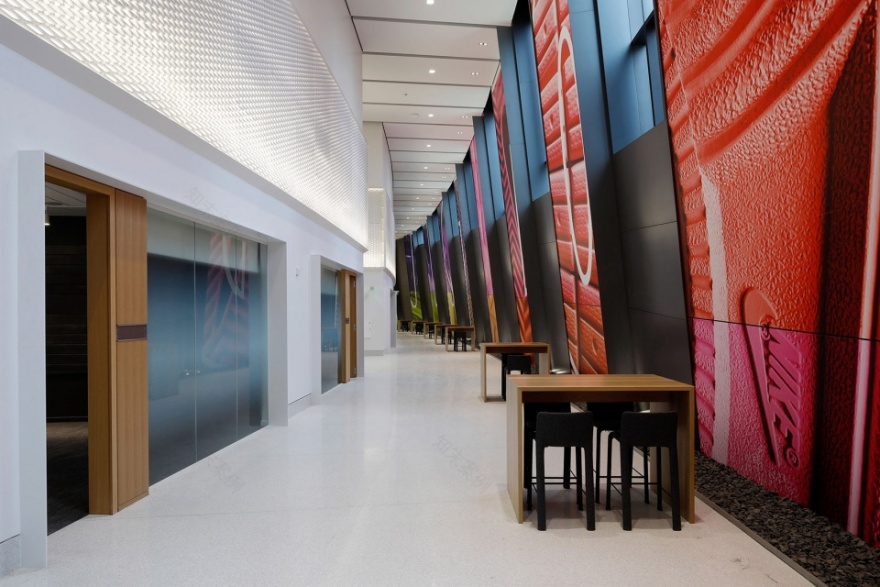
▼大堂,裸露的混凝土结构
lobby with exposed concrete structure

▼楼梯,staircase

▼从工作区看向大堂和楼梯,view to the lobby and the staircase from the workplace

▼促进交流的交通空间,circulating space foster communication


▼丰富而开放的空间布局,rich and open space layout


▼咖啡厅,cafe

▼天花细部,details of the ceiling

▼空间中体现Serena Williams的运动精神,sport spirit of Serena Williams expressed in the space


▼夜景,night view

Skylab Architecture team
Jeff Kovel, Design Director
Brent Grubb, Project Manager
Susan Barnes, Project Director
Robin Wilcox, Project Director
Nita Posada, Interior Architecture Lead
Louise Foster, Project Designer
Project team
Architecture and Interior Design – Skylab Architecture
Building Enclosure – Facade Group
Civil Engineering – WHPacific
Code Consultant – Code Unlimited
Contractor – Hoffman Construction
Kitchen Consultant – HDA
Landscape – Place Landscape
Lighting – Luma
Mechanical/Electrical/Plumbing – PAE
Signage/Wayfinding – Ambrosini Design
Sound – Listen Acoustics
Specifications Consultant – M.Thrailkill
Structural Engineering – Thornton Tomasetti
Sustainability Consultant – Brightworks
Photography
Jeremy Bittermann
Stephen Miller
J.P. Paull, PLACE

 445
4452020/10/16 11:12:15
11042019/06/05 13:49:13
1202020/06/29 17:41:36
832019/11/11 12:12:37
1072019/11/08 17:58:01
1032019/06/04 15:13:41
642019/01/23 15:40:25
942018/11/16 19:28:35
462018/09/13 18:40:59
652018/07/24 14:59:17
1582018/05/28 18:27:55
622018/05/17 11:00:00
南京喵熊网络科技有限公司 苏ICP备18050492号-4知末 © 2018—2020 . All photos and trademark graphics are copyrighted by their owners.增值电信业务经营许可证(ICP)苏B2-20201444 苏公网安备 32011302321234号
苏公网安备 32011302321234号客服
消息
收藏
下载
最近