

创作上传
VIP
收藏下载
登录 | 注册有礼
查看完整案例

收藏

下载

分享

翻译

Save this picture!

iginally used primarily for short-term vacation rentals, Airbnb has now expanded to encompass a wide range of accommodations, from entire apartments and houses to unique stays like castles and treehouses. With over 7 million listings worldwide, Airbnb offers travelers a unique and affordable alternative to traditional hotel stays.
One of the key advantages of using Airbnb is the ability to customize your travel experience. Instead of being confined to a single room in a hotel, you can choose accommodations that suit your needs and preferences. Whether you prefer a cozy apartment in the heart of a city or a secluded cottage in the countryside, Airbnb offers a variety of options to cater to every traveler’s taste.
In addition to the wide range of accommodations, Airbnb also offers the opportunity to connect with locals and experience a destination from a unique perspective. Many hosts are eager to share their knowledge of the local area and provide valuable tips and recommendations. This personal touch can greatly enhance the overall travel experience, allowing visitors to immerse themselves in the local culture and make lasting memories.
Another advantage of Airbnb is the potential cost savings compared to traditional hotels. By renting a private accommodation, travelers can often save money on accommodation expenses. Additionally, Airbnb offers the option to cook meals at home, further reducing dining expenses. This can be particularly beneficial for longer stays or for travelers on a budget.
However, it’s important to note that there are some potential drawbacks to using Airbnb. While the majority of hosts are reputable and trustworthy, there have been cases of fraudulent listings and dishonest hosts. It’s essential for travelers to do their due diligence and carefully read reviews and ratings before booking a property.
Furthermore, Airbnb may not be the best option for all travelers. Some individuals may prefer the convenience and amenities offered by traditional hotels, such as room service, daily housekeeping, and access to on-site facilities like a gym or pool. Additionally, Airbnb may not be available in all destinations, or the selection of accommodations may be limited in certain areas.
Ultimately, the decision to use Airbnb or traditional hotels depends on personal preferences, budget, and travel needs. Both options offer unique advantages and disadvantages, and it’s important for travelers to carefully consider their options before making a decision.
In conclusion, Airbnb revolutionized the travel industry by offering a wide range of accommodations and a unique travel experience. With millions of listings worldwide, Airbnb provides travelers with the opportunity to customize their stay, connect with locals, and potentially save money. However, it’s essential for travelers to be cautious and research their options before booking to ensure a positive and safe experience.
The Future of Airbnb and Short-Term Rentals
Airbnb has faced challenges in recent years due to safety concerns, false listings, and rising property prices. Many cities have implemented regulations to address these issues. Despite the challenges, Airbnb continues to be a popular option for travelers. However, its future viability remains uncertain.

London Airbnb listings from 2019. Image © Greater London AuthorityFrom 2015 to 2019, the number of Airbnb listings in London nearly quadrupled, forcing much of the capital city’s housing supply to be owned and operated as short-term rental units. By mid-2019 alone, 80,770 properties in London were listed on Airbnb with almost a quarter of those in breach of the city’s 90-day limit or a rule that states a property cant be rented out on Airbnb for more than 90 days of occupied nights each year. Even more astonishing, data reports showed that across all of these listings, just one percent of hosts were responsible for 15 percent of the active listings at that time. It’s also estimated, using third-party data measurement tools, that 30 percent of hosts in London have at least three listings on the platform, further showing how Airbnb ownership has quickly become a monopoly of sorts.Save this picture!
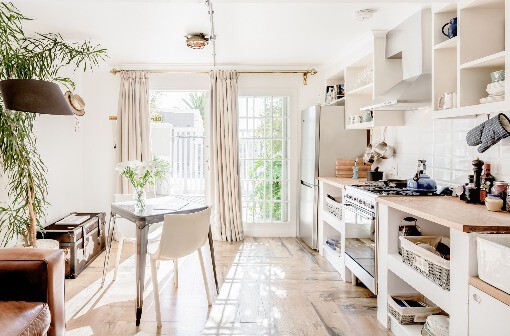
Courtesy of AirbnbAirbnbs aren’t just a concern in London’s center, the growing short-term rental market impacts even the sprawling suburbs and outer boroughs. Nearly 10 percent of the housing stock in Camden and Westminster is listed on Airbnb, for a total of 7,000 entire properties, half exceeding the 90-day limit. The most concerning aspect is that 6,000 families are currently listed on the council’s housing waiting list. Many council members feel that short-term rentals are growing out of control and exacerbating the housing shortage.London isn’t the only place that feels the impact of the growing number of Airbnb listings. New York City has also implemented a 90-day limit of its own with even more restrictions. Additionally, home rentals of fewer than 30 days are not permitted unless the permanent resident (or Airbnb operator) is present in the unit. The city is already pushed to its limits with astronomical housing prices caused by a tight housing supply. These rules are becoming increasingly difficult to enforce, especially with the number of rentals violating these laws. Visitors who rent these stays claim that they help the city’s economy by providing more options, but city officials want tourists to stay in hotels, an industry that suffered greatly during the pandemic.Save this picture!

Interactive map of Airbnb listings in New York City. Red dots represent entire homes and green dots represent shared stays. Image © Inside Airbnb In just a few days, New York City may release a new set of rules to further limit the number of Airbnbs available to rent. The new rules would require hosts to submit apartment floor plans to the city, provide proof that the home is their permanent residence, submit their lease documents, and prove an understanding of the city’s multiple dwelling laws. Hosts would be prohibited from putting locks on doors where residents stay, and have to comply with other rules to protect visitor safety. Any infractions would result in hefty fines by the city. The push for these strict laws comes as a recent study found that there are more Airbnb listings than open apartment inventory across the city. In a Curbed report, less than 8,000 units were available to rent across Manhattan, Brooklyn, and Northwest Queens in April of this year. At the same time, Airbnb listed 10,572 rooms or entire homestays for rent, with another data listing, Inside Airbnb , projecting that there were 20,397 listings at that time. Will more restrictions help ensure that Airbnbs are operating legally worldwide, and how might it be possible to enforce these laws? It’s possible that Airbnbs will have to completely reinvent themselves to become longer-term stays to accommodate these rules, and that check-ins to a stranger’s home for a weekend away may soon not be as seamless. Editor’s Note: This article was originally published on November 29, 2022.

 63
632020/09/29 16:34:55
252020/08/28 15:38:23
1202021/03/16 19:36:45
1592017/04/11 16:11:37
982020/12/15 12:24:43
562016/10/08 03:26:11
1602019/01/18 02:00:00
1012016/07/13 05:00:00
1352016/05/17 02:00:00
452016/03/07 00:00:00
3772020/03/19 14:41:00
16872021/08/13 07:31:10
南京喵熊网络科技有限公司 苏ICP备18050492号-4知末 © 2018—2020 . All photos and trademark graphics are copyrighted by their owners.增值电信业务经营许可证(ICP)苏B2-20201444 苏公网安备 32011302321234号
苏公网安备 32011302321234号客服
消息
收藏
下载
最近